Tree Care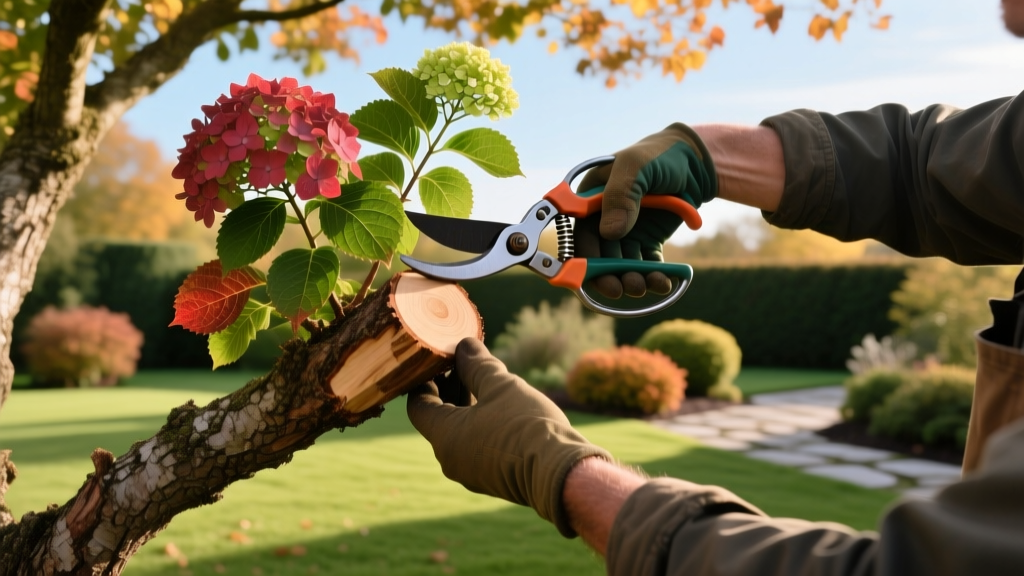
How to Prune Hydrangeas in the Fall: Regional Timing Guide
Searching for how to prune hydrangeas in the fall is a common autumn ritual, but grabbing your shears in October can permanently destroy next year's blooms. The secret to successful fall pruning lies in matching your specific hydrangea species to your regional USDA hardiness zone. While some varieties demand aggressive fall cutbacks, pruning others during the autumn months will sever the exact nodes required for spring flowering.
This guide provides a precise, region-specific calendar and botanical framework to help you execute fall pruning safely, protect your shrubs from winter damage, and maximize your 2026 bloom cycle.
The Botanical Trap: Old Wood vs. New Wood
Before you make a single cut, you must identify your hydrangea species. Hydrangeas are divided into two distinct flowering categories: those that bloom on 'old wood' (last year's growth) and those that bloom on 'new wood' (the current season's growth). According to Clemson University's Home & Garden Information Center, misidentifying your shrub is the leading cause of bloom failure.
| Hydrangea Species | Common Names | Blooms On | Fall Pruning Verdict |
|---|---|---|---|
| H. macrophylla | Bigleaf, Mophead, Lacecap | Old Wood | NO. Only remove dead blooms (deadheading). |
| H. quercifolia | Oakleaf | Old Wood | NO. Prune only in early summer after flowering. |
| H. paniculata | Panicle, PeeGee | New Wood | YES. Can be pruned heavily in late fall/dormancy. |
| H. arborescens | Smooth, Annabelle | New Wood | YES. Can be cut to the ground in late fall. |
| H. anomala | Climbing | Old Wood | NO. Prune only to control size in summer. |
⚠️ CRITICAL WARNING: If you cut an H. macrophylla (Bigleaf) down to 18 inches in the fall, you are physically cutting off next year's flower buds. You will be left with a lush, green shrub that produces zero blooms the following summer.
Regional Timing Calendars: When 'Fall' Actually Means
For new-wood hydrangeas (Panicle and Smooth), fall pruning is highly effective for shaping and controlling size. However, 'fall' is a meteorological concept, not a botanical one. Pruning too early while the plant is still actively transporting nutrients to its roots will stimulate tender new growth that will be instantly killed by the first hard frost. You must wait for true dormancy.
USDA Zones 3-5 (Northern & Harsh Winters)
In regions like Minnesota, Maine, and upstate New York, early autumn pruning is dangerous. Wait until late October through mid-November, specifically after the first hard freeze (temperatures dropping below 28°F for at least four hours). At this point, the leaves will have dropped, and the shrub has fully entered dormancy. For H. arborescens (Smooth), you can cut the stems down to 6 inches above the soil line. For H. paniculata, reduce the overall height by one-third to prevent heavy winter snow from snapping the brittle stems.
USDA Zones 6-7 (Transitional Climates)
In areas like Virginia, Missouri, and parts of Oregon, autumn temperatures fluctuate wildly. A warm November can trick a pruned hydrangea into pushing new buds. Delay your fall pruning until late November or early December. Wait until the shrub has experienced at least two consecutive nights below 32°F. When pruning Panicle hydrangeas here, make your cuts just above a pair of plump, outward-facing nodes, leaving a structural framework of 18 to 24 inches.
USDA Zones 8-10 (Southern & Mild Winters)
In the Deep South and coastal California, true dormancy is brief or non-existent. 'Fall' pruning should actually be pushed to late December or January. Because these regions rarely experience stem-snapping snow loads, aggressive height reduction isn't necessary. Focus on thinning out crossing branches and removing spindly, pencil-thin growth at the base to improve air circulation for the humid spring months.
Precision Execution: Tools and Technique
Hydrangea stems have a soft, pithy center that is highly susceptible to moisture retention and fungal rot if crushed during pruning. Never use anvil pruners or hedge shears for this task.
- Tool Selection: Use high-carbon steel bypass pruners. The UMass Extension Landscape Program recommends clean, sharp bypass blades to prevent tearing the cambium layer. The Felco 2 or Corona SL 4264 are industry standards.
- Sanitization: Wipe your blades with 70% isopropyl alcohol between every single shrub. Do not use bleach; it pits carbon steel and degrades the cutting edge over time.
- The Cut Angle: Make your cuts at a precise 45-degree angle, exactly 1/4 inch above an outward-facing bud node. This angle sheds water away from the pith, preventing winter rot.
Fall Maintenance Alternatives for Old-Wood Varieties
If you have identified your shrub as an old-wood variety (Bigleaf or Oakleaf) and cannot prune it in the fall, your autumn efforts should pivot to soil amendment and winterization. Fall is the optimal time to adjust soil chemistry because the amendments require months to break down and become bioavailable.
Adjusting Bloom Color (Soil pH)
According to NC State Extension, the color of H. macrophylla blooms is dictated by soil pH and aluminum availability.
- For Blue Blooms: If your soil is too alkaline (pH above 6.0), apply elemental sulfur in the fall. Use exactly 1 cup of pelletized sulfur per 10 square feet of root zone. The winter moisture and microbial activity will slowly lower the pH by spring.
- For Pink Blooms: Apply garden lime (calcium carbonate) at a rate of 1 cup per 10 square feet in late autumn to raise the pH and lock up soil aluminum.
Winterizing and Mulching
Instead of pruning Bigleaf hydrangeas in the fall, protect the existing buds. After the ground freezes in Zones 4-6, apply a 3-inch layer of shredded hardwood bark mulch over the root zone.
💡 PRO TIP: Keep the mulch at least 3 inches away from the main crown of the hydrangea. Piling mulch directly against the stems (volcano mulching) invites crown rot and provides a warm winter habitat for voles, which will chew through the bark at the soil line and girdle your shrub.
For extreme cold zones, construct a burlap windbreak. Drive three or four wooden stakes around the perimeter of the shrub and wrap the stakes with heavy-duty burlap. Never wrap the shrub tightly in plastic, as solar gain on a sunny winter day will cook the dormant buds inside.
Summary Decision Matrix
Use this quick framework before heading out to the garden this autumn:
- Identify: Is it Panicle/Smooth (New Wood) or Bigleaf/Oakleaf (Old Wood)?
- Check Zone: Has your region experienced a hard freeze (below 28°F)?
- Execute or Pivot: Prune new-wood types at a 45-degree angle above nodes. Pivot to soil amendment and mulching for old-wood types.
By aligning your pruning schedule with your specific plant biology and regional climate data, you eliminate the guesswork and ensure a massive, vibrant bloom cycle for the upcoming spring.