
Tree Care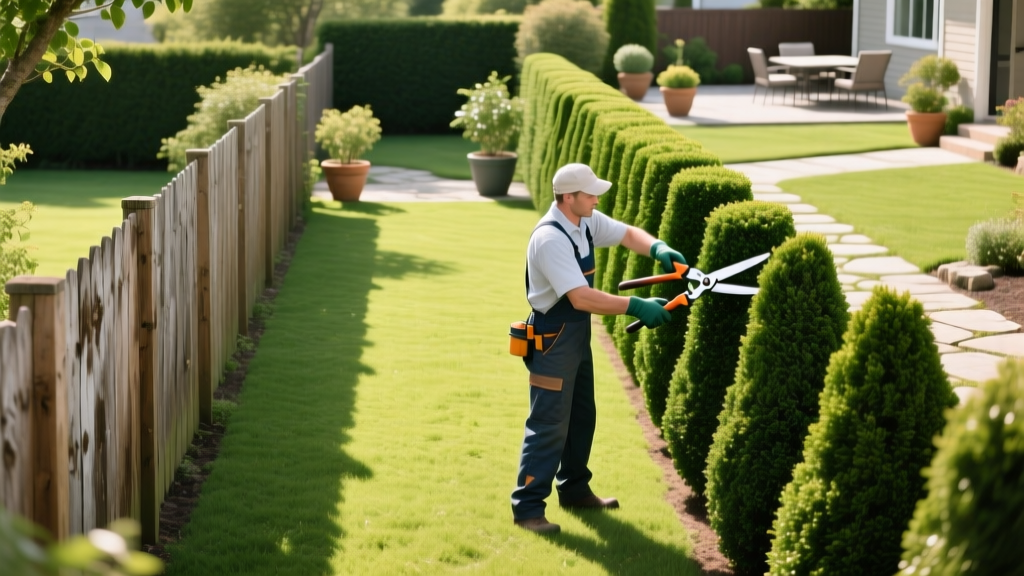
Fence vs. Most Hedge Plants: Step-by-Step Boundary Care
The Boundary Dilemma: Hardscape vs. Softscape
Property lines demand clear definition, but homeowners frequently struggle at the intersection of hardscape fencing and living softscape hedges. When evaluating a physical fence vs. most hedge plants like Thuja occidentalis (Arborvitae), Ligustrum vulgare (Privet), or Buxus sempervirens (Boxwood), the maintenance procedures diverge sharply. A wood fence requires structural inspections and stain applications, while a living hedge demands precise horticultural pruning and root management. When these two boundary types share a property line—or when you are deciding which to install—understanding the step-by-step maintenance procedures is critical to preventing structural damage and botanical decline.
Cost and Maintenance Matrix: Fence vs. Most Hedge Plants
Before executing any maintenance protocol, review the baseline metrics for standard 6-foot boundary options. Pricing reflects 2026 material and nursery averages.
| Feature | 6ft Cedar Privacy Fence | 6ft Arborvitae Hedge | 6ft Privet Hedge |
|---|---|---|---|
| Initial Cost (Per Linear Foot) | $45 - $65 | $18 - $28 | $12 - $20 |
| Annual Maintenance Time | 2 hours (staining/repair) | 6 hours (pruning/cleanup) | 10 hours (heavy pruning) |
| Expected Lifespan | 15 - 25 years | 30 - 50 years | 20 - 30 years |
| Root Intrusion Risk | N/A | Low | High |
Step-by-Step Hedge Maintenance Near Fence Lines
Maintaining a hedge adjacent to a fence requires strict spatial awareness. Allowing foliage to press against wood or vinyl accelerates rot, traps moisture, and voids fence warranties. Follow these procedural steps to maintain the boundary.
Step 1: Establish the 18-Inch Microclimate Zone
Measure exactly 18 inches from the physical fence line toward the hedge interior. This clearance zone serves three purposes: it allows airflow to dry the fence boards after rain, provides physical access for fence post repairs, and prevents hedge branches from scratching vinyl or aluminum panels during high winds. Apply a 2-inch layer of shredded hardwood mulch in this zone to suppress weeds, but keep the mulch 3 inches away from the base of the hedge trunks to prevent collar rot.
Step 2: Select the Correct Cutting Equipment
For boundaries exceeding 50 linear feet, manual shears are inefficient. The 2026 standard for residential boundary maintenance is a 56V lithium-ion hedge trimmer with a 24-inch blade. Models like the Stihl HSA 56 or EGO Power+ HT2400 provide the torque needed to slice through 3/4-inch semi-hardwood stems without stalling. For thick, neglected privet branches near the fence base, use bypass loppers (not anvil loppers, which crush the cambium layer) to make clean cuts flush with the main trunk.
Step 3: Execute the Tapered A-Cut Pruning Technique
According to the University of Wisconsin-Madison Extension, hedges must be pruned with a tapered profile—wider at the base and narrower at the top. This 'A-Cut' ensures sunlight reaches the lower branches, preventing the hollow, dead-center syndrome common in overgrown arborvitae.
- Top Cut: Trim the apical meristem (top growth) to your desired 6-foot height, using a taut masonry line as a visual guide.
- Side Angles: Tilt the trimmer blade 10 to 15 degrees inward as you move from the base to the top.
- Fence-Side Clearance: When trimming the side facing the fence, use a physical spacer (like a 2x4 block) pressed against the fence to ensure you do not accidentally nick the hardscape with the reciprocating blade.
Warning: The Moisture Trap
Never allow hedge clippings to accumulate in the gap between the hedge and the fence. Decomposing foliage traps moisture against cedar or pressure-treated pine, accelerating fungal decay and attracting carpenter ants. Use a backpack blower immediately after pruning to clear the 18-inch clearance zone.
Never allow hedge clippings to accumulate in the gap between the hedge and the fence. Decomposing foliage traps moisture against cedar or pressure-treated pine, accelerating fungal decay and attracting carpenter ants. Use a backpack blower immediately after pruning to clear the 18-inch clearance zone.
Managing the Intersection: Root Barriers and Post Protection
While above-ground maintenance is visible, below-ground conflicts cause the most expensive property line disputes. Fast-growing species like Privet and Leyland Cypress develop aggressive lateral root systems that can heave fence footings or crack concrete post collars.
Installing a DeepRoot UB 24-2 Barrier
If you are planting a new hedge near an existing fence, or retrofitting an aggressive species, install a high-density polyethylene (HDPE) root barrier. The DeepRoot UB 24-2 is the industry standard, featuring a 24-inch depth and integrated vertical ribs that deflect roots downward rather than allowing them to circle.
- Trenching: Dig a narrow trench exactly 12 inches from the fence line, 24 inches deep.
- Placement: Insert the HDPE panels, ensuring the top edge protrudes 1 inch above the soil grade to prevent roots from creeping over the top.
- Backfilling: Tamp the soil firmly to eliminate air pockets that roots could exploit.
Seasonal Maintenance Calendar for Boundary Hedges
Timing your maintenance procedures to the plant's biological clock prevents stress and disease entry. The University of Minnesota Extension emphasizes that pruning at the wrong time can expose fresh cuts to fatal pathogens.
- Early Spring (Pre-Bud Break): Inspect fence posts for winter heave. Apply a slow-release 10-8-6 granular fertilizer to the hedge drip line. This is the only safe window for heavy structural pruning of deciduous hedges like Privet.
- Early Summer (Post-First Flush): Execute the primary shaping prune on evergreens like Arborvitae and Boxwood. Cut only the soft, new growth (candles), never into the old, brown wood, which will not regenerate.
- Late Fall (Post-Dormancy): Clear all leaf litter from the fence-hedge intersection. Apply an anti-desiccant spray (like Wilt Pruf) to broadleaf evergreens to prevent winter burn caused by wind reflecting off the fence surface.
'The most common failure in boundary landscaping is treating the fence and the hedge as isolated elements. They are a single micro-ecosystem. The fence alters wind patterns and rain shadows, directly dictating how the hedge must be watered and pruned.'
— Certified Arborist Field Notes, 2025
Troubleshooting Common Edge Cases
Problem: The hedge has grown completely through a chain-link or wire fence.
Solution: Do not attempt to rip the branches out; you will tear the bark and invite canker disease. Use a pruning saw to cut the branches flush with the main trunk on your side of the property line. Allow the branches trapped in the wire to die and dry out over the winter, then snap them out safely in early spring.
Problem: Vinyl fence panels are warping due to hedge heat reflection.
Solution: Dark-colored vinyl fences can reach 140°F in direct summer sun. If a dense hedge traps this radiant heat, the PVC will warp. Increase the clearance zone from 18 inches to 30 inches to allow cross-breeze cooling.

