Tree Care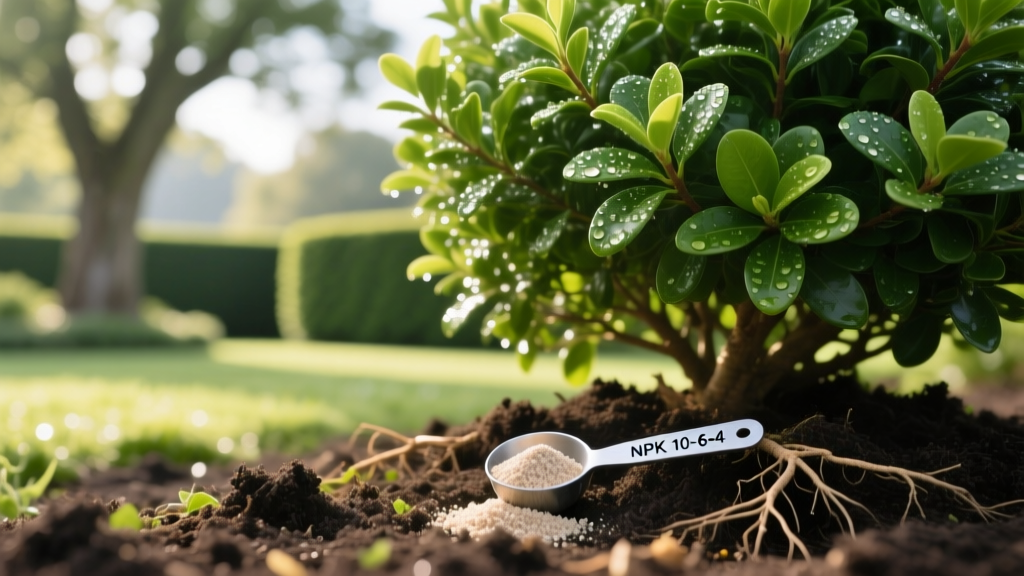
Fertilizing Shrubs: Exact NPK Ratios, Timing, and Soil Secrets
The Soil-First Mandate: pH and Cation Exchange Capacity
Blindly applying fertilizer to landscape shrubs is the most common cause of nutrient lockout and root burn in residential yards. Before purchasing any soil amendments, you must understand your soil's pH and Cation Exchange Capacity (CEC). CEC measures the soil's ability to hold onto positively charged ions (cations) like calcium, magnesium, and potassium. Heavy clay soils typically have a high CEC but poor drainage, while sandy soils have a low CEC and leach nutrients rapidly.
Soil pH dictates nutrient availability. If your soil pH is above 7.0 (alkaline), essential micronutrients like iron and manganese become chemically bound and inaccessible to shrub roots, regardless of how much fertilizer you apply. Conversely, a pH below 5.0 can cause aluminum toxicity. According to the UMass Soil and Plant Nutrient Testing Lab, a standard mail-in soil test costs between $15 and $25 and provides exact lime or sulfur amendment recommendations to correct pH imbalances before you introduce NPK fertilizers.
Shrub-Specific NPK Matrix and Product Selection
Different shrub species have evolved to thrive in distinct nutrient profiles. Applying a generic high-nitrogen lawn fertilizer to acid-loving shrubs will rapidly elevate soil pH and induce severe chlorosis. Use the matrix below to match your shrub species with the correct NPK (Nitrogen-Phosphorus-Potassium) ratio and specific commercial formulations.
| Shrub Category | Common Species | Ideal NPK Ratio | Recommended Product (2026 Pricing) |
|---|---|---|---|
| Acid-Loving Broadleaf | Azaleas, Rhododendrons, Camellias | 4-3-4 (with sulfur) | Espoma Holly-tone 18lb bag (~$34.99) |
| Flowering Deciduous | Hydrangeas, Lilacs, Forsythia | 10-10-10 or 12-4-8 | Jack's Classic Blossom Booster 10-30-20 (~$22.00) |
| Evergreen Conifers | Arborvitae, Junipers, Yews | 16-4-8 or 12-6-6 | Miracle-Gro Shake 'N Feed 4.5lb (~$18.00) |
| Dense Hedge Shrubs | Boxwood, Privet, Holly | 10-6-4 (with calcium) | Jobe's Organics Tree & Shrub Spikes (~$14.50) |
Calculating Application Rates: The 'Actual Nitrogen' Math
The most critical skill in fertilizing shrubs is calculating the application rate based on 'actual nitrogen' rather than total product weight. The University of Minnesota Extension recommends applying 1 to 2 pounds of actual nitrogen per 1,000 square feet of root zone area for established shrubs.
Step-by-Step Calculation Framework
- Identify the Nitrogen Percentage: Look at the first number in the NPK ratio. A 50 lb bag of 10-10-10 fertilizer contains 10% nitrogen.
- Calculate Actual Nitrogen per Bag: Multiply the bag weight by the percentage (50 lbs × 0.10 = 5 lbs of actual nitrogen).
- Determine Coverage Area: If your target rate is 1 lb of actual nitrogen per 1,000 sq ft, this 50 lb bag will cover exactly 5,000 sq ft.
- Measure the Drip Line: The root zone extends to the 'drip line' (the outer edge of the shrub canopy) and often 50% beyond it. Measure the radius from the trunk to the drip line, use the formula Area = πr², and apply the calculated product weight evenly across that zone.
⚠️ WARNING: Trunk Burn and Collar Rot
Never pile fertilizer directly against the main trunk or basal flare of the shrub. The feeder roots responsible for nutrient uptake are located in the top 6 to 12 inches of soil, extending outward from the trunk. Concentrating synthetic salts near the bark will cause chemical burns, girdling, and invite fungal pathogens like Phytophthora root rot. Keep all granular applications at least 6 inches away from the main stem.
Seasonal Timing and Climate Zone Variables
Timing your application to coincide with root flush periods maximizes uptake and minimizes groundwater leaching. Shrub roots actively absorb nutrients when soil temperatures are between 55°F and 75°F.
- Early Spring (Zones 4-6): Apply slow-release granular fertilizers just as bud break occurs (typically mid-April to early May). This supports the massive energy demand of leaf expansion and initial floral development.
- Early Spring (Zones 7-9): Shift applications to late February or early March. Warmer winters mean root activity begins earlier. Use a lower nitrogen formulation to prevent excessive vegetative growth at the expense of blooms.
- Late Fall (All Zones): After the first hard frost but before the ground freezes, apply a potassium-heavy fertilizer (e.g., 0-0-10 or 5-10-15). Potassium regulates stomatal opening and builds cellular winter-hardiness, protecting the shrub from freeze desiccation.
🛑 CRITICAL ERROR: Late-Summer Nitrogen Spikes
Applying high-nitrogen fertilizers after July 15th in northern climates forces late-season vegetative growth. This new growth will not have time to lignify (harden off) before winter, resulting in severe dieback and 'winter kill' when temperatures drop below freezing.
Broadcast vs. Deep Root Injection: Method Comparison
How you deliver the fertilizer is just as important as what you deliver. Choose your method based on soil compaction and shrub maturity.
| Application Method | Best Use Case | Pros | Cons |
|---|---|---|---|
| Surface Broadcast | Newly planted shrubs, loose loam soils, mulch beds | Low cost, easy DIY application, covers wide surface area | High risk of runoff on slopes, nutrients intercepted by turfgrass |
| Soil Drench / Spikes | Established hedges, heavy clay soils, competitive root zones | Bypasses turfgrass competition, localized nutrient delivery | Can cause root burn if placed too close to trunk, uneven distribution |
| Deep Root Injection | Mature specimens, highly compacted urban soils, severe deficiencies | Aerates soil while feeding, immediate uptake by deep feeder roots | Requires specialized hydraulic equipment, high cost ($10-$15 per caliper inch) |
Troubleshooting Nutrient Deficiencies and Toxicities
Visual symptoms on shrub foliage are the first indicators of a nutritional imbalance, but misdiagnosis is common. Use this diagnostic framework before adding more fertilizer.
Iron Chlorosis vs. Nitrogen Deficiency
Both conditions cause yellowing leaves, but the pattern reveals the culprit. Nitrogen is a mobile nutrient; when deficient, the plant moves it from older leaves to support new growth. Therefore, nitrogen deficiency presents as uniform yellowing of the older, lower leaves first. Iron is immobile. Iron chlorosis presents as interveinal yellowing (green veins with yellow tissue between them) on the newest, uppermost leaves. If you see interveinal chlorosis, adding more nitrogen will not help; you must apply chelated iron (Fe-EDDHA) and lower the soil pH.
Salt Toxicity and Leaf Scorch
If the margins and tips of shrub leaves turn brown and crispy shortly after fertilizing, you are likely experiencing salt toxicity from over-application. Synthetic fertilizers are essentially salts. When applied too heavily, or during drought conditions without adequate irrigation, they draw moisture out of the roots via osmosis. The immediate fix is to leach the soil by running a slow trickle of water over the root zone for 2 to 3 hours to push the excess salts below the active root profile.