
Tree Care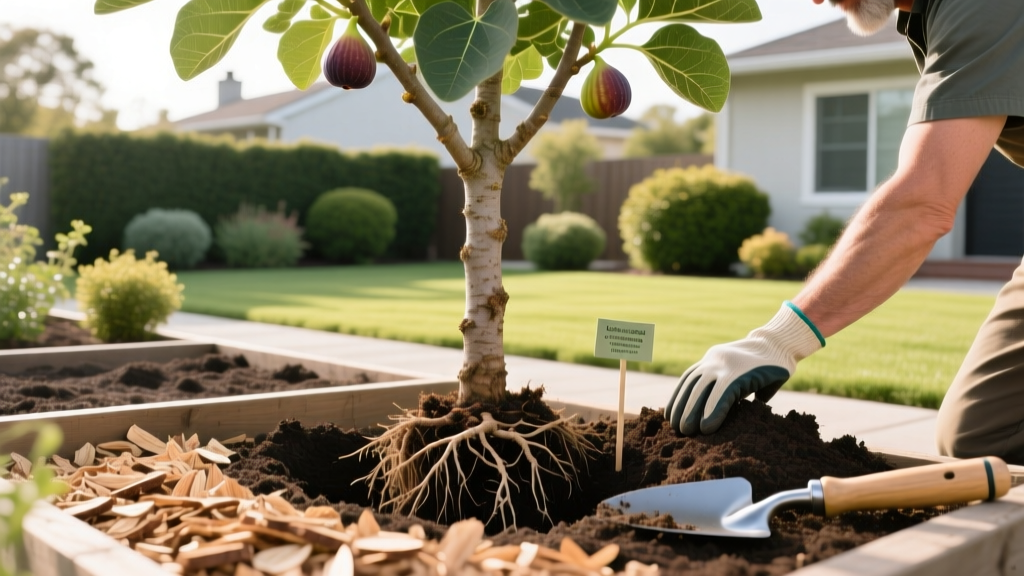
Fig Tree Plant Care: First-Year Establishment and Planting Protocol
The Critical First 12 Months: Why Fig Tree Plant Care Dictates Future Yields
Establishing a Ficus carica (common fig) requires precise environmental manipulation during its first year in the ground. Unlike mature orchard trees that can tolerate benign neglect, young figs are highly susceptible to root desiccation, transplant shock, and winter dieback. Proper fig tree plant care during this initial 12-month window focuses entirely on vegetative growth and root expansion, not fruit production. In fact, removing any developing figlets during the first year redirects the tree's energy into establishing a robust taproot and lateral feeder network, which is the foundational requirement for decades of heavy cropping.
Whether you are planting a 3-gallon container-grown 'Celeste' or a bare-root 'Chicago Hardy' whip, the establishment protocols remain rigid. This guide details the exact soil metrics, planting depths, and hydration schedules required to transition your fig from a nursery environment to a self-sustaining landscape anchor.
Site Selection and Soil Preparation Metrics
Figs demand full sun (minimum 8 hours of direct, unfiltered light) and exceptionally well-draining soil. While mature figs are famously drought-tolerant, young root systems will quickly succumb to Phytophthora root rot in waterlogged conditions.
Optimal Soil Parameters for Ficus carica:
- pH Range: 6.0 to 6.5 (Slightly acidic to neutral)
- Drainage Rate: 1 to 2 inches per hour
- Organic Matter: 3% to 5% by volume
- Sun Exposure: 8+ hours direct sunlight, preferably with a southern or western exposure to maximize late-day heat absorption.
Executing the Percolation Test
Before amending the soil, verify your drainage rate. Dig a test hole 12 inches deep and 12 inches wide. Fill it completely with water and allow it to drain. Refill it a second time and measure the water level drop after one hour. If the water drops less than 1 inch in an hour, your soil is heavily compacted or clay-dominant. According to Clemson University Extension, planting figs in unamended heavy clay guarantees establishment failure. To correct this, excavate a planting zone three times the width of the root ball and blend the native soil with 30% expanded shale or composted pine bark fines by volume to create macro-pores for oxygen exchange.
Step-by-Step Planting Protocol
The physical act of planting a fig tree differs slightly from standard shade trees, particularly regarding depth. In USDA Hardiness Zones 6 and 7, where winter dieback is a known risk, planting the tree slightly deeper encourages the trunk to develop its own root system, allowing the tree to sucker back from the ground if the top growth is killed by a hard freeze.
- Excavate the Hole: Dig a hole twice as wide as the nursery container, but no deeper than the root ball itself. The width encourages lateral root spread, while restricting depth prevents the tree from sinking over time.
- Tease and Prune the Roots: Remove the tree from its pot. If the roots are circling the perimeter, use a sterilized hori-hori knife to make four vertical, 1-inch-deep slices down the sides of the root ball, and slice an 'X' across the bottom. This severs girdling roots and forces new outward growth.
- Set the Depth: For Zones 8-10, place the root ball so the top of the soil line is perfectly flush with the surrounding grade. For Zones 6-7, bury the trunk 2 to 3 inches deeper than it sat in the nursery pot to promote adventitious rooting and protect the graft union (if grafted).
- Backfill and Water-In: Backfill with the native/amended soil mixture. Do not add synthetic fertilizers to the backfill, as high nitrogen salts will burn young feeder roots. Halfway through backfilling, flood the hole with 5 gallons of water to eliminate air pockets, then finish filling.
First-Year Watering and Mulching Matrix
Hydration management is the most common point of failure in fig tree plant care. Young figs lack the extensive taproots required to access deep soil moisture. The goal is to keep the top 12 inches of soil consistently moist, but never saturated. Use a 24-inch steel soil moisture probe to verify moisture levels before watering.
| Establishment Phase | Watering Volume & Frequency | Mulch Application | Growth Expectations |
|---|---|---|---|
| Months 1-2 (Initial Rooting) | 5 gallons every 3 days (adjust for rainfall) | 2 inches coarse arborist chips | Minimal top growth; energy focused on root repair |
| Months 3-4 (Vegetative Push) | 10 gallons once per week (deep soak) | Refresh to 3 inches total depth | Rapid shoot elongation; 1-2 feet of new growth |
| Months 5-6 (Hardening Off) | 10-15 gallons every 10-14 days | Maintain 3-4 inches; keep 6 inches from trunk | Wood begins to lignify (harden) for winter prep |
| Months 7-12 (Dormancy Prep) | Water only during severe drought spells | Add 2 inches of straw or leaves over root zone | Leaf drop; tree enters winter dormancy |
Warning: The Volcano Mulching Trap
Never pile mulch against the trunk of your fig tree. Figs have thin, sensitive bark that is highly prone to fungal collar rot if kept constantly damp. Maintain a strict 6-inch 'donut' of bare soil around the base of the trunk where no mulch or soil touches the bark.
Never pile mulch against the trunk of your fig tree. Figs have thin, sensitive bark that is highly prone to fungal collar rot if kept constantly damp. Maintain a strict 6-inch 'donut' of bare soil around the base of the trunk where no mulch or soil touches the bark.
Overwintering Young Fig Trees in Zones 6 and 7
While varieties like 'Chicago Hardy' and 'Celeste' are marketed as cold-hardy, this hardiness applies to mature, established wood. First-year fig wood is soft, pithy, and highly vulnerable to desiccation from freezing winter winds. As noted by Penn State Extension, young figs in marginal climates require physical protection during their first winter.
The Cage-and-Stuff Method:
- Erect a cylinder of hardware cloth or chicken wire around the tree, leaving 12 inches of clearance on all sides of the branches.
- Stuff the interior of the cage loosely with dry straw, shredded leaves, or pine needles. Do not pack it tightly, as trapped moisture will cause the wood to rot.
- Wrap the exterior of the cage with a breathable burlap sack to block wind desiccation while allowing the tree to respire. Never use plastic sheeting, which will create a greenhouse effect on sunny winter days, forcing the tree to break dormancy prematurely, only to be killed by the next freeze.
- Remove all wrapping and stuffing in early spring, exactly one week after the last expected hard frost date for your specific microclimate.
Troubleshooting Establishment Failures
Even with meticulous execution, environmental variables can disrupt establishment. Use this diagnostic framework to identify and correct first-year anomalies.
Symptom: Rapid Yellowing of Lower Leaves and Leaf Drop
Cause: Overwatering or poorly draining soil leading to hypoxia (oxygen deprivation) in the root zone. Fig roots require high oxygen levels.
Fix: Halt all supplemental watering immediately. Use a broadfork to gently aerate the soil 12 inches away from the trunk to introduce oxygen. If the soil remains soggy for more than 48 hours, you must dig up the tree, elevate the planting site by creating a 12-inch berm of well-draining soil, and replant.
Symptom: Stunted Growth and Brown, Crispy Leaf Margins
Cause: Wind desiccation or fertilizer burn. If you applied a high-nitrogen synthetic fertilizer at planting, the salts have likely damaged the delicate root hairs, preventing water uptake.
Fix: Flush the root zone with 20 gallons of water over a 2-hour period to leach excess salts below the root profile. Erect a temporary burlap windbreak on the prevailing wind side of the tree to reduce transpiration stress while the roots recover. Do not apply any fertilizer for the remainder of the year.
Symptom: Orange-Brown Pustules on the Underside of Leaves
Cause: Fig Rust (Cerotelium fici), a fungal pathogen exacerbated by high humidity and overhead watering. According to NC State Extension, while rarely fatal to mature trees, it can severely defoliate and stunt a first-year tree.
Fix: Switch strictly to drip irrigation or base-watering. Rake and destroy all fallen leaves to remove fungal spores. Apply a copper-based fungicide (such as Bonide Copper Fungicide, mixed at 2 tablespoons per gallon of water) as a foliar spray every 10 days until the pustules cease spreading.
Mastering fig tree plant care in year one is an exercise in restraint and observation. By prioritizing root architecture over immediate fruit production, managing soil moisture with precision, and protecting vulnerable first-year wood from winter extremes, you establish a resilient framework that will yield heavy, honey-sweet crops for decades to come.

