
Tree Care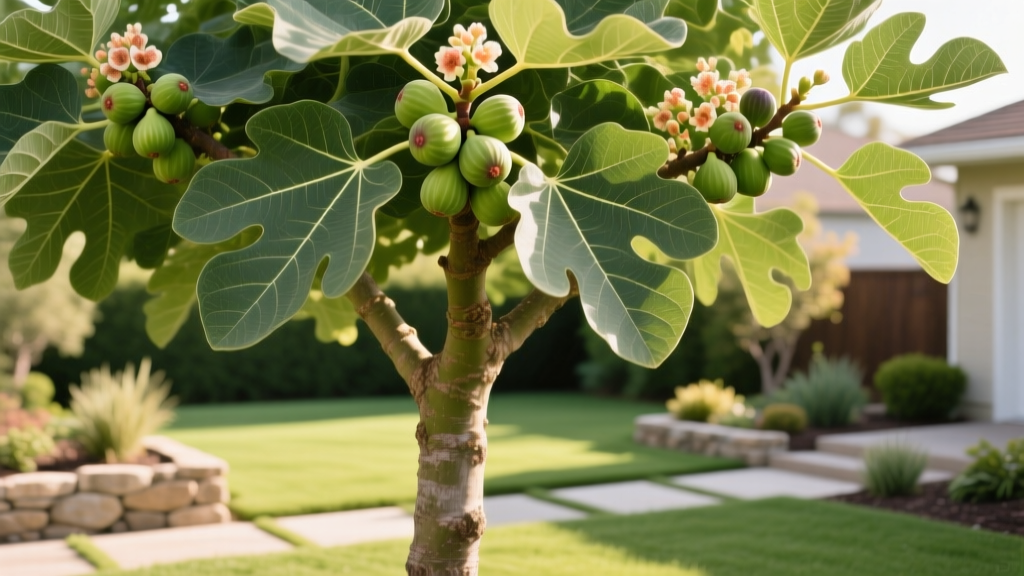
What Does a Fig Tree Look Like? Visual ID & Care Guide
The Botanical Profile and Growth Habit
When homeowners ask, "what does a fig tree look like," they are typically referring to the common fig (Ficus carica). Native to the Mediterranean and western Asia, this deciduous broadleaf tree is prized not just for its sweet harvest, but for its striking, tropical-looking architectural form. Unlike many fruit trees that blend into the background until harvest season, the fig tree commands visual attention year-round through its massive, textured foliage and smooth, muscular trunks.
In optimal conditions (USDA Hardiness Zones 8-11), a mature common fig tree reaches 15 to 30 feet in height with an equally wide, sprawling canopy. They naturally grow as multi-trunked, low-branching trees or large shrubs. The root system is notoriously aggressive and shallow, often spreading well beyond the drip line. Because of this, landscape architects recommend planting fig trees at least 10 to 15 feet away from concrete foundations, patios, and underground plumbing to prevent structural lifting.
Leaf Identification: The Most Distinctive Feature
The most immediate answer to what a fig tree looks like lies in its foliage. Fig leaves are massive, typically measuring 4 to 10 inches across, and are distinctly palmate (hand-shaped). They feature 3 to 5 deep, irregular lobes, though some vigorous shoots may produce leaves with up to 7 lobes. The margins of the leaves are usually smooth or slightly serrated near the tips.
Texture is a critical identification marker. The upper surface of a fig leaf is scabrous—meaning it feels rough, sandpapery, and slightly bristly to the touch. The underside is paler, heavily veined, and covered in fine, soft hairs. When a leaf is plucked or torn, the stem immediately exudes a thick, milky white latex sap.
⚠️ Safety Warning: Phytophotodermatitis
All parts of the fig tree exude a milky white latex sap when cut or bruised. This sap contains furocoumarins (psoralen) and the proteolytic enzyme ficin. If this sap contacts your skin and is then exposed to UV sunlight, it causes severe blistering and hyperpigmentation known as phytophotodermatitis. Always wear thick nitrile gloves (cotton will absorb the sap) and long sleeves when pruning or handling broken branches.
All parts of the fig tree exude a milky white latex sap when cut or bruised. This sap contains furocoumarins (psoralen) and the proteolytic enzyme ficin. If this sap contacts your skin and is then exposed to UV sunlight, it causes severe blistering and hyperpigmentation known as phytophotodermatitis. Always wear thick nitrile gloves (cotton will absorb the sap) and long sleeves when pruning or handling broken branches.
Bark and Trunk Characteristics
The trunk and branches of Ficus carica offer a striking contrast to the rough foliage. Young fig trees feature remarkably smooth, light gray to silvery-gray bark. As the tree matures, the bark may develop shallow, longitudinal fissures and a slightly darker, ash-gray hue, but it generally retains a smooth, muscular appearance compared to the deeply furrowed bark of oaks or hickories.
The branches are thick, somewhat brittle, and often grow in erratic, twisting patterns, giving older, unpruned fig trees a sculptural, almost ancient aesthetic. During winter dormancy, the bare branches reveal prominent, pointed terminal buds and distinct, raised circular leaf scars where the massive summer leaves were attached.
The Hidden Flower and Unique Fruit Structure
If you are looking for flowers on a fig tree, you will not find them in the traditional sense. According to the California Rare Fruit Growers, the fig is botanically a syconium—an enclosed, inverted inflorescence. The tiny, unisexual flowers bloom entirely on the inside walls of the hollow pod.
Botanical Fact: Because the flowers are hidden inside the pod, wild figs rely on specialized fig wasps that enter through a tiny pore (the ostiole) at the base of the fruit for pollination. However, most home garden cultivars (like 'Brown Turkey' and 'Celeste') are parthenocarpic, meaning they develop sweet, seedless fruit without any pollination.
Visually, the fruit appears as small, teardrop-shaped or spherical green nodules in early summer. As they ripen in late summer or early fall, they swell and change color depending on the cultivar, drooping heavily on their short, thick stems.
Visual Comparison of Common Fig Cultivars
While the general structure of Ficus carica remains consistent, visual traits vary slightly among popular cultivars. Use this matrix to identify specific varieties in your yard:
| Cultivar | Leaf Lobe Depth | Fruit Skin Color | Fruit Pulp Color | Mature Spread |
|---|---|---|---|---|
| Black Mission | Deep (3-5 lobes) | Dark Purple to Black | Strawberry Red | 15-20 ft |
| Brown Turkey | Moderate (3-5 lobes) | Brownish-Purple | Amber to Pink | 15-25 ft |
| Celeste | Shallow to Moderate | Violet to Bronze | Light Rose | 10-15 ft |
| Kadota (White) | Deeply Incised | Yellow-Green | Amber | 15-20 ft |
| LSU Purple | Moderate (mostly 3) | Glossy Dark Purple | Strawberry Red | 10-15 ft |
Fig Tree vs. Common Lookalikes
Homeowners sometimes confuse young fig trees with other broadleaf species. Here is how to differentiate them:
- White Mulberry (Morus alba): Mulberry leaves can sometimes mimic the lobed shape of a fig leaf, but they are generally glossier, have distinctly serrated margins, and lack the rough, sandpapery upper texture. Mulberry fruit grows as elongated drupes (resembling blackberries), not teardrop syconia.
- Papaya (Carica papaya): In tropical zones (USDA 10-11), papaya leaves look remarkably similar to fig leaves—massive and deeply palmate. However, papaya leaves cluster exclusively at the very top of a single, unbranched, hollow trunk, whereas figs have woody, branching trunks.
- Breadfruit (Artocarpus altilis): Also in the Moraceae family, breadfruit has massive, deeply lobed leaves and milky sap. However, breadfruit leaves are much larger (up to 3 feet long), and the fruit is a massive, spiky, compound sphere weighing up to 10 pounds, unlike the tiny, soft fig.
Seasonal Visual Transitions
A fig tree's appearance shifts dramatically through the seasons. In early spring, large, fuzzy, cone-shaped bud scales break open to reveal bright, pale green, tightly furled leaves. By mid-summer, the canopy is a dense, dark green umbrella providing heavy shade. In autumn, unlike trees that offer brilliant red or orange displays, fig leaves typically turn a muted, dusty yellow before dropping rapidly after the first frost. Winter reveals the stark, gray, twisting branch architecture, making it the ideal time for structural pruning to manage the tree's aggressive vigor.
Frequently Asked Identification Questions
Do fig trees lose their leaves in winter?
Yes, Ficus carica is fully deciduous. It will drop all its leaves in late autumn following the first hard freeze. If you are looking at a tropical Ficus species (like the Weeping Fig, Ficus benjamina), those are evergreen, but they do not produce edible figs and are generally grown as houseplants or tropical landscape trees in USDA Zones 10+.
Why does my fig tree have no fruit?
If the tree is visually mature (over 3-4 years old) and receives full sun (minimum 8 hours daily), a lack of fruit is usually due to improper pruning. Fig trees bear fruit on new wood (current season's growth) and sometimes on the previous year's wood. Heavy winter pruning can stimulate excessive vegetative leaf growth at the expense of fruit production. For detailed pruning schedules, consult the Clemson University Home & Garden Information Center.
Are fig tree roots destructive?
Visually, you won't see the roots, but their impact is obvious. Fig roots are shallow, fast-growing, and highly opportunistic. They will infiltrate cracked water lines and lift sidewalks. Always plant them in open yard spaces or use heavy-duty underground root barriers (HDPE plastic, minimum 24 inches deep) if planting near hardscapes.
Understanding the visual markers of Ficus carica—from the sandpapery, lobed leaves to the smooth gray bark and hidden-flower fruit—ensures you can confidently identify, site, and safely maintain this ancient and rewarding fruit tree in your landscape. For further cultivar selection and regional planting advice, the Royal Horticultural Society (RHS) offers excellent climate-specific growing profiles.

