
Tree Care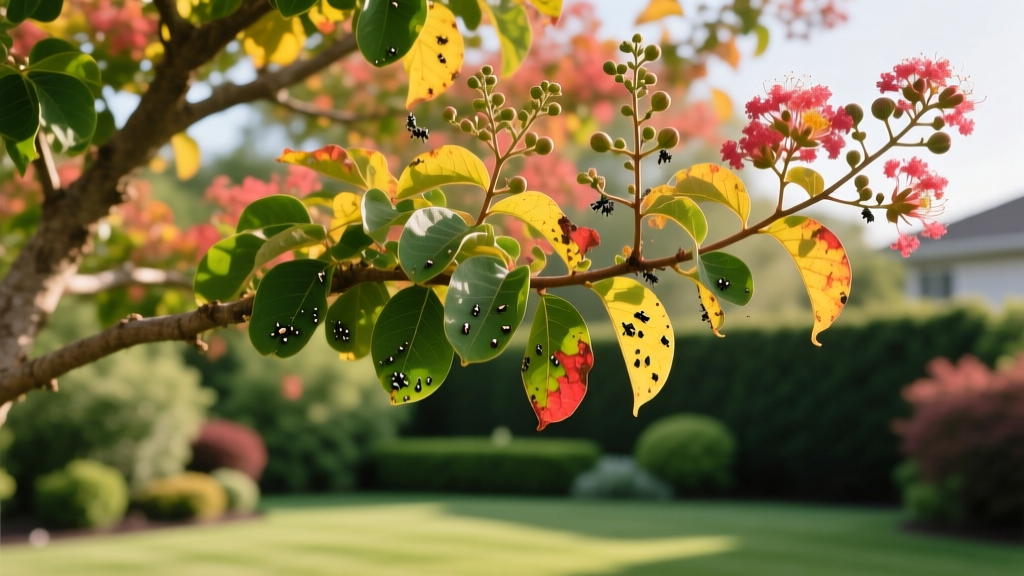
How to Diagnose and Treat Crepe Myrtle Foliage Issues
Why Foliage Health Dictates Bloom Performance
Crepe myrtles (Lagerstroemia indica) are engineered to produce massive summer flower panicles, but this reproductive effort requires immense photosynthetic energy. When crepe myrtle foliage is compromised by fungal pathogens, sap-sucking insects, or nutrient lockouts, the tree aborts flower buds to survive. According to the Clemson University Home & Garden Information Center, foliar diseases can reduce a tree's photosynthetic capacity by up to 40% in a single season, leading to premature defoliation by late August. This guide provides a clinical, step-by-step framework to identify, treat, and prevent the most common foliage threats using specific, commercially available formulations.
The 4 Primary Crepe Myrtle Foliage Threats
Before purchasing any treatment, you must accurately identify the pathogen or pest. Misdiagnosing sooty mold as a fungal leaf spot will result in wasted fungicide and unchecked aphid populations. Use this matrix to cross-reference your visual symptoms.
| Threat | Visual Symptoms on Foliage | Primary Cause / Pathogen | First-Line Treatment |
|---|---|---|---|
| Powdery Mildew | White, talcum-powder coating on new leaves; leaf curling. | Erysiphe lagerstroemiae (Fungus) | Myclobutanil or Copper Octanoate |
| Cercospora Leaf Spot | Dark brown, angular spots with yellow halos; premature drop. | Cercospora lythracearum (Fungus) | Chlorothalonil or Thiophanate-methyl |
| Sooty Mold | Black, powdery crust on leaf surfaces; wipes off easily. | Capnodium spp. (Feeds on aphid honeydew) | Imidacloprid soil drench (targets aphids) |
| Iron Chlorosis | Interveinal yellowing on new growth; veins remain green. | High soil pH (>7.0) locking out iron | Fe-EDDHA chelated iron application |
Step-by-Step Diagnostic Framework
When inspecting crepe myrtle foliage, follow this physical examination protocol to confirm your diagnosis before mixing any chemicals.
- The Rub Test: If the foliage is covered in a black substance, rub it with your thumb. If it flakes off and leaves green tissue underneath, it is sooty mold (an insect byproduct). If the black/brown spotting is embedded in the leaf tissue and cannot be rubbed off, it is Cercospora leaf spot.
- The Underside Inspection: Flip a affected leaf over. Powdery mildew typically colonizes the underside of young leaves first. Look for tiny, pale-green insects (aphids) clustering near the petiole (leaf stem).
- The Canopy Airflow Check: Fungal spores require 100% relative humidity on the leaf surface for 6-8 hours to germinate. If the interior canopy is densely packed with crossing branches, you have created a microclimate that guarantees recurring fungal infections.
⚠️ CRITICAL WARNING: The 'Crepe Murder' Foliage Penalty
Topping or pollarding crepe myrtles (commonly called 'crepe murder') forces the tree to push out dense, epicormic water sprouts. This hyper-dense crepe myrtle foliage lacks structural integrity and severely restricts airflow, increasing powdery mildew susceptibility by over 60%. Always prune using the natural thinning method, removing only crossing branches and interior suckers to maintain an open vase shape.
Targeted Treatment Protocols and Dosages
Once diagnosed, apply the following treatments. Pricing reflects average 2026 retail costs for residential quantities.
1. Eradicating Powdery Mildew and Leaf Spot
For active fungal infections, contact fungicides are insufficient. You need a systemic or translaminar product. Spectracide Immunox Multi-Purpose Fungicide (active ingredient: Myclobutanil 1.55%) is highly effective. Mix 1.5 fluid ounces per gallon of water. Apply using a pump sprayer, ensuring complete coverage of both the upper and lower leaf surfaces. Repeat applications at 7-to-10-day intervals until the new foliage emerges completely clean. Expect to spend roughly $14 for a 16 oz concentrate, which treats up to 1,000 square feet of canopy.
2. Eliminating Aphids and Sooty Mold
Spraying sooty mold with fungicide is useless; the mold is feeding on aphid excrement. You must break the life cycle. For large, established trees where foliar spraying is impractical, use a systemic soil drench like Bayer Advanced 12 Month Tree & Shrub Protect & Feed (active ingredient: Imidacloprid 0.74%).
Dosing Metric: Mix 1 ounce of concentrate per inch of trunk circumference (measured at chest height). Pour the mixture in a circle around the drip line of the tree. The roots will translocate the chemical into the crepe myrtle foliage, killing aphids upon ingestion. The sooty mold will weather away naturally within 3-4 weeks once the honeydew supply stops. Cost: ~$24 for a 32 oz bottle.
💡 Pro-Tip: Surfactant Adhesion
Crepe myrtle leaves have a slightly waxy cuticle. When applying liquid foliar fungicides, add 1 teaspoon of non-ionic surfactant (like Southern Ag Surfactant) per gallon of spray. This breaks the surface tension, forcing the chemical to spread evenly across the foliage rather than beading up and rolling off.
Nutrient Deficiencies Masking as Disease
According to the University of Florida IFAS Extension, nutrient lockout is frequently misdiagnosed as a viral or fungal issue. Crepe myrtles thrive in slightly acidic soil (pH 5.0 to 6.5). If your soil pH creeps above 7.0, iron and manganese become chemically bound and unavailable to the roots.
- Nitrogen Deficiency: Uniform pale green or yellowing of the oldest (lowest) foliage. Fix with a balanced 10-10-10 granular fertilizer applied at 1 lb per 100 sq ft of root zone in early spring.
- Iron Chlorosis: Bright yellowing of the newest foliage at the branch tips, with dark green veins remaining. Standard iron sulfate will not work in high-pH soils. You must use Fe-EDDHA chelated iron (e.g., Sequestrene 138), which remains stable in alkaline soils up to pH 9.0. Apply 1 tablespoon per gallon of water as a soil drench. Cost: ~$35 for a 5 oz water-soluble packet.
Annual Preventative Maintenance Calendar
Rather than reacting to damaged crepe myrtle foliage, use this proactive schedule to protect the canopy before pathogens establish.
| Timing | Action | Product / Method |
|---|---|---|
| Late February (Dormant) | Smother overwintering insect eggs and fungal spores on bark. | Horticultural Oil (2% solution) |
| Mid-March (Bud Break) | Apply systemic insecticide to prevent spring aphid colonization. | Imidacloprid Soil Drench |
| Early May (Pre-Bloom) | Protect new, vulnerable foliage from powdery mildew spores. | Copper Octanoate or Myclobutanil |
| June - August | Maintain soil moisture to prevent drought-stress defoliation. | Deep root watering (1 inch per week) |
Frequently Asked Questions
Why is my crepe myrtle dropping green leaves in summer?
Summer dropping of perfectly green crepe myrtle foliage is almost always a symptom of environmental stress, specifically drought or waterlogged soil. Crepe myrtles drop leaves to reduce transpiration surface area when roots cannot uptake enough water. Check soil moisture 4 inches deep near the drip line; if bone dry, apply 10 gallons of water slowly via a soaker hose. If the soil is soggy, you have a drainage issue causing root hypoxia.
Can I use neem oil on crepe myrtle foliage?
Yes, but with strict temperature limitations. Cold-pressed neem oil (70% clarified hydrophobic extract) is effective against mild aphid populations and early-stage powdery mildew. However, you must apply it when ambient temperatures are below 85°F. Spraying neem oil on crepe myrtle foliage during peak summer heat will cause severe phytotoxicity, essentially frying the leaf cuticle and causing mass defoliation.
How do I clean existing sooty mold off the leaves?
Once the aphids are eradicated via a systemic drench, the existing sooty mold will slowly flake off via wind and rain. To accelerate this process, spray the canopy with a mild solution of insecticidal soap (2.5 tablespoons per gallon of water) using a hose-end sprayer. The soap acts as a surfactant, loosening the mold's grip on the leaf cuticle so the next heavy rain can wash it away. For more on regional pruning and care standards, consult the Texas A&M AgriLife Extension guidelines on structural maintenance.

