
Tree Care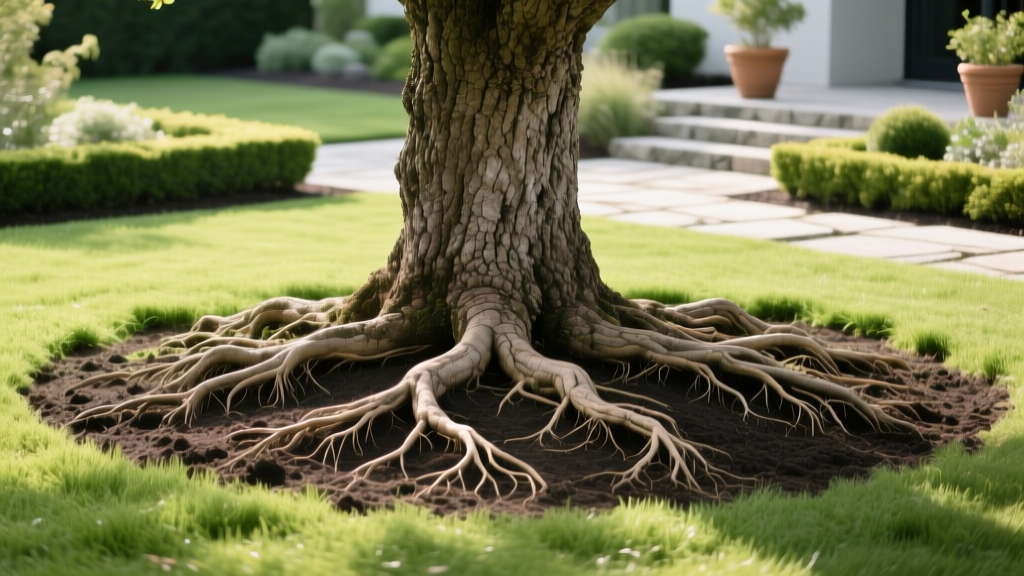
How to Handle Tree Above Ground Roots Safely in Your Yard
The Surface Root Dilemma: Why It Happens
Discovering tree above ground roots in your yard is a common landscaping frustration. They trip pedestrians, shatter lawnmower blades, and create barren patches of dirt where grass refuses to grow. However, before you grab a shovel or an axe, you need to understand why this happens. Surface roots are rarely a sign of a dying tree; they are a survival mechanism.
According to the University of Minnesota Extension, the vast majority of a tree's feeder roots exist in the top 12 to 18 inches of soil to access oxygen and moisture. When soil becomes heavily compacted from foot traffic, construction, or heavy clay composition, oxygen levels drop. The tree responds by pushing roots upward to breathe. Additionally, certain species are genetically predisposed to shallow root systems regardless of soil quality.
⚠️ CRITICAL WARNING: The Root-Cutting Trap
Never chop, rototill, or sever large surface roots to level your lawn. Cutting roots wider than 2 inches compromises the tree's structural stability, making it a falling hazard during high winds. It also opens direct pathways for wood-decay fungi, which can hollow out the trunk from the inside over 3 to 5 years.
Species Prone to Surface Rooting
Not all trees behave the same way. If you are planning a new landscape or trying to understand your existing yard, consult this rooting matrix to set realistic expectations for maintenance.
| Tree Species | Root Aggressiveness | Mature Canopy Spread | Best Management Strategy |
|---|---|---|---|
| Silver Maple | Extremely High | 35 - 50 feet | Wide mulch beds; avoid lawn areas |
| Norway Maple | High | 30 - 40 feet | Topdressing; shade-tolerant groundcover |
| Weeping Willow | Extremely High | 35 - 50 feet | Keep away from hardscapes; mulch heavily |
| Pin Oak | Moderate | 25 - 40 feet | Aerate surrounding soil; light mulching |
| White Oak | Low (Deep Taproot) | 50 - 80 feet | Rarely surfaces; address soil compaction if it does |
3 Safe Solutions for Exposed Roots
When dealing with tree above ground roots, your goal is to protect the root tissue, manage the trip hazard, and maintain soil gas exchange. Here are the three professional-grade solutions, ranked from most recommended to last resort.
Fix 1: The Mulch Ring Method (Best for 90% of Cases)
Mulching is the gold standard recommended by the Morton Arboretum for surface roots. It eliminates the need to mow over the roots, retains moisture, and slowly improves soil structure as it decomposes.
- Material: Use coarse, shredded hardwood bark or pine bark nuggets. Avoid fine mulches or rubber mulch, which block oxygen.
- Depth: Apply exactly 2 to 3 inches of mulch. Any deeper, and you will suffocate the feeder roots.
- The Donut Rule: Keep the mulch at least 3 to 4 inches away from the actual trunk flare to prevent trunk rot and rodent damage. The mulch should cover the roots but never touch the bark of the main trunk.
Fix 2: Topdressing with a Soil Mix (For Minor Exposure)
If the roots are only barely breaking the surface (less than 1 inch exposed) and you desperately want to grow grass or groundcover, you can topdress the area. This is a temporary fix and must be done carefully.
- Mix a lightweight blend: 50% screened compost and 50% sandy loam topsoil.
- Apply no more than 1 to 1.5 inches of this mix over the roots.
- Overseed with a shade-tolerant grass blend like Fine Fescue, or plant a low-traffic groundcover like Creeping Jenny or Pachysandra.
- Warning: Never add more than 2 inches of soil at one time. Adding 3 or more inches will cut off oxygen to the root zone, causing a slow, irreversible decline over 2 to 4 years.
Fix 3: Targeted Root Pruning (The Last Resort)
If a single root is heaving a sidewalk or posing a severe trip hazard near a pathway, you may need to prune it. This must be done using the 5x Trunk Diameter Rule.
- Measure the trunk: Measure the diameter of the trunk at 4.5 feet above the ground. If the trunk is 10 inches wide, your no-cut zone is 50 inches (10 x 5) from the trunk in all directions.
- Outside the zone: You may safely cut a single root outside this 50-inch radius, provided the root is less than 2 inches thick.
- The Cut: Use a razor-sharp bypass pruning saw, such as the Silky Zubat 270mm (approx. $65 in 2026), to make a clean, flush cut. Jagged cuts from dull axes or chainsaws tear the cambium layer and invite disease.
- No Sealants: Do not paint the cut with pruning sealer. Modern arboriculture relies on the tree's natural CODIT (Compartmentalization of Decay in Trees) process to wall off the wound.
What NOT to Do: Common Beginner Mistakes
Many well-intentioned homeowners accidentally kill their trees while trying to fix surface roots. Avoid these critical errors:
- Building Raised Beds: Constructing a wooden or stone raised bed around the trunk and filling it with soil will suffocate the root flare and cause fatal girdling roots.
- Paving Over Roots: Pouring concrete or laying impermeable pavers directly over the root zone blocks water and gas exchange, leading to canopy dieback.
- Rototilling: Using a rototiller to prep the soil around an existing tree for a new garden bed will sever thousands of critical feeder roots and shock the tree.
- The 'Volcano' Mulch: Piling mulch high against the trunk in a volcano shape promotes adventitious root growth, which eventually girdle and strangle the main trunk.
DIY vs. Hiring a Certified Arborist: Cost & Decision Matrix
Knowing when to handle the project yourself and when to call a professional saves both money and the life of the tree. Use this framework to decide.
| Scenario | DIY or Pro? | Estimated Cost (2026) | Required Tools/Skills |
|---|---|---|---|
| Roots exposed in open lawn area | DIY | $30 - $80 (Mulch) | Wheelbarrow, rake, basic gardening gloves |
| Roots heaving a concrete sidewalk | Pro | $400 - $1,200 | Arborist for root pruning; mason for sidewalk ramping |
| Multiple large roots (3+ inches) exposed | Pro | $150 - $300 (Consultation) | ISA Certified Arborist for soil aeration (AirSpade) assessment |
| Tree leaning with exposed roots on one side | Pro (Urgent) | $200 - $500 (Risk Assessment) | Immediate structural risk evaluation; potential cabling or removal |
Frequently Asked Questions
Will cutting surface roots kill my tree?
Cutting one small root (under 2 inches) far from the trunk usually will not kill a mature, healthy tree. However, cutting multiple roots, or cutting large structural roots near the trunk, compromises the tree's ability to absorb water and anchor itself, often leading to death or a hazardous windthrow event within a few years.
Can I cover exposed roots with gravel or river rock?
Yes, a shallow layer (1 to 2 inches) of washed river rock or pea gravel can be used over exposed roots to prevent tripping while still allowing water and air to penetrate. However, avoid using landscape fabric underneath the rock, as it eventually clogs with silt and blocks gas exchange. Use a thick layer of cardboard instead, which will decompose over time.
Why is grass dying over my tree roots?
Grass dies over surface roots due to intense competition for water and nutrients, combined with deep shade from the tree canopy. Furthermore, as roots expand, they physically push the soil upward, creating a dry, compacted micro-environment where turfgrass roots cannot establish. Transitioning to a mulch bed or shade-tolerant groundcover is the most ecologically sound solution.
For more advanced diagnostics on tree health and soil structure, always consult resources provided by the International Society of Arboriculture or hire a locally certified arborist to evaluate your specific yard conditions.

