Tree Care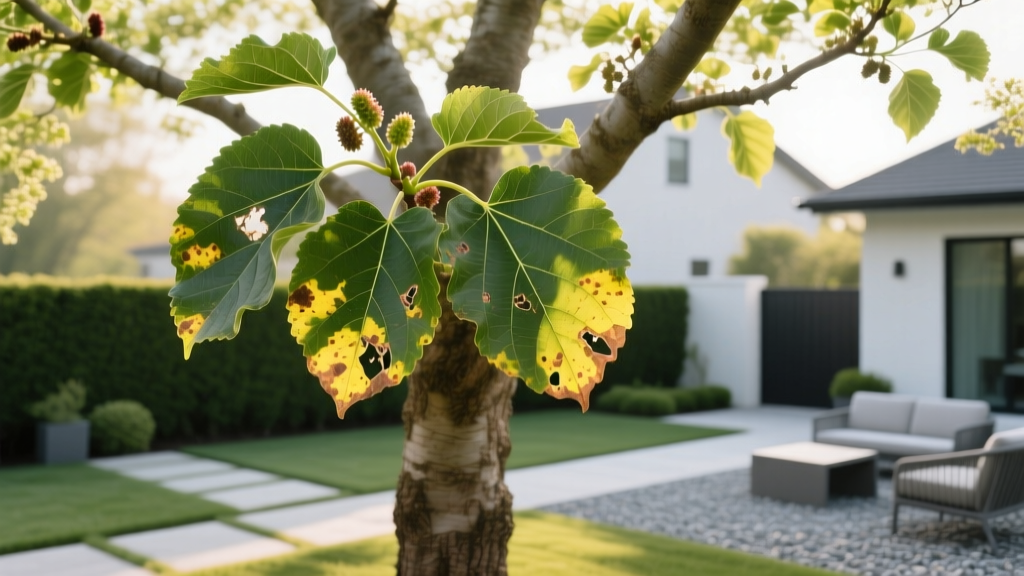
Troubleshooting Fruitless Mulberry Tree Leaves: A Beginner Guide
The Dashboard of Your Shade Tree
The fruitless mulberry (Morus alba cultivars like 'Chaparral', 'Stribling', or 'Bellaire') is a staple in residential landscaping. Homeowners choose it for its rapid growth, dense summer canopy, and lack of messy, bird-attracting fruit. Because the primary purpose of this tree is shade, its foliage is its most valuable asset. When fruitless mulberry tree leaves begin to yellow, spot, or drop prematurely, it is the tree's way of signaling environmental stress, nutrient deficiencies, or pathogen invasions.
This guide provides actionable, beginner-friendly diagnostics to help you read your tree's leaves, correct underlying soil or watering issues, and maintain a vigorous canopy year after year.
Anatomy of a Healthy Fruitless Mulberry Leaf
Before diagnosing a problem, you must understand what a healthy leaf looks like. Mulberry leaves are famous for their polymorphism—meaning a single tree can produce leaves of different shapes. Beginners often panic, assuming their tree is diseased or grafted incorrectly when they see varied foliage.
Quick Reference: Healthy Leaf Profile
- Size: 3 to 6 inches long, roughly as wide.
- Shape: Can be unlobed (oval with a pointed tip) or deeply lobed (2 to 4 distinct lobes) on the exact same branch.
- Texture: Glossy, dark green on top; slightly paler and fuzzy along the veins underneath.
- Edges: Serrated (toothed) margins.
- Fall Color: Transitions to a vibrant, clear yellow before dropping in late autumn.
Common Leaf Problems and How to Fix Them
When fruitless mulberry tree leaves deviate from the profile above, use the following diagnostic breakdowns to identify the culprit and apply the correct treatment.
1. Yellowing Leaves (Chlorosis) Between Green Veins
If the leaf tissue turns pale green or yellow while the veins remain distinctly dark green, your tree is suffering from iron chlorosis. This is rarely caused by a lack of iron in the soil; rather, it is caused by high soil pH (alkaline soils above 7.5) which locks up iron, making it unavailable to the roots.
The Fix: Standard iron sulfate will not work in high-pH soils. You must use a chelated iron product containing Fe-EDDHA (such as Sequestrene 138 or similar soil-applied chelates, typically $25–$35 for a 5 lb bag). Apply it to the root zone in early spring according to the package rate (usually 1 to 2 tablespoons per inch of trunk diameter). For a quick, temporary cosmetic fix on mature trees, a foliar spray of liquid iron chelate can green up leaves in 7 to 10 days, but soil amendment is the long-term solution.
2. Brown Spots, Lesions, and Premature Dropping
Small, dark brown or black spots with yellow halos that eventually merge and cause the leaf to drop in mid-summer indicate Mulberry Leaf Spot, caused by the fungus Mycosphaerella morifolia. This thrives in wet, humid springs and poor air circulation.
The Fix: Rake and destroy all fallen leaves immediately to break the fungal life cycle. Do not compost them. For active infections, apply a copper-based fungicide (like Bonide Liquid Copper Fungicide, ~$15 per pint). Mix 2 tablespoons per gallon of water and spray the canopy thoroughly, focusing on the undersides of the leaves. Repeat every 10 to 14 days during wet weather. According to Clemson University Extension, improving air circulation by thinning the inner canopy during winter dormancy is the best preventative measure.
3. Curling, Distorted, or Sticky Leaves
If the leaves are puckering, curling downward, and feel sticky to the touch (covered in honeydew), your tree is under attack by sap-sucking insects, most commonly aphids or whiteflies. The honeydew often attracts sooty mold, which coats the leaf in a black, powdery film, blocking photosynthesis.
The Fix: For minor infestations, a strong blast of water from a garden hose aimed at the leaf undersides will dislodge aphids. For moderate to severe cases, apply a ready-to-use insecticidal soap (such as Safer Brand Insect Killing Soap, ~$10) in the early evening to avoid harming foraging bees and to prevent leaf burn from the sun. Avoid broad-spectrum systemic insecticides like imidacloprid for foliar pests, as they can harm beneficial predator insects that naturally keep aphid populations in check.
Symptom Troubleshooting Matrix
Use this quick-reference table to match your visual symptoms with the correct cultural or chemical intervention.
| Visual Symptom | Probable Cause | Beginner-Friendly Action Plan |
|---|---|---|
| Entire leaf turns pale yellow, starting at older growth | Nitrogen deficiency or chronic overwatering | Check soil moisture 6 inches down. If wet, reduce watering. If dry, apply a balanced 10-10-10 granular fertilizer in early spring. |
| Yellow tissue, green veins (interveinal chlorosis) | Iron deficiency due to high soil pH | Apply Fe-EDDHA chelated iron to the soil root zone; test soil pH to confirm alkalinity. |
| Brown, crispy leaf margins and tips | Salt burn, fertilizer burn, or drought stress | Deep water the tree to flush salts past the root zone. Reduce fertilizer application rates by 25%. |
| Leaves wilting and dropping in mid-summer | Verticillium wilt or severe root rot | Prune affected branches back to healthy wood. Improve drainage. There is no chemical cure for Verticillium; focus on supportive watering. |
Proactive Foliage Maintenance: Watering and Mulching
The most common mistake beginners make with fruitless mulberries is treating them like shallow-rooted turfgrass. Mulberries develop deep, extensive root systems. Frequent, shallow watering encourages roots to stay near the surface, making the tree highly susceptible to drought stress, which manifests as scorched, curling leaves in July and August.
Warning: The Volcano Mulching Mistake
Never pile mulch against the trunk of your mulberry tree. 'Volcano mulching' traps moisture against the bark, inviting fungal cankers that will eventually girdle the tree and cause total canopy dieback. Keep mulch 3 to 4 inches away from the trunk flare.
The Deep Watering Protocol:
- Frequency: Water established trees deeply once every 10 to 14 days during peak summer heat.
- Depth: Water must penetrate 18 to 24 inches into the soil. Use a 24-inch soil probe or a long screwdriver to test penetration; if you cannot push the metal rod easily into the soil, you have not watered enough.
- Delivery: Use a soaker hose or drip emitters placed at the drip line (the outer edge of the canopy), not at the base of the trunk. As the tree grows, move the emitters outward.
- Mulch: Apply a 3-inch layer of organic arborist wood chips in a 4-foot radius around the tree to retain soil moisture and regulate root zone temperatures.
Seasonal Leaf Care Calendar
Maintaining pristine fruitless mulberry tree leaves requires timing your interventions to the tree's natural growth cycles. The Missouri Botanical Garden notes that Morus alba is highly adaptable, but structured care maximizes its shade potential.
- Early Spring (Bud Swell): Apply a balanced, slow-release fertilizer (e.g., 16-16-16) at a rate of 1 lb of actual nitrogen per 1,000 square feet of root zone. Apply pre-emergent weed control around the base to prevent root competition.
- Late Spring (Post-Flowering): Monitor for aphids. Prune out any winter-damaged or crossing branches to open the canopy to sunlight, which dries leaves quickly and prevents fungal leaf spot.
- Mid-Summer: Execute the deep watering protocol. If leaves show signs of heat scorch, do not fertilize; simply increase water volume and ensure the mulch layer is intact.
- Late Autumn (Post Leaf Drop): Rake and remove all fallen leaves, especially if leaf spot was present during the year. Do not leave them on the lawn, as the fungal spores will overwinter and reinfect the tree the following spring.
By observing your fruitless mulberry tree leaves closely and responding with targeted, science-backed interventions, you ensure the tree remains a robust, low-maintenance shade provider for decades.