
Tree Care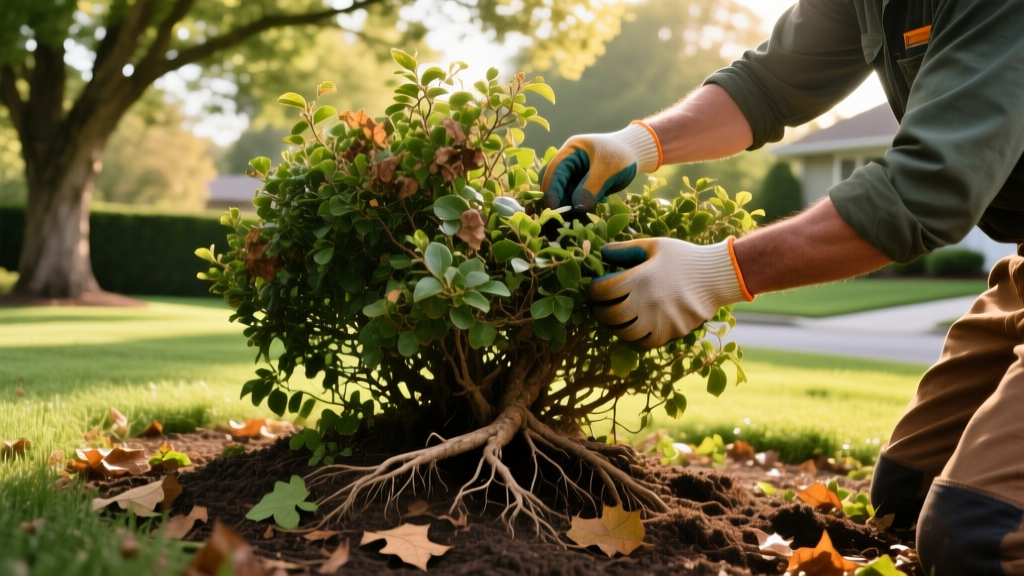
Getting Rid of Bushes: Diagnosis and Permanent Removal
Diagnosing the Bush Problem: Why Removal is Necessary
Getting rid of bushes requires more than just cutting them at the soil line. If the root system remains intact, vigorous species like privet, burning bush, barberry, and boxwood will rapidly resprout from the crown. Before initiating removal, accurately diagnose why the shrub has become a problem to determine whether aggressive extraction or targeted pruning is the correct solution.
| Problem Symptom | Underlying Cause | Recommended Action |
|---|---|---|
| Blocking window sightlines or pathways | Improper species selection for the space | Complete extraction and replanting with dwarf cultivars |
| Interior dieback with green outer edges | Shading out due to lack of renewal pruning | Hard rejuvenation pruning (do not remove) |
| Foundation cracking or sidewalk heaving | Invasive lateral root system seeking moisture | Mechanical extraction and root barrier installation |
| Rapid spreading into lawn beds | Invasive species (e.g., Autumn Olive, Bush Honeysuckle) | Cut-stump herbicide application and total removal |
According to the University of Minnesota Extension, attempting to pull mature shrubs without severing the lateral anchor roots first often results in broken trunks and leftover root mass that guarantees regrowth. Proper diagnosis dictates the extraction method.
Extraction Methods: Manual, Chemical, and Mechanical
The size, species, and location of the bush dictate the most cost-effective removal strategy. Below is a decision matrix to help you choose the right approach for your landscape.
Method Selection Framework
- Manual Extraction: Best for shrubs under 5 feet tall with taproots or shallow fibrous roots (e.g., spirea, small hydrangeas). Cost: $0 - $50 (hand tools).
- Chemical Root Kill: Required for invasive, multi-stemmed species that aggressively resprout (e.g., ligustrum, honeysuckle). Cost: $20 - $40 (herbicide and safety gear).
- Mechanical Extraction: Necessary for mature hedges over 6 feet tall, dense root balls, or mass removals. Cost: $250 - $450 per day (equipment rental).
Step-by-Step Manual Extraction for Shrubs Under 6 Feet
For manageable shrubs, manual extraction preserves the surrounding soil structure and avoids the compaction caused by heavy machinery. You will need a digging bar, a mattock, bypass loppers (like the Fiskars 32-inch Power-Lever), and a pruning saw.
- Canopy Reduction: Cut the bush down to a 2-foot stump. This removes the leverage the wind has on the root ball and clears your workspace. Do not cut it flush with the ground yet; you need the stump to act as a lever handle.
- Trenching the Perimeter: Using a sharp, flat spade, dig a trench 12 to 18 inches away from the base of the stump. The width of the root ball is typically 1.5 times the width of the canopy. Sever all lateral roots you encounter.
- Undercutting the Taproot: Switch to a digging bar or mattock. Drive the bar down at a 45-degree angle toward the center of the root ball to sever the deep taproot or central anchor roots. For clay soils, water the trench heavily and let it sit for 12 hours to soften the earth.
- Leverage and Extraction: Wrap a heavy-duty chain or tow strap around the base of the stump. Use a come-along winch anchored to a mature tree, or manually rock the stump back and forth using the digging bar as a fulcrum until the root ball pops free.
Chemical Root Kill: The Cut-Stump Method
When getting rid of bushes that are notorious for suckering—such as Bradford pear saplings, tree of heaven, or bush honeysuckle—mechanical removal alone will trigger a hydra-effect, where one cut stem turns into five new shoots. The Environmental Protection Agency (EPA) outlines strict guidelines for using systemic herbicides safely in residential zones.
The most effective technique is the cut-stump treatment. This involves cutting the bush and immediately applying a concentrated systemic herbicide to the exposed cambium layer.
Herbicide Selection and Mixing
- Triclopyr (e.g., Ortho Brush-B-Gon or professional Garlon 4): The gold standard for woody, broadleaf shrubs. Mix to an 8% to 12% solution using a basal oil or diesel carrier for dormant-season applications, or water with a surfactant for growing-season cuts.
- Glyphosate (e.g., Roundup Pro Concentrate 41%): Effective on most deciduous shrubs. Must be applied at a 20% to 50% solution (mixed with water) directly to the cut stump. Standard consumer 'Ready-to-Use' glyphosate (2% concentration) will fail on mature woody tissue.
Application Protocol
Timing is the most critical variable. The herbicide must be painted onto the outer 2 inches of the cut stump (the cambium ring) within 15 minutes of making the cut. If you wait longer, the plant's vascular system seals itself with sap, blocking the chemical from reaching the roots. Use a dedicated foam brush or a squeeze bottle with a dauber cap. Wear nitrile gloves and safety goggles to prevent splashback.
Warning: Soil Contamination and Replanting
If you use a soil-active herbicide like Imazapyr (Arsenal) to treat the roots, the chemical will persist in the soil for up to two years, killing any new ornamental plants you attempt to install in that spot. Stick to Triclopyr or Glyphosate, which break down in the soil within weeks, if you plan to replant the area soon.
If you use a soil-active herbicide like Imazapyr (Arsenal) to treat the roots, the chemical will persist in the soil for up to two years, killing any new ornamental plants you attempt to install in that spot. Stick to Triclopyr or Glyphosate, which break down in the soil within weeks, if you plan to replant the area soon.
Heavy Machinery for Mature Hedges and Mass Removals
If you are clearing a 50-foot privacy hedge of overgrown arborvitae or juniper, manual extraction is economically unviable. As of 2026, renting a compact track loader (CTL) or mini skid steer (such as a Ditch Witch SK750 or Toro Dingo) with a grapple bucket attachment costs between $250 and $350 per day from major equipment rental yards.
These machines exert up to 1,500 lbs of breakout force, allowing you to drive the grapple teeth under the root ball, clamp the lower trunk, and rip the entire shrub from the ground in seconds. However, this method severely disrupts the soil profile, leaving massive craters and compacted clay tracks. You must factor in the cost of a bobcat or skid steer to grade the yard and import fresh topsoil after the bushes are hauled away.
Post-Removal Soil Remediation
Once the physical bush and primary root ball are gone, the remaining fine roots left in the soil will slowly decay. Do not immediately plant a new, expensive specimen tree in the exact same hole. The decaying roots will temporarily tie up soil nitrogen (a process called nitrogen immobilization) and create air pockets as they rot, causing the new plant to sink and drown.
Backfill the void with a 50/50 mix of native soil and organic compost. Add a slow-release, high-nitrogen fertilizer (like a 24-4-12 formulation) to feed the soil microbes breaking down the old roots. Allow the soil to settle for at least one full season of rain and freeze-thaw cycles before installing a new focal point shrub or tree.
Frequently Asked Edge Cases
Will bleach or motor oil kill bush roots?
No. While internet myths suggest pouring bleach or used motor oil on stumps, these substances do not translocate through the plant's vascular system. They will merely kill the surface tissue, contaminate your local groundwater, and violate local environmental ordinances, resulting in heavy fines. Always use EPA-registered systemic herbicides.
How do I remove a bush planted too close to my house foundation?
Do not use heavy machinery or aggressive digging bars within 3 feet of a poured concrete or block foundation. You risk cracking the footing or damaging buried weeping tiles. Use a hand trowel and pruning saw to carefully sever the roots flush against the foundation wall, leaving the deep roots in place to decay naturally without disturbing the structural backfill.

