
Tree Care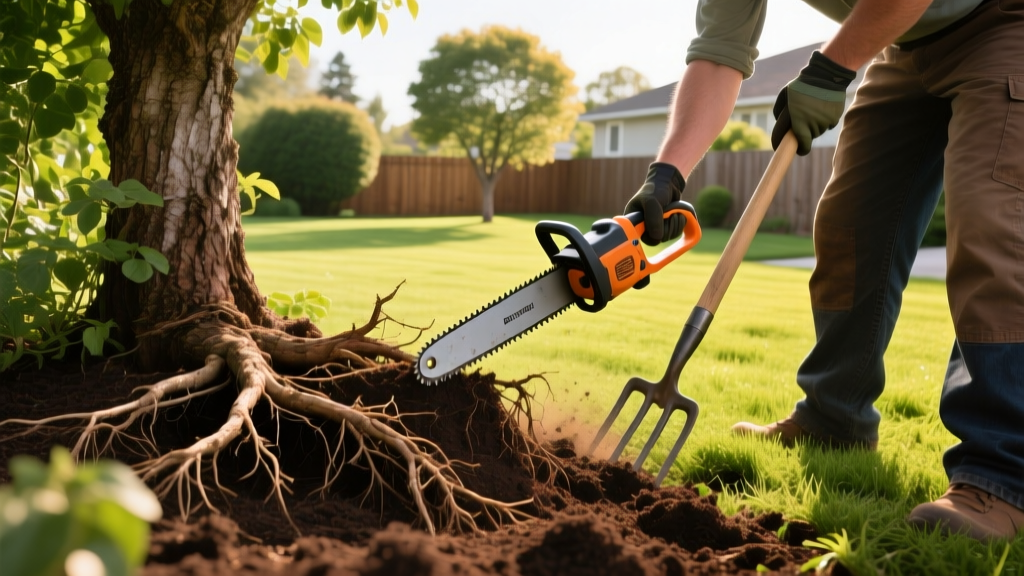
Getting Rid of Tree Roots: Safe Removal Methods for Homeowners
When surface roots buckle your driveway, invade your sewer lines, or create tripping hazards in your lawn, getting rid of tree roots safely becomes a critical landscaping priority. However, reckless root removal can destabilize a mature tree, invite fatal fungal infections, or kill the surrounding turf. This guide provides a precise, science-backed framework for evaluating, cutting, and treating problematic tree roots without compromising the structural integrity of your landscape.
The Anatomy of a Root Problem: Why Roots Surface
Most tree roots grow in the top 6 to 18 inches of soil, where oxygen and moisture are most abundant. Surface roots become a problem primarily due to soil compaction, heavy clay layers that prevent deep water infiltration, or the natural genetics of specific species. Silver Maples, Willows, Poplars, and American Elms are notorious for aggressive, shallow lateral root systems. According to the University of Minnesota Extension, as these shallow roots grow in diameter over decades, they eventually push through the topsoil, especially in high-traffic yard areas where soil erosion exposes them.
Decision Matrix: Cut, Grind, or Chemically Treat?
Before grabbing a chainsaw, you must match the removal method to the specific root problem. Use this decision matrix to choose the right approach for your yard.
| Scenario | Recommended Method | Estimated Cost | Time to Resolve | Lawn/Turf Impact |
|---|---|---|---|---|
| Single surface root buckling a walkway | Mechanical Cutting (Reciprocating Saw) | $15 - $30 (Blade cost) | 1 - 2 Hours | Low (Sod can be replaced) |
| Large, sprawling root mat in lawn | Stump/Root Grinder Rental | $135 / 4 hours (Rental) | Half Day | High (Requires topsoil & reseeding) |
| Roots invading sewer/septic lines | Chemical Copper Sulfate Treatment | $25 - $40 (Foaming root killer) | 2 - 4 Weeks | None (Applied via plumbing) |
| Remnant roots from a felled tree | Chemical Accelerant (Potassium Nitrate) | $10 - $15 (Stump-Out) | 4 - 8 Weeks | Moderate (Localized soil toxicity) |
Mechanical Removal: The Critical Root Zone Rule
If you must sever a living root to fix a hardscape issue or clear a planting bed, you must respect the tree's Critical Root Zone (CRZ). The International Society of Arboriculture (ISA) warns that severing major structural roots compromises the tree's anchorage, making it a fall hazard during high winds.
Calculating the Safe Cutting Distance
Use the Diameter at Breast Height (DBH) rule. Measure the trunk's diameter at 4.5 feet above the ground. For every 1 inch of trunk diameter, you must leave 1 foot of root radius untouched. If your Oak tree has a 20-inch DBH, you cannot cut any roots within 20 feet of the trunk.
CRITICAL WARNING: Never remove more than 25% of a tree's root system in a single season. Exceeding this threshold induces severe water stress and canopy dieback. If the problematic roots fall within the CRZ, do not cut them yourself; consult an arborist for root bridging or radial trenching alternatives.
The Right Tools for Clean Cuts
Do not use a chainsaw for underground or surface roots; dirt will instantly dull the chain and ruin the guide bar. Instead, use a reciprocating saw equipped with a 9-inch or 12-inch pruning blade (such as the Diablo 9-inch pruning blade, roughly $15 at major hardware stores).
- Excavate: Use a digging mattock to clear soil 2 inches above and below the target root.
- Cut Cleanly: Make a straight, perpendicular cut. Jagged or torn root ends cannot compartmentalize wounds effectively.
- Skip the Sealer: Do NOT apply pruning sealer or tar to the cut root. Modern arboriculture proves that sealers trap moisture against the wound, accelerating fungal rot. Let the root callus naturally in the air and soil.
Chemical Accelerants: Potassium Nitrate vs. Copper Sulfate
When dealing with dead roots from a recently felled tree, or roots invading underground plumbing, chemical treatments are highly effective. However, they must be chosen based on the specific environment.
Potassium Nitrate (For Dead Stumps and Remnant Roots)
Products like Bonide Stump-Out utilize 98% Potassium Nitrate to accelerate wood decay. This is strictly for dead wood.
- Drill 1-inch wide, 8-inch deep holes into the exposed root using a spade bit.
- Pour the potassium nitrate granules into the holes and fill with warm water.
- Cover with a plastic tarp to retain moisture. The root will become spongy and easily breakable with a mattock in 4 to 6 weeks.
Copper Sulfate (For Sewer and Septic Lines Only)
If roots are breaching your clay or PVC sewer pipes, foaming copper sulfate treatments (like Roebic K-77) are the industry standard. The foam fills the pipe, reaching roots at the top of the line. Note: Copper sulfate is highly toxic to aquatic life and can kill surrounding turf if it leaks into the soil. Never use this for surface yard roots.
The "Cut and Paint" Herbicide Technique
If you are dealing with highly invasive species like Tree of Heaven, Mulberry, or aggressive suckering roots from a felled Poplar, simply cutting the root will trigger a survival response, causing the tree to push up dozens of new shoots through your lawn. To prevent this, use the "Cut and Paint" method.
Pro Tip: You must apply the herbicide to the freshly cut root cambium within 5 minutes of making the cut. If the wood dries and seals, the chemical will not translocate to the root system.
Use a brush-on herbicide containing Triclopyr (e.g., Ortho Brush-B-Gon) or a 41% Glyphosate concentrate. Do not spray the chemical on the surrounding soil, as it will kill your lawn and nearby desirable shrubs. Paint it directly onto the outer ring (the cambium layer) of the severed root using a disposable foam brush.
When to Hire an ISA Certified Arborist
Getting rid of tree roots becomes a professional job when the roots are structural, located near your home's foundation, or belong to a protected or heritage tree species.
What to Expect Financially
- Root Pruning / Air Spade Excavation: $150 to $250 per hour. Arborists use compressed-air excavation tools (AirSpades) to safely expose and prune roots without tearing the bark, which is vital for roots near foundations.
- Root Barrier Installation: $15 to $25 per linear foot. If a root is threatening a retaining wall, an arborist can sever it cleanly and install a high-density polyethylene (HDPE) root barrier to permanently redirect future growth.
Frequently Asked Questions
Will Epsom salt kill tree roots in my yard?
Epsom salt (magnesium sulfate) is largely ineffective for killing established, living roots in the ground. While it can desiccate small, detached stumps when poured into drilled holes, applying it to surface roots in your lawn will simply alter your soil chemistry, potentially causing magnesium toxicity that locks out calcium uptake in your turfgrass.
Can I just dump bleach on exposed tree roots?
No. Household bleach (sodium hypochlorite) degrades rapidly in sunlight and soil. It will burn the outer bark of the root but will not translocate through the tree's vascular system to kill the root mass. Furthermore, it will severely alter the soil pH, creating a dead zone where grass and garden plants will refuse to grow for months.

