
Tree Care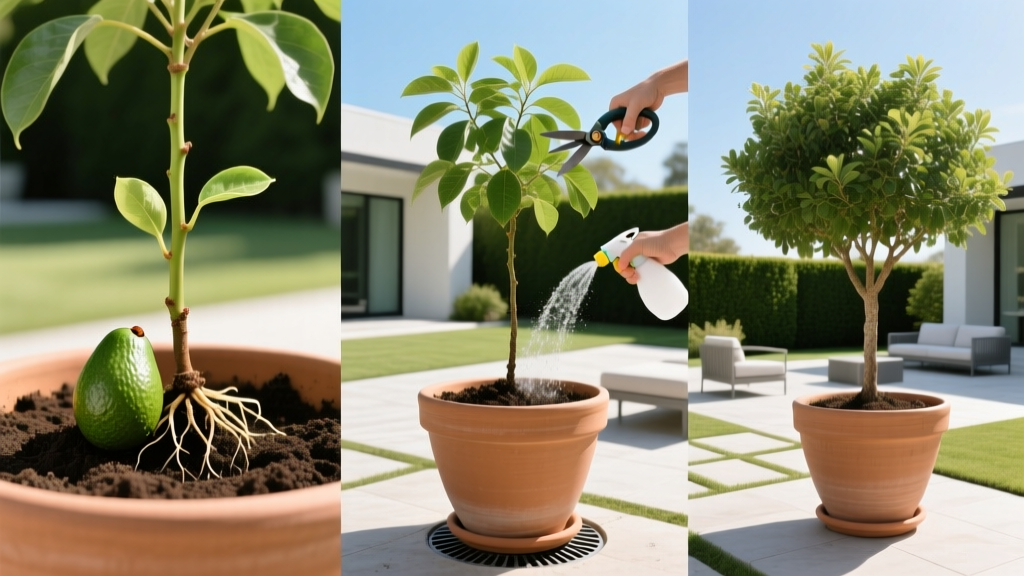
Step-by-Step Guide to Growing an Avocado Tree in Pots
The Reality of Growing Avocados Outside the Tropics
Avocados (Persea americana) are shallow-rooted, subtropical evergreens that demand precise environmental control. While commercial orchards thrive in USDA Zones 9-11, home gardeners in Zones 7-8 must rely on container cultivation and aggressive microclimate management to succeed. It is incredibly common for new gardeners to search for the 'avacado tree' (a frequent misspelling of avocado) when starting their journey. Regardless of spelling, the botanical requirements remain strict: these trees will not tolerate waterlogged roots or freezing winds.
Container growing solves the soil drainage issue and allows you to move the tree during frost events. However, it requires a strict regimen of substrate engineering, structural pruning, and micronutrient management. According to the University of California Agriculture and Natural Resources (UC ANR), the primary killer of containerized avocados is Phytophthora cinnamomi, a soil-borne water mold that causes root rot in poorly aerated environments.
Cost Expectation: Expect to invest between $140 and $200 upfront for a high-quality grafted dwarf tree ($85-$120), a 15-gallon air-pruning fabric pot ($25), and the necessary mineral amendments like pumice and pine bark ($40).
Step 1: Selecting the Right Dwarf Cultivar
Do not attempt to grow a standard 'Hass' avocado in a container long-term; they easily exceed 30 feet in height and develop massive, aggressive taproots. You must select a genetically dwarf or semi-dwarf cultivar grafted onto a clonal rootstock (like Dusa or Toro Canyon) that resists root rot.
| Cultivar | Mature Potted Height | Flower Type | Cold Hardiness | Best For |
|---|---|---|---|---|
| Wurtz (Little Cado) | 8-10 feet | Type A | 30°F (-1°C) | Small patios, true dwarf |
| Gwen | 10-15 feet | Type A | 30°F (-1°C) | High yield, creamy texture |
| Bacon | 12-15 feet | Type B | 25°F (-4°C) | Colder zones, cross-pollination |
| Hass | 20-30 feet | Type A | 30°F (-1°C) | In-ground only (Zones 9-11) |
Step 2: Engineering the Perfect Substrate and Container
Avocado feeder roots require high oxygen levels. Standard potting soil retains too much moisture and will suffocate the roots within a single season. The University of Florida IFAS Extension recommends highly porous, well-draining media for all avocado cultivation.
The 40-30-20-10 Substrate Recipe
Mix the following components by volume to achieve a pH of 6.0 to 6.5 with optimal drainage:
- 40% Pine Bark Fines: Provides long-term structure and prevents soil compaction over the 3-year repotting cycle.
- 30% Pumice or Coarse Perlite: Creates macro-pores for rapid water drainage and root oxygenation.
- 20% Coconut Coir: Retains just enough moisture and nutrients without becoming waterlogged.
- 10% Earthworm Castings: Supplies slow-release organic nitrogen and beneficial soil microbes.
Container Selection
Start with a 15-gallon container. Avoid solid plastic pots with single bottom holes, as avocado roots will circle and girdle themselves. Use air-pruning fabric pots (such as Smart Pot brand) or rigid plastic pots with vertical root-training ribs. The air-pruning mechanism exposes the root tips to air, halting their growth and forcing the tree to produce a dense, fibrous lateral root system.
Step 3: Strategic Pruning for Structural Integrity
Left unpruned, a potted avocado will grow straight up into a weak, spindly whip that cannot support fruit weight. You must force lateral scaffolding branches through strategic heading cuts.
- The Initial Topping (Year 1): When the central leader reaches 24 to 30 inches in height, use sharp bypass pruners to make a clean 45-degree cut just above a leaf node. This breaks apical dominance and forces the tree to push lateral buds.
- Selecting Scaffolds (Year 2): Choose 3 to 4 lateral branches that are spaced evenly around the trunk and grow outward at a 45-degree angle. Remove any branches growing inward or crossing the central axis.
- Tipping the Scaffolds: Once your chosen lateral branches reach 18 inches in length, tip them back by 6 inches. This encourages secondary branching, creating a dense canopy capable of supporting a 20-30 pound fruit load.
- Maintenance Pruning: Never remove more than 20% of the canopy in a single season. Avocados are highly susceptible to sunburn on exposed bark. If you expose the trunk, immediately paint it with a 50/50 mixture of white interior latex paint and water to prevent UV scorch.
Step 4: Fertilization and Micronutrient Management
Avocados are heavy feeders, but they are uniquely sensitive to salt buildup from synthetic fertilizers. Use an organic, slow-release citrus and avocado fertilizer with an NPK ratio around 6-3-3 (such as Down to Earth Citrus Mix).
Expert Tip on Micronutrients: Avocados are notoriously prone to Zinc and Boron deficiencies. If you notice interveinal chlorosis (yellowing between green leaf veins) on new growth, apply a foliar spray of 0.5% zinc sulfate and 0.1% borax in late spring. Soil applications of zinc are often ineffective in high-pH container mixes.
Apply granular fertilizer in February, May, and August. Always water deeply immediately after application to move the nutrients into the root zone and prevent root burn. Flush the container with heavy watering once a month to leach out accumulated salts.
Winterizing Protocols for Zone 8 and Below
When nighttime temperatures threaten to drop below 32°F (0°C), your containerized avocado must be protected. The root system is actually more cold-sensitive than the canopy; roots can suffer permanent damage at 28°F (-2°C).
Freeze Warning: Never bring a potted avocado directly from freezing outdoor temperatures into a 70°F heated living room. The sudden shift in humidity and temperature will cause massive leaf drop and shock. Move it to an unheated garage or sunroom that stays between 40°F and 50°F.
- Insulate the Root Zone: Wrap the fabric pot in bubble wrap or moving blankets to trap geothermal heat and protect the shallow feeder roots.
- Frost Blankets: Drape a breathable, spun-bond frost blanket (like Agribon AG-50) over the canopy. Secure it at the base of the pot, not around the trunk, to trap heat radiating from the soil.
- Hydration: Water the tree deeply 48 hours before a predicted freeze. Moist soil retains and radiates heat significantly better than dry soil.
By strictly managing your substrate porosity, executing timely pruning cuts, and respecting the tree's subtropical origins, you can successfully cultivate a fruiting avocado tree in a container, even outside traditional hardiness zones.

