
Tree Care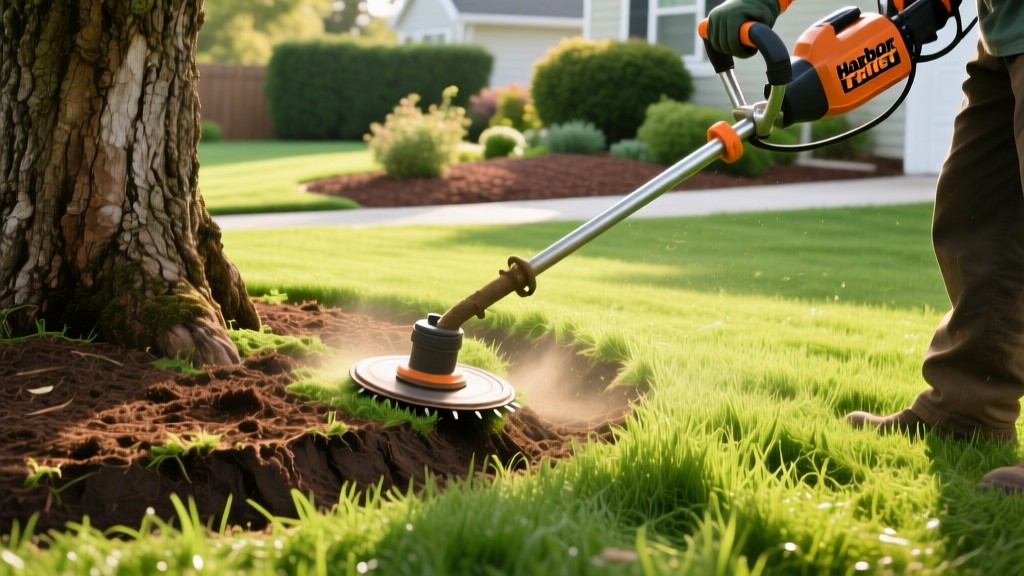
How to Use a Harbor Freight Edger for Tree Rings and Root Trenching
Adapting Budget Lawn Edgers for Professional Tree Care
While most homeowners reserve lawn edgers for creating crisp borders along concrete sidewalks, arborists and serious landscapers know that a standard walk-behind edger is one of the most efficient tools for tree care maintenance. Specifically, defining mulch rings, clearing the root flare, and trenching for root barriers are tasks that traditionally require hours of back-breaking work with a trenching spade. By adapting a budget-friendly Harbor Freight edger, you can mechanize these tree care tasks, saving time and ensuring uniform depth control.
However, using a motorized edger near a tree's critical root zone carries significant risks. Striking a structural surface root with a high-RPM steel blade can girdle the tree, introduce pathogens, and compromise its structural stability. This guide details the exact techniques, depth settings, and blade modifications required to safely use Harbor Freight's edger lineup for professional-grade tree ring maintenance and root barrier installation in 2026.
Selecting the Right Harbor Freight Model for Tree Work
Harbor Freight typically stocks two primary categories of edgers suitable for this work: the electric walk-behind models and the gas-powered trenchers. Choosing the correct tool depends entirely on your soil composition and the specific tree care task at hand.
| Model / Type | Item Number (Typical) | Power & Blade | Best Tree Care Application | Current Price Range |
|---|---|---|---|---|
| Chicago Electric 9 Amp Electric Edger | 63392 / 63393 | 9 Amp Motor, 7.5" Blade | Annual mulch ring refresh, clearing turf from root flares in soft loam. | $109 - $129 |
| Predator / Earthquake Gas Trencher | Various (e.g., 63022) | 79cc-99cc Engine, 4"-6" Trenching Blade | Cutting deep linear trenches for HDPE root barriers near hardscapes. | $299 - $399 |
For 90% of residential tree ring maintenance, the Chicago Electric 9 Amp Electric Edger is the superior choice. It is lightweight (under 30 lbs), produces zero localized exhaust (which can stress tree stomata in enclosed canopy areas), and features a 3-position depth adjustment lever that is critical for avoiding shallow feeder roots.
The Two-Pass Scoring Method for Mulch Rings
The most common mistake homeowners make when edging a tree ring is dropping the blade to its maximum depth (usually 2 inches) on the first pass. In compacted clay soils or lawns with thick rhizomatous grasses like Bermuda or Zoysia, this will bind the 7.5-inch blade, stall the 9-amp motor, and violently jerk the machine—potentially throwing you toward the tree trunk.
Instead, use the Two-Pass Scoring Method to safely carve out a drip-line mulch ring:
Step 1: Mark the Drip Line and Set Shallow Depth
According to the University of Minnesota Extension, mulch rings should ideally extend to the tree's drip line, or at minimum a 3-foot radius from the trunk. Use a piece of garden hose to mark your circle. Set the Harbor Freight edger's depth lever to Position 1 (approximately 1 inch deep).
Step 2: Score the Perimeter
Walk the edger along the inside edge of your hose line. At 1 inch deep, the blade will cleanly sever the turf rhizomes and taproots without encountering major resistance. This creates a frictionless guide track for your final pass.
Step 3: The Final Depth Pass
Adjust the depth lever to Position 2 (1.5 inches). Run the edger over the exact same track. Because the turf tension is already broken, the blade will effortlessly lift the sod, leaving a clean, vertical trench ready for mulch.
WARNING: The Root Flare Exclusion Zone
Never run the edger within 12 inches of the tree trunk. The goal of a mulch ring is to expose the root flare (where the trunk transitions to roots). Piling mulch against the trunk or cutting the inner ring with a machine will cause stem girdling roots and trunk rot. Use a hand trowel or an air-spade for the inner 12-inch radius. For more on proper trunk clearance, consult the International Society of Arboriculture (ISA) guidelines on mulching and planting.
Never run the edger within 12 inches of the tree trunk. The goal of a mulch ring is to expose the root flare (where the trunk transitions to roots). Piling mulch against the trunk or cutting the inner ring with a machine will cause stem girdling roots and trunk rot. Use a hand trowel or an air-spade for the inner 12-inch radius. For more on proper trunk clearance, consult the International Society of Arboriculture (ISA) guidelines on mulching and planting.
Trenching for Root Barriers Near Hardscapes
When planting trees near driveways, retaining walls, or foundations, installing a high-density polyethylene (HDPE) root barrier is essential to prevent hardscape heaving. While the Chicago Electric edger cannot dig the required 18-to-24-inch depth for a root barrier, it is the perfect tool for scoring the initial trench line.
- Align the Guide Wheel: Position the edger exactly 12 inches away from the concrete slab (the standard offset for root barriers). Lock the guide wheel against the concrete edge.
- Maximum Depth Scoring: Set the edger to its deepest setting (Position 3, usually 2 inches). Run the edger in a straight line parallel to the hardscape. This severs the surface turf and creates a perfectly straight visual guide.
- Manual Trenching: Use a sharp, flat trenching spade to dig down the remaining 16 to 22 inches, using the edger's scored line as your exact boundary. This prevents the trench from wandering and ensures the HDPE barrier sits flush and straight.
Blade Maintenance and Aftermarket Upgrades
Harbor Freight's included Chicago Electric blades are stamped from medium-carbon steel. They are adequate for soft loam but will roll and dull rapidly when striking the compacted clay or small gravel commonly found near construction backfill zones around newer homes.
- Sharpening: After every 3-4 tree rings, remove the 7.5-inch blade (using a 1/2-inch wrench and a block of wood to hold the blade stationary). Use a flat bastard file to restore the bevel. Do not use a bench grinder, as the high heat will ruin the temper of the stamped steel.
- Upgrading the Blade: For heavy-duty tree care, replace the OEM blade with a forged steel replacement. Look for a 7.5-inch replacement blade designed for the True Temper or EdgeMaster lines, which fit the standard 5/8-inch arbor hole of the Chicago Electric motor. A forged blade costs roughly $22-$35 and will outlast three OEM stamped blades in abrasive soils.
Troubleshooting Common Tree Care Edging Issues
When adapting a lawn tool for arboriculture, you will encounter specific edge cases. Here is how to resolve them without damaging the tree or the equipment.
| Symptom | Cause in Tree Care Context | Solution |
|---|---|---|
| Motor bogs down and smells of ozone | Blade has struck a dense mat of surface feeder roots or a buried landscape timber. | Release the trigger immediately. Raise the depth lever to Position 1. Do not force the motor through woody roots; use bypass loppers to cut roots over 1/4" thick manually. |
| Edger violently pulls to the left/right | The guide wheel has dropped into an existing, uneven tree root trench or animal burrow. | Fill the uneven divot with topsoil and tamp it down before making your pass, or switch to a free-hand edging technique using a painted string line. |
| Frayed, torn grass edge instead of a clean cut | The stamped blade is dull, or the blade is installed backward (bevel facing the wrong direction). | Verify the cutting bevel faces the direction of rotation. Sharpen the edge or install a forged aftermarket replacement blade. |
By treating the Harbor Freight edger not just as a sidewalk tool, but as a precision scoring instrument for the critical root zone, you can maintain expansive, healthy mulch rings in a fraction of the time it takes with manual tools. Respect the depth limits, avoid the root flare, and upgrade your blade for soil-specific conditions to get professional arborist results on a budget.

