Tree Care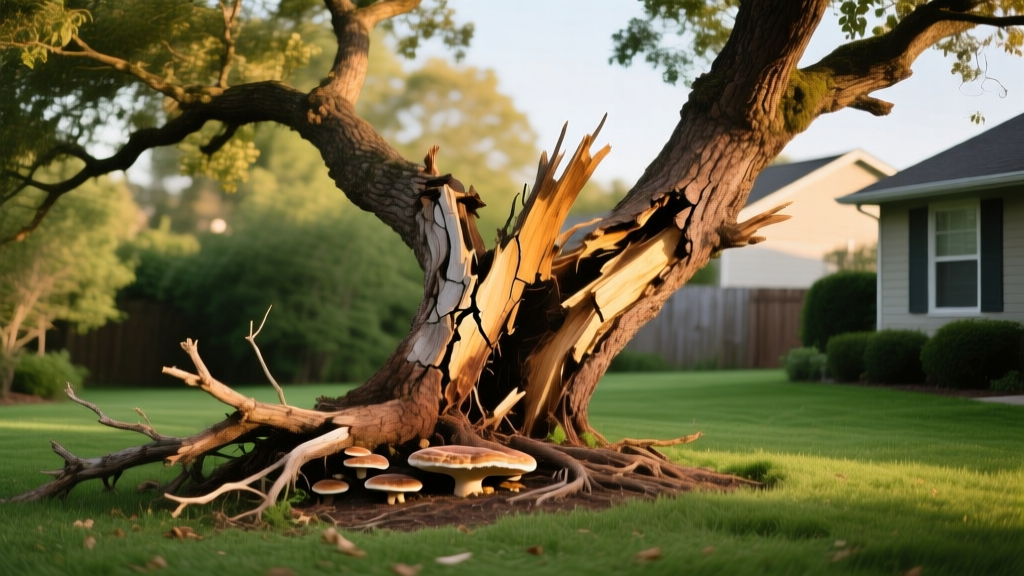
Diagnosing Hazards: When Removing Large Trees Is the Only Solution
The 4-Point TRAQ Diagnostic Framework
A mature shade tree adds thousands in property value, but a compromised 80-foot oak poses a catastrophic liability. Deciding between mitigating a hazard and removing large trees requires a systematic diagnostic approach based on the International Society of Arboriculture (ISA) Tree Risk Assessment Qualification (TRAQ) standards. According to the ISA Tree Risk Assessment guidelines, arborists evaluate four distinct variables to determine if a tree's structural integrity has crossed the threshold from salvageable to hazardous.
⚠️ The TRAQ Matrix Decision Point:
Risk is calculated by multiplying the Probability of Failure by the Size of the Part and the Consequences of Impact (the target). If a 60-inch diameter trunk with advanced internal decay is leaning over a primary residence (a high-value target), the risk rating defaults to 'Extreme', making removing large trees the only viable legal and safety solution.
Risk is calculated by multiplying the Probability of Failure by the Size of the Part and the Consequences of Impact (the target). If a 60-inch diameter trunk with advanced internal decay is leaning over a primary residence (a high-value target), the risk rating defaults to 'Extreme', making removing large trees the only viable legal and safety solution.
Critical Failure Modes: Diagnosis and Solutions
Visual assessments are insufficient for large, mature specimens. Modern arboriculture relies on acoustic and micro-drilling technology to quantify internal decay before recommending removal.
1. Advanced Root Rot (Armillaria & Phytophthora)
Diagnosis: Look for mushroom conks at the root flare, mycelial fans beneath the bark, and premature autumn crown dieback. Armillaria mellea (oak root fungus) destroys the lignin in structural roots. If a sonic tomography scan reveals that more than 30% of the critical root plate (the zone extending 3 feet from the trunk) is compromised, the tree's anchorage is fatally degraded.
Solution: Mitigation is impossible once the root plate fails. Removing large trees with advanced root rot is mandatory. Delaying removal risks a sudden, unforecasted blowdown during standard 30-mph wind events.
2. Co-Dominant Stems with Included Bark
Diagnosis: V-shaped crotches trap bark inside the wood union, creating a mechanical weak point. Look for 'ribs' or bulging wood below the union, which indicates the tree is attempting to grow reaction wood over a failing joint.
Solution: If the union is sound and the target zone is low (e.g., an open lawn), installing a Cobra dynamic cabling system ($450–$800 per union) can mitigate the risk. However, if the University of Florida IFAS Extension hazard evaluation protocols indicate active cracking or decay within the bark inclusion, the structural failure is imminent. In high-target zones (driveways, roofs), removing large trees with failing co-dominant stems is the only responsible action.
3. Severe Trunk Cavities and Internal Decay
Diagnosis: Arborists use a Resistograph (a micro-drill that measures wood density) or a PiCUS Sonic Tomograph. The critical metric is the remaining shell thickness. A trunk must retain a solid wood shell equal to at least 30% of its total radius to withstand wind loads.
Solution: If a 40-inch diameter oak has a hollow core and only 4 inches of solid sapwood remaining, it fails the 30% rule. Cavity filling is an outdated practice that traps moisture; removing large trees with this level of decay is required.
2026 Cost Analysis: Mitigation vs. Removing Large Trees
Homeowners often attempt to mitigate hazard trees to save money, but recurring maintenance on a failing tree frequently exceeds the one-time cost of removal. Below is a comparative cost breakdown for a typical 80-foot, 48-inch diameter hardwood.
| Service / Intervention | 2026 Average Cost | Lifespan of Solution | Residual Risk |
|---|---|---|---|
| Crown Reduction Pruning | $1,200 - $1,800 | 3 - 5 Years | Moderate (stimulates rapid, weak regrowth) |
| Dynamic Cabling & Bracing | $800 - $1,500 | 10 - 15 Years | Low (if union is not decayed) |
| Full Tree Removal (Crane) | $3,500 - $6,200 | Permanent | Zero |
| Stump Grinding (48-inch) | $350 - $550 | Permanent | Zero |
Execution Solutions for High-Risk Removals
When the diagnosis dictates removing large trees, the execution method must be matched to the site constraints. Felling a 40,000-pound tree in a residential lot is a complex rigging operation governed by strict safety parameters.
Sectional Dismantling (Rigging)
Used when drop zones are obstructed by fences, pools, or structures. Climbers ascend the trunk and remove the canopy in 500-pound blocks, using friction bollards and 1/2-inch Tenex brait rigging lines to lower wood safely to the ground. This method is labor-intensive and typically costs 20-30% more than crane removal due to the time and climbing hazards involved.
Crane-Assisted Felling
The industry standard for 2026 large tree removals in accessible yards. A 130-ton hydraulic mobile crane is positioned on the street or driveway. The crane operator and arborist use radio headsets to lift entire 3,000-pound sections of the trunk directly over the house, bypassing the need for ground-level rigging. This minimizes lawn damage and reduces the project timeline from three days to a single six-hour shift.
Post-Removal Protocol: Stump Grinding and Soil Remediation
Removing large trees is only half the process. The remaining root system and soil biology require immediate management to prepare the site for future landscaping.
- Deep Stump Grinding: Standard grinding leaves the root flare intact. Specify a 'deep grind' to 18 inches below grade to remove the entire taproot and primary lateral roots, preventing regrowth and eliminating tripping hazards.
- Woodchip Removal: Do not use the freshly ground chips of a diseased tree as mulch. If the tree was removed due to Armillaria or Verticillium wilt, the chips harbor active pathogens. Have the crew haul them away.
- Soil Solarization and Inoculation: The soil left behind is often depleted of nutrients and rich in decay fungi. Amend the 10-foot radius around the old stump with 2 inches of compost mixed with biochar and Trichoderma mycorrhizal inoculants. This introduces beneficial fungi that outcompete residual root-rot pathogens.
- Root Collar Excavation (Adjacent Trees): Large trees often share root grafts with neighboring specimens. When the primary tree is removed, the sudden loss of shared resources can shock adjacent trees. Apply a slow-release, low-nitrogen organic fertilizer (like 4-3-4 feather meal) to the drip line of surrounding trees to buffer the shock.
Accurate diagnosis prevents both unnecessary removals of healthy heritage trees and the catastrophic failure of compromised ones. When structural thresholds are breached, prompt, professional removal is an investment in property safety and long-term landscape health.