
Tree Care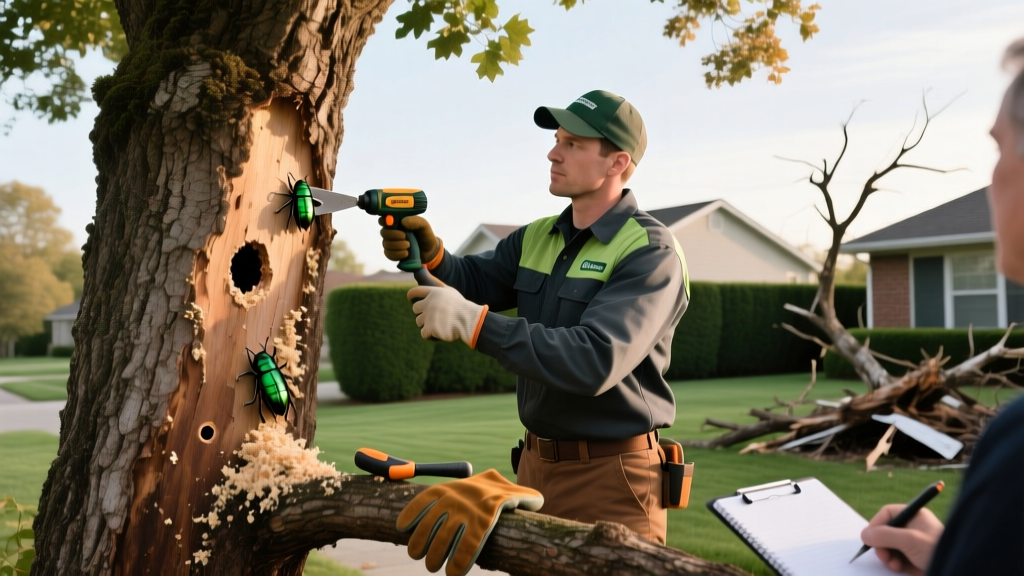
How to Hire an Omaha Tree Service for EAB and Storm Cleanup
Navigating Omaha’s Unique Urban Forest Challenges
Omaha’s urban canopy faces a distinct set of pressures that general landscaping crews are rarely equipped to handle. The ongoing Emerald Ash Borer (EAB) infestation has compromised thousands of ash trees across Douglas and Sarpy counties, turning once-sturdy shade trees into brittle hazards. Combined with the structural stress caused by severe Midwest derechos, heavy ice loading, and the region's dense clay soils, hiring a qualified Omaha tree service requires strict vetting. This guide provides a practical framework for evaluating local arborists, understanding 2026 regional pricing, and navigating municipal utility regulations.
The 4-Step Vetting Framework for Omaha Arborists
Do not rely on general liability insurance alone. Tree care in the Midwest requires specialized credentials to manage biological threats and high-voltage utility proximities.
- Verify ISA and TRAQ Credentials: Ensure the lead arborist holds an active International Society of Arboriculture (ISA) certification. For storm-damaged or compromised trees, specifically request a professional with a TRAQ (Tree Risk Assessment Qualification) credential. You can verify local professionals via the ISA Find an Arborist database.
- Demand Specific Insurance Certificates: Require a certificate of insurance naming you as the certificate holder. Minimum acceptable limits for Omaha residential properties are $1,000,000 in general liability and active Workers' Compensation for all crew members on-site.
- Confirm EAB Quarantine Compliance: Douglas and Sarpy counties are under strict state and federal EAB quarantines. Your contractor must possess a documented protocol for wood disposal. Moving unchipped ash wood is illegal and carries heavy fines from the Nebraska Department of Agriculture.
- Check TCIA Accreditation: While ISA certifies individuals, the Tree Care Industry Association (TCIA) accredits the business itself for safety and consumer protection standards. TCIA-accredited companies undergo rigorous annual audits.
⚠️ WARNING: Post-Storm 'Chaser' Crews
Following Omaha ice storms or high-wind derechos, out-of-state 'storm chaser' crews frequently flood the metro area. These crews often lack local utility permits, carry fraudulent insurance, and violate EAB wood transport laws. Never hire door-to-door solicitors who demand cash deposits or offer 'discounts' for immediate sign-offs. Always verify a local physical business address and Nebraska state registration.
2026 Cost Matrix: Omaha Tree Service Pricing
Pricing fluctuates based on tree species, DBH (Diameter at Breast Height), and site access. The following matrix reflects average residential rates charged by fully insured, ISA-certified Omaha tree services in 2026.
| Service Type | Average Cost Range | Primary Cost Variables |
|---|---|---|
| EAB Ash Removal (50-80ft) | $1,200 – $2,800 | Canopy decay stage, proximity to structures, crane necessity. |
| Heritage Oak Crown Cleaning | $600 – $1,400 | Deadwood volume, canopy spread, climbing vs. bucket truck access. |
| Stump Grinding | $4 – $7 per inch | Stump diameter, surface root spread, soil rock content. |
| Root Flare Excavation (AirSpade) | $150 – $225 per hour | Clay compaction depth, number of girdling roots requiring surgical removal. |
Coordinating with OPPD and City Right-of-Ways
Omaha Public Power District (OPPD) maintains strict clearance mandates that dictate how and who can prune trees near infrastructure. Misunderstanding these rules can result in stopped work orders or severe electrical hazards.
The 10-Foot Primary Line Rule
According to OPPD safety guidelines, only utility-approved contractors are permitted to prune or remove tree limbs within 10 feet of primary high-voltage power lines. If your ash or oak tree overhangs these lines, your private tree service must coordinate a temporary power drop or line guard installation with OPPD before work begins. Failure to do so voids the contractor's insurance and risks fatal arc-flash incidents.
City of Omaha Boulevard Permits
Trees situated in the public right-of-way (the boulevard between the sidewalk and street) are technically managed by the City of Omaha Forestry Division. While homeowners are often responsible for maintenance, any complete removal or major structural pruning of a boulevard tree requires a municipal permit. A reputable Omaha tree service will pull this permit on your behalf; if they suggest bypassing it, walk away.
Managing Emerald Ash Borer (EAB) Wood Disposal
The biological reality of EAB means the job is not finished when the tree hits the ground. The Nebraska Forest Service mandates strict handling of infested wood to prevent the artificial spread of larvae to uninfested counties.
- Chipping Specifications: All ash wood and brush must be chipped to a maximum dimension of 1 inch in two directions. This physical destruction ensures any hidden larvae are killed.
- Log Transport Restrictions: If the contractor is hauling away large ash logs for lumber or firewood, those logs cannot be transported outside the designated quarantine zone without a special compliance agreement and heat-treatment certification.
- Local Landfill Protocols: Douglas County Environmental Management requires EAB-infested wood to be buried or processed at specific facilities. Ensure your contract explicitly states 'EAB-compliant disposal' rather than generic 'haul away' language.
Addressing Omaha’s Heavy Clay Soil Dynamics
Omaha’s native soil profile is dominated by heavy, poorly draining glacial till and clay. This soil type severely restricts oxygen flow to root systems, leading to shallow root plates and girdling roots—especially in species like Bur Oak, Silver Maple, and Honeylocust. When hiring a service for tree health care or preservation, ask about their pneumatic excavation capabilities.
"In Omaha's clay, 80% of mature tree failures during ice storms are traced back to girdling roots and root flare suffocation, not canopy weight. If a contractor doesn't offer AirSpade root collar excavation, they are only treating the symptoms, not the structural defect."
Final Pre-Contract Checklist
Before signing any work order or paying a deposit, verify the following items are explicitly detailed in the written proposal:
- [ ] Exact DBH and species of trees to be worked on.
- [ ] Specification of pruning standards (must explicitly state 'ANSI A300 Pruning Standards'—never 'topping' or 'lion-tailing').
- [ ] EAB quarantine-compliant disposal routing for ash biomass.
- [ ] Stump grinding depth specification (minimum 8-12 inches below grade for future sod installation).
- [ ] Site cleanup parameters (e.g., 'all wood removed, brush chipped and hauled, lawn raked and blown').
- [ ] Proof of $1M Liability and active Workers' Compensation attached as an appendix.

