
Tree Care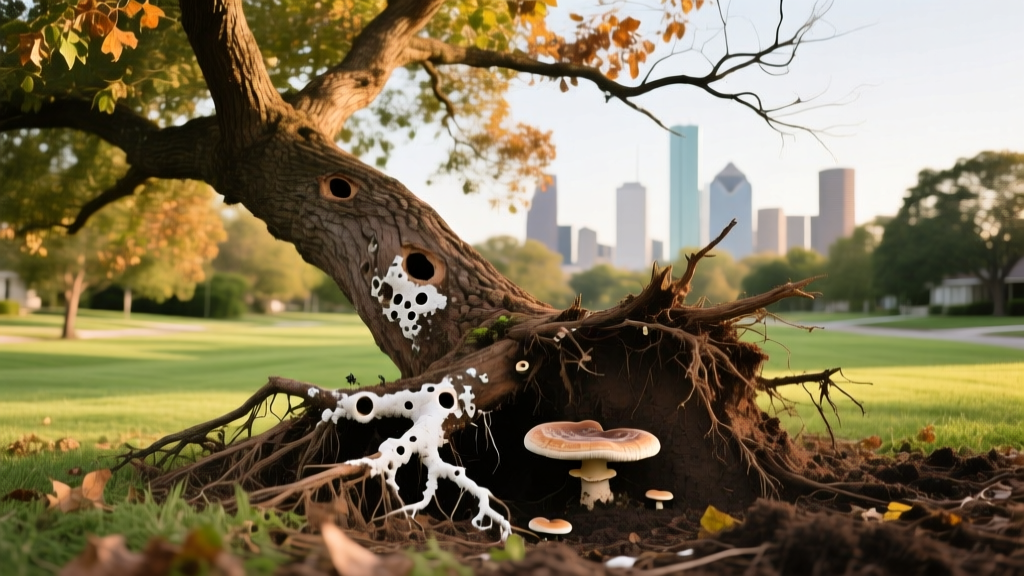
Tree Removal in Houston: A Pest & Disease Decision Playbook
The Houston Pest & Pathogen Threat Matrix
Houston’s subtropical climate—characterized by high humidity, heavy clay soils, and mild winters—creates an ideal incubator for aggressive wood-boring insects and fungal pathogens. When a tree becomes a host, the decision to treat or remove is rarely straightforward. Misjudging the threshold can lead to catastrophic structural failure during Gulf hurricane season or the rapid spread of pathogens to adjacent canopy. Below is a clinical breakdown of the primary threats necessitating tree removal in Houston, based on current data from the Texas A&M Forest Service and regional arboriculture standards.
| Pest / Pathogen | Primary Target Species | Treatment Viability | Removal Trigger |
|---|---|---|---|
| Formosan Subterranean Termites | Live Oak, Water Oak, Bald Cypress | Low (if structural) | Visible mud tubes on main trunk + hollow sounding tap test on load-bearing limbs. |
| Southern Pine Beetle | Loblolly Pine, Slash Pine | Moderate (preventative) | Fading red/brown crown + pitch tubes on lower 30ft of trunk. Must remove within 14 days. |
| Hypoxylon Canker | Stressed Oaks, Pecans | None (opportunistic) | Gray/black fungal mats visible on bark + >30% canopy dieback. |
| Ganoderma Root Rot | Palms, Broadleaf Shade Trees | None | Conk (shelf mushroom) emergence at root flare. Immediate removal required due to sudden drop risk. |
The 50/30 Decision Framework: When to Pull the Plug
Homeowners often attempt to salvage severely compromised trees through deep-root fertilization or systemic fungicides. In Houston’s heavy gumbo clay, soil compaction frequently renders these treatments ineffective for advanced infections. Use the 50/30 Rule to determine if removal is the only viable playbook:
⚠️ The 50/30 Rule for Houston Trees:
If a tree exhibits 50% or more structural trunk damage (e.g., deep cavities housing carpenter ants or termites) OR 30% or more canopy dieback directly linked to vascular diseases like Oak Wilt or Hypoxylon Canker, removal is mathematically and biologically required. The cost of repeated chemical interventions will exceed the cost of removal, and the tree remains a severe liability during high-wind events.
If a tree exhibits 50% or more structural trunk damage (e.g., deep cavities housing carpenter ants or termites) OR 30% or more canopy dieback directly linked to vascular diseases like Oak Wilt or Hypoxylon Canker, removal is mathematically and biologically required. The cost of repeated chemical interventions will exceed the cost of removal, and the tree remains a severe liability during high-wind events.
According to diagnostic guidelines from the Texas Plant Disease Diagnostic Lab, once vascular wilt diseases breach the main trunk of a Red Oak, the tree is functionally dead, even if leaves remain temporarily green. Immediate removal and proper wood disposal are critical to severing the transmission vector.
2026 Cost Breakdown & Houston Permit Nuances
The cost of tree removal in Houston varies wildly based on lot accessibility, species density, and the presence of active infestations. Infested trees often require specialized rigging to prevent scattering contaminated wood chips across the property. Furthermore, neighborhoods like The Heights or Montrose feature narrow setbacks that mandate the use of 30-ton hydraulic cranes rather than standard bucket trucks.
| Tree Size / Scenario | Estimated Cost Range (2026) | Key Cost Drivers |
|---|---|---|
| Small (<30 ft) - E.g., Young Magnolia | $450 - $950 | Standard felling, manual limb disposal, basic stump grinding. |
| Medium (30-60 ft) - E.g., Water Oak | $1,100 - $2,400 | Bucket truck access, sectional dismantling, root flare extraction. |
| Large (60+ ft) - E.g., Mature Live Oak | $2,500 - $5,500+ | Crane rental ($1,200/day), heavy rigging, multiple chipper loads. |
| Active Pine Beetle Infestation Adder | +$300 - $600 | Mandatory on-site solarization or deep chipping to contain spread. |
| Stump Grinding (Post-Removal) | $3.50 - $5.50 per inch | Measured by diameter; includes surface root chasing up to 2ft out. |
Navigating Houston’s Permit Landscape
Unlike Austin or Dallas, the City of Houston does not enforce a comprehensive tree preservation ordinance for private, single-family residential properties. You generally do not need a municipal permit to remove a tree on your private lot. However, strict regulations apply if the tree is located in a public right-of-way, an utility easement, or if your property is governed by a strict Homeowners Association (HOA). Always verify setback lines via your property survey before authorizing a crew to drop a street-adjacent shade tree. For right-of-way inquiries, consult Houston Public Works to avoid severe municipal fines.
The Infested Wood Disposal Playbook
Removing a tree is only half the battle. If the tree is harboring Southern Pine Beetles, Formosan termites, or fungal cankers, improper disposal will simply relocate the infestation to your neighbor’s yard or your remaining landscape. Follow this strict containment protocol:
- Sectional Dismantling (No Topping): Do not simply top the tree and let it drop. The impact will shatter infested bark, releasing beetles and spores into the air. The tree must be rigged and lowered in controlled 4-to-6-foot sections.
- On-Site Micro-Chipping: For borer-infested pines, wood must be fed through a high-torque drum chipper equipped with a 1/2-inch screen. This pulverizes the cambium layer, destroying beetle larvae and galleries. Standard 2-inch chipping is insufficient.
- Solarization for Termite-Heavy Wood: If Formosan termites are present, chipping is risky as it can spread the colony. Instead, cut the trunk into 3-foot logs, stack them on a heavy 6-mil clear polyethylene tarp, wrap them completely, and seal the edges with soil. Leave the wrapped wood in direct Houston sunlight for 14 days. The internal temperature will exceed 140°F, effectively cooking the colony.
- Root Flare Excavation: For trees removed due to Ganoderma or Armillaria root rot, the stump must be ground at least 12 inches below grade. Leaving the root collar intact allows the fungus to persist in the soil and infect future plantings via root grafts.
Frequently Asked Questions
Can I treat a Houston pine tree that has pitch tubes on the bark?
Once pitch tubes (small, popcorn-sized globs of resin) appear on the lower trunk, the Southern Pine Beetle has already breached the cambium and introduced blue-stain fungus. Systemic insecticides cannot cure this. The tree must be removed and destroyed within two weeks to prevent the emerging brood from attacking adjacent pines.
Will my homeowner’s insurance cover tree removal if it’s diseased?
Standard Houston home insurance policies cover tree removal only if the tree falls and damages a covered structure (like your roof or fence) or blocks a driveway. Preventative removal of a dead, diseased, or termite-hollowed tree is classified as "property maintenance" and is strictly the homeowner's financial responsibility.
How do I verify if an arborist is qualified to handle infested wood?
Require proof of ISA (International Society of Arboriculture) Certification and a valid Texas Department of Insurance liability policy. Specifically, ask if their crew holds a Texas Department of Agriculture Structural Pest Control License. This ensures they are legally and technically trained to identify, handle, and dispose of quarantined, pest-ridden wood mass safely.

