
Tree Care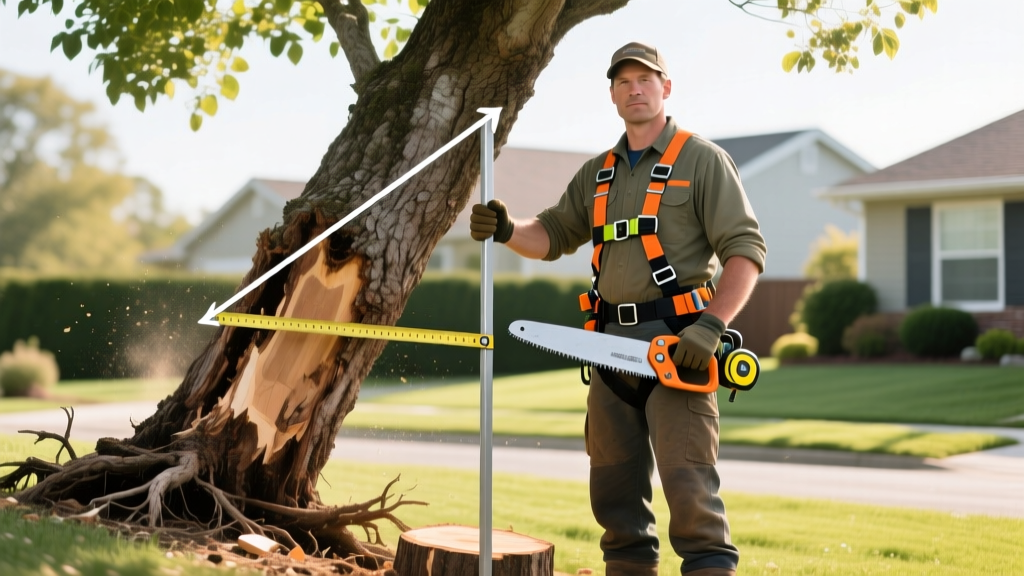
How to Chop Trees Safely: Diagnosing Lean, Rot, and Felling Angles
The Physics of Felling: Why "Chopping" Requires Diagnosis
When homeowners search for how to chop trees, they often envision a simple, brute-force approach with an axe or chainsaw. In professional arboriculture, however, bringing down a tree is an exercise in applied physics. A mature tree can weigh anywhere from 2,000 to over 20,000 pounds, and misdiagnosing its center of gravity, internal decay, or environmental lean can result in catastrophic property damage or fatal injuries. According to the Occupational Safety and Health Administration (OSHA), logging and tree felling remain among the most hazardous occupations, with the majority of accidents stemming from improper felling techniques and failure to assess tree defects prior to cutting.
To safely chop and fell a tree, you must transition from a mindset of "cutting wood" to "engineering a controlled fall." This requires a rigorous pre-cut diagnostic phase, an understanding of advanced notch geometry, and the deployment of specific felling techniques tailored to the tree's unique structural flaws.
The Pre-Chop Diagnostic Checklist
Before starting your chainsaw, you must evaluate the tree's biological and physical condition. Skipping this step is the primary cause of "barber-chairing" (where the trunk splits vertically upward) and unpredictable falls.
WARNING: The 3-Point Lean Assessment
Never rely on a visual estimate of a tree's lean. Stand 50 feet away and assess the tree from three distinct angles. Use a plumb bob or a clinometer app on your smartphone to measure the exact degree of lean. A forward lean of just 5 degrees on an 80-foot tree shifts the center of gravity by nearly 7 feet, drastically altering the required hinge thickness and back-cut placement.
Identifying Internal Decay and Structural Defects
Trees with internal rot require modified cutting techniques because the compromised wood cannot support a standard hinge. Look for these specific indicators:
- Conks and Fungal Fruiting Bodies: Mushrooms or shelf fungi on the lower trunk indicate advanced heart rot. If conks are present on multiple sides, the trunk is likely hollow.
- Seams and Bark Inclusions: Vertical cracks or seams where bark is trapped inside the wood union create sheer planes. The tree may split along these planes rather than falling as a single unit.
- Deadwood in the Canopy: Known as "widowmakers," dead branches over 4 inches in diameter can snap off upon the tree's impact with the ground, creating a lethal rebound zone.
Diagnosing the Felling Path: When Cuts Go Wrong
Understanding failure modes is critical for troubleshooting mid-cut. Below is a diagnostic matrix of common felling problems, their root causes, and the mechanical solutions required to correct them.
| Failure Mode | Primary Cause | Diagnostic Solution |
|---|---|---|
| Barber Chair | Notch cut too shallow; hinge wood too thick; severe forward lean ignored. | Use an open-faced notch (70-90 degrees) and execute a plunge (bore) cut to leave a precise, thin hinge. |
| Hang-Up | Miscalculated side-lean; tree falls into adjacent canopy instead of the drop zone. | Map the side-lean using a plumb bob. Use steel felling wedges and a sledgehammer to mechanically lift the tree off the back cut. |
| Kickback on Back Cut | Chainsaw bar tip contacts the holding wood or hinge during the final severing cut. | Never use the upper quadrant of the bar nose. Maintain a strict 90-degree plunge angle when initiating bore cuts. |
| Trunk Shattering | Extreme cold temperatures combined with a dull chain tearing rather than slicing the wood fibers. | Sharpen the chain to exact factory angles (usually 30 degrees) and reduce throttle speed during the final hinge cut. |
Step-by-Step Felling Cuts for Problem Trees
The traditional 45-degree notch taught to amateurs is obsolete for heavy or leaning timber. Modern directional felling relies on the Open-Faced Notch combined with a Bore Cut. This methodology, endorsed by forestry programs like Penn State Extension, provides maximum control over the tree's descent.
Step 1: The Open-Faced Notch
Cut the top angle of your notch first, aiming for a 70 to 90-degree opening. This wide angle prevents the notch from closing prematurely, which is the primary cause of the hinge snapping before the tree hits the ground. The depth of the notch should be exactly one-third (33%) of the tree's Diameter at Breast Height (DBH).
Step 2: The Undercut
Make the horizontal bottom cut so it meets the top cut perfectly. A clean, flat hinge floor is non-negotiable. If the cuts do not meet perfectly, use a handsaw to clean the corner. Do not cut deeper than the top cut, or you will compromise the hinge.
Step 3: The Bore (Plunge) Cut
For trees with heavy forward lean or a DBH larger than your chainsaw bar length, a standard back cut is too dangerous. Instead, plunge the center of your chainsaw bar directly into the trunk, 2 to 3 inches behind the hinge line.
Data Highlight: Hinge Sizing Math
The hinge wood left between the notch and the bore cut must be exactly 10% of the tree's DBH. For a 20-inch thick oak tree, your hinge must be exactly 2 inches thick. Leaving a 4-inch hinge on a 20-inch tree will cause the tree to pivot erratically or snap the hinge fibers violently.
Step 4: Setting Wedges and the Final Cut
Once the bore cut is established and you have wrapped the bar around to leave the 10% hinge, insert your felling wedges into the back cut. Drive them down with a felling axe or sledgehammer to lift the tree slightly, transferring the weight off your chainsaw bar. Finally, cut the holding wood on the sides, leaving the front hinge intact, and retreat along a 45-degree escape path.
Tooling Up: 2026 Chainsaw & Wedge Specifications
Executing precision cuts requires professional-grade equipment. Consumer saws often lack the anti-vibration technology and torque required for sustained bore cutting in dense hardwoods.
Recommended Chainsaws for Directional Felling
- Stihl MS 261 C-M (approx. $649.99): Featuring a 50.2 cc engine and M-Tronic engine management, this saw auto-calibrates the fuel-air mixture based on ambient temperature and altitude, preventing stalling during critical plunge cuts.
- Husqvarna 550XP (approx. $799.99): A 50.1 cc professional saw with a low-vibration dampening system. Its narrow nose profile on the 16-inch bar is ideal for tight plunge cuts in crowded timber.
Felling Wedges and Axes
Do not use standard plastic wedges for trees over 18 inches DBH; they will compress and fail under the tonnage of a falling tree. Invest in 25-degree taper, 15-inch ABS or aluminum-core wedges (e.g., Oregon or Timber Pro models, roughly $14 to $22 per pair). Pair these with a dedicated 3-pound felling axe (such as the Gränsfors Bruk Felling Axe, ~$185) to drive the wedges without shattering the wedge heads.
When to Abort: Recognizing Unsalvageable Chop Scenarios
Not every tree can be safely chopped by a homeowner or even a standard arborist crew. You must recognize when the risk-to-reward ratio dictates hiring a specialized crane-assisted removal service.
"If a tree exhibits a severe forward lean over a primary structure, combined with visible conks at the base and a target zone that cannot be cleared, the mechanical advantage of wedges is insufficient. Crane removal is the only acceptable risk mitigation strategy." — ISA Certified Arborist Standard Guidelines for Tree Risk Assessment.
Abort the manual felling operation and call a crane service if:
- The tree's DBH exceeds your chainsaw bar length by more than 4 inches, and you lack bore-cutting experience.
- The drop zone is less than 1.5 times the height of the tree, and the tree cannot be rigged and lowered in sections.
- The trunk is hollowed out by more than 30% of its cross-sectional area, rendering hinge calculations mathematically invalid.
Frequently Asked Questions
Can I use an axe to chop down a tree over 12 inches thick?
While physically possible, using an axe for trees over 12 inches DBH is highly discouraged due to the inability to create a precise, measurable hinge. Chainsaws allow for exact depth control (using depth gauges or marked bars), which is mandatory for controlling the direction of the fall. Axe felling relies heavily on guesswork and is responsible for a disproportionate number of amateur crushing injuries.
How do I calculate the escape route angle?
Your escape route must be exactly 45 degrees backward and diagonally away from the direction of the fall. Never retreat directly behind the tree (the "butt-sweep" zone), as the trunk can kick straight back off the stump when the canopy hits the ground, traveling up to 15 feet backward at high speeds.
What is the safest time of year to chop trees?
Late autumn to early winter, after the leaves have dropped and the ground has frozen, is optimal. The lack of foliage reduces the tree's overall weight and wind-sail effect, while frozen ground provides stable footing and protects the underlying turf from heavy equipment and limb impacts. Avoid felling during high-wind events exceeding 15 mph, as wind can easily overpower your wedge-lifting capacity.

