
Tree Care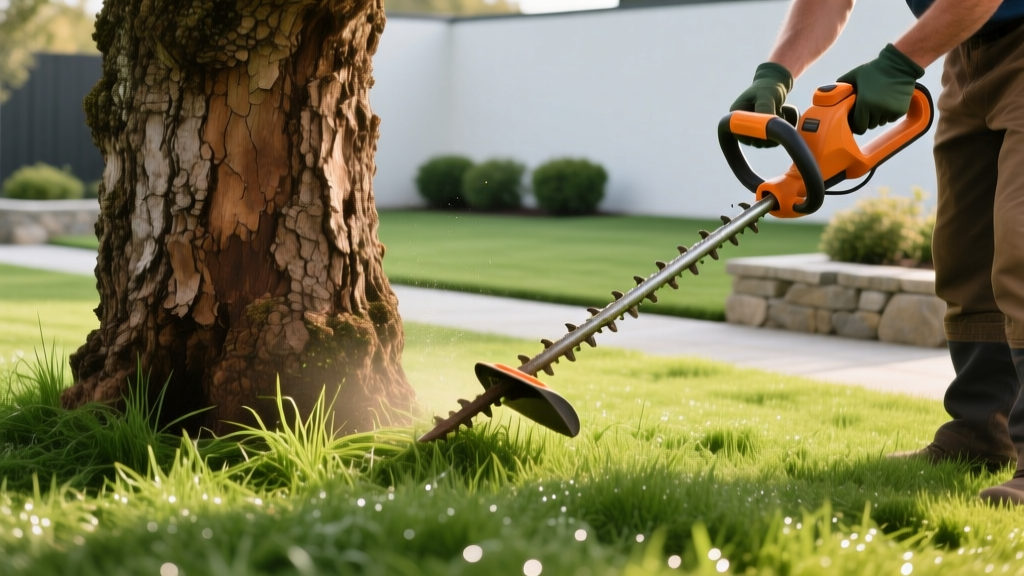
How to Cut Grass Around a Tree Without Damaging the Bark
The intersection of lawn care and tree health is where many homeowners accidentally commit arboricide. Learning how to cut grass around a tree is not just about aesthetics; it is a critical maintenance procedure that protects the tree's vascular system. The most common cause of non-pathogenic tree death in suburban landscapes is 'mower blight'—mechanical damage to the trunk base caused by string trimmers and mower decks. This damage severs the phloem, effectively starving the root system and inviting fatal fungal pathogens like Armillaria root rot.
This guide provides a step-by-step, professional-grade procedure for maintaining turf near tree trunks, selecting the correct equipment, and ultimately designing the landscape to eliminate the hazard entirely.
The Anatomy of Mower Blight and Trunk Girdling
Before executing any maintenance, it is vital to understand what happens when a nylon trimmer line strikes a tree trunk. The bark of a tree protects the cambium layer and the phloem. The phloem is responsible for transporting carbohydrates produced in the leaves down to the roots.
- Young Trees (Under 5 Years): The bark is often less than 1/8-inch thick. A single pass with a commercial-grade string trimmer (operating at 7,000+ RPM) will strip the bark entirely, girdling the tree. Girdling severs the phloem completely, leading to root starvation and tree death within 12 to 18 months.
- Mature Trees: While thick, furrowed bark on species like White Oak or Sycamore offers some protection, repeated trimming creates open wounds. These wounds become entry points for wood-boring insects (like the Emerald Ash Borer or Bronze Birch Borer) and decay fungi.
Critical Warning: Never use a metal-blade brush cutter or edger within 12 inches of a tree trunk. The kinetic energy of a metal blade striking a root flare or trunk base can cause catastrophic, irreparable structural damage to the cambium layer.
Step-by-Step Procedure: How to Cut Grass Around a Tree Safely
If you must maintain grass directly up to the trunk, follow this precise operational sequence to minimize mechanical impact.
Step 1: Assess the Root Flare and Soil Grade
Locate the root flare—the area where the trunk widens and transitions into the root system. Ensure the soil grade has not been built up over the flare. If the tree is 'planted too deep' and the flare is buried, cutting grass near the base will inevitably result in striking the surface roots, which are vital for oxygen exchange.
Step 2: Select the Appropriate Cutting Tool
Tool selection dictates the risk profile of the maintenance event. Below is a comparison matrix of common turf-cutting tools and their safety parameters for tree zones.
| Tool Type | Risk Level to Bark | Recommended Distance from Trunk | Best Use Case |
|---|---|---|---|
| Push Mower (Deck Raised) | Low | 12+ inches | Primary bulk mowing over surface roots |
| String Trimmer (Nylon Line) | High | 4 to 6 inches (with guard) | Perimeter trimming; never pivot against bark |
| Manual Hedge Shears | Zero | 0 inches (flush to bark) | Precision cutting within the critical root zone |
| Walk-Behhind Edger (Metal) | Extreme | Never use near root flare | Hardscape borders only |
Step 3: The Physical Cutting Technique
When using a string trimmer to close the gap left by the mower, adjust your technique to prevent 'whip-lash' damage:
- Choke the Line: Tap the trimmer head on the grass to release only a minimal amount of nylon line (no more than 1/2 inch past the guard blade). Shorter lines flex less and are less likely to wrap around the trunk.
- Directional Sweeping: Approach the tree trunk from a tangent angle. Sweep the trimmer head past the tree in a continuous motion. Never plant your feet and pivot the trimmer head directly against the bark.
- Finish with Shears: For the final 2 inches immediately surrounding the trunk base, switch to manual bypass pruners or heavy-duty hedge shears (such as the Felco 200 or Corona HS 3240). This guarantees zero mechanical abrasion to the bark.
The Permanent Solution: Specifying a Mulch Ring
The most effective way to manage grass around a tree is to eliminate the grass entirely within the critical root zone. Turfgrass and trees are highly competitive; dense fescue or bermudagrass will outcompete young tree roots for water and nitrogen. According to research from the University of Minnesota Extension, replacing turf with a properly specified mulch ring increases tree growth rates by up to 79% in the first three years.
Dimensions and Installation Protocol
To install a professional-grade mulch ring that protects the tree and eliminates the need for string trimming, follow these exact specifications:
- Radius: Minimum 3-foot radius from the trunk for young trees. For mature trees, extend the mulch ring to the 'drip line' (the outer edge of the tree canopy).
- Depth: Apply 2 to 4 inches of coarse, double-shredded hardwood mulch. Do not exceed 4 inches, as excessive depth restricts soil oxygenation and promotes anaerobic conditions.
- The Trunk Gap: Maintain a strict 3-inch gap between the mulch and the actual tree trunk.
Avoid 'volcano mulching'—the practice of piling mulch high against the trunk. As noted by the University of Florida IFAS, mulch piled against the bark keeps the cambium perpetually moist, leading to bark decay, adventitious root growth (girdling roots), and severe rodent nesting during winter months.
Equipment Upgrades for Trimmer Safety
If maintaining a grass border immediately adjacent to the tree is unavoidable due to landscape design constraints, upgrading your equipment is a necessary investment. Standard OEM trimmer guards are often too small to deflect errant nylon lines.
Consider installing an aftermarket universal shield, such as the WeedEater Universal Trimmer Guard or the Shindaiwa Commercial Debris Shield (typically priced between $15 and $30). These heavy-duty polycarbonate or aluminum shields extend further downward and outward, creating a physical barrier that prevents the cutting line from reaching the trunk, even if the operator accidentally tilts the shaft.
Troubleshooting Existing Trunk Damage
If you discover that previous maintenance has already damaged the bark around your tree, immediate triage is required to facilitate compartmentalization (the tree's natural healing process).
- Trace the Wound: Using a sterilized, sharp pruning knife, carefully trace an ellipse around the damaged area, cutting back to healthy, undamaged bark. This removes jagged edges where water and fungi can pool.
- Do Not Apply Sealants: Modern arboriculture strictly advises against using pruning paint, tar, or wound sealants. These products trap moisture and bacteria inside the wound, accelerating decay. The Penn State Extension confirms that trees heal best when wounds are left clean and exposed to air.
- Optimize Hydration: A damaged tree has a compromised vascular system. Provide deep, slow root-zone watering (using a soaker hose for 45-60 minutes) twice a week during dry spells to reduce environmental stress while the tree generates callus tissue.
Frequently Asked Questions
Can I use a chemical grass killer around the base of my tree?
Using non-selective herbicides like glyphosate (Roundup) near the root flare is highly risky. While mature trees with thick bark are somewhat protected from foliar absorption, young trees can absorb herbicides through thin bark or surface roots. Furthermore, herbicide drift onto the lower leaves or root suckers can translocate the chemical into the tree's system, causing severe canopy dieback. Manual cutting or mulching is always the safer protocol.
How do I mow over surface roots without damaging them?
Set your mower deck to its highest setting (usually 3.5 to 4 inches) when passing over exposed roots. Never scalp the grass down to the soil level over roots, as the mower blade will strike and shave the woody root tissue, creating massive entry points for root rot pathogens. If roots are entirely above grade, cover them with a thin layer (no more than 1 inch) of topsoil and reseed, or transition the area to a mulch bed.