
Tree Care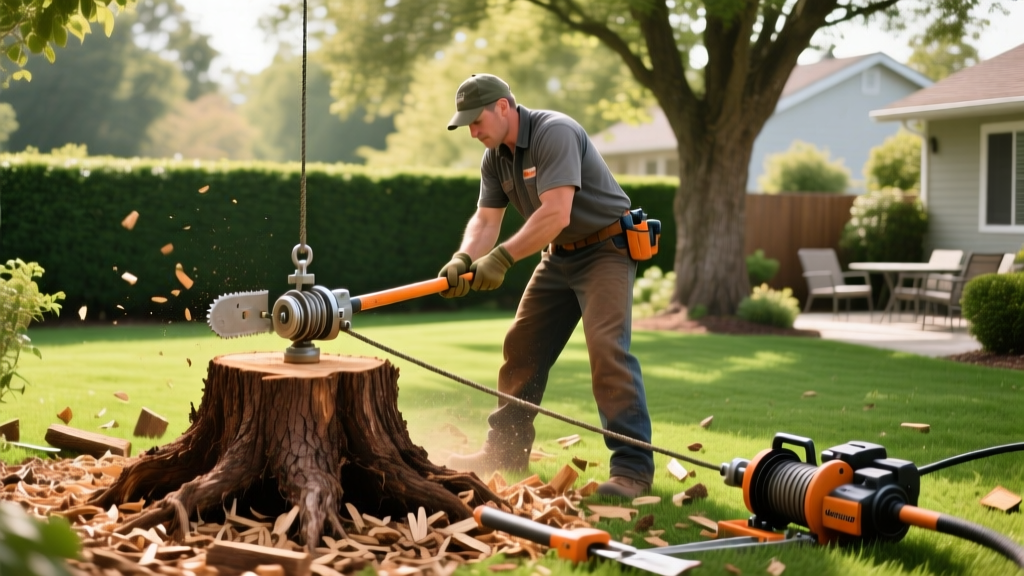
How to Pull Out a Tree Stump: Manual and Mechanical Guide
Why Extract the Root Ball Instead of Grinding?
When a tree is felled, homeowners typically default to stump grinding. However, grinding only pulverizes the upper 12 inches of the trunk, leaving a massive subterranean network of wood that takes decades to decay. If your goal is to replant a new tree in the exact same location, lay sod, or install hardscaping, learning how to pull out a tree stump entirely is the superior approach. Complete extraction removes the decaying biomass that causes nitrogen tie-up in the soil, eliminates the risk of future sinkholes, and eradicates the primary breeding ground for subterranean termites and Armillaria (honey fungus) pathogens.
Extraction Method Decision Matrix
The method you choose depends entirely on the stump's diameter, the species' root architecture, and your budget. Use this framework to select the right approach.
| Method | Ideal Stump Size | Estimated Cost | Time Required | Best Application |
|---|---|---|---|---|
| Manual Lever Extraction | Under 6 inches | $45 - $120 (Tools) | 2 - 4 hours | Small ornamentals, tight fence-line access |
| Mechanical Winching | 6 to 15 inches | $150 - $400 (Gear) | 3 - 6 hours | Medium hardwoods, DIY budget projects |
| Heavy Machinery (Skid Steer) | Over 15 inches | $250 - $450/day (Rental) | 1 - 2 hours | Large oaks/pines, open yard access |
| Professional Excavation | Any size / Complex | $300 - $800+ | 1 - 3 hours | Proximity to utilities, massive taproots |
Manual Lever Extraction (Stumps Under 6 Inches)
For stumps with a diameter of 6 inches or less, the lateral root system is usually shallow enough to sever by hand. The goal is to isolate the taproot and use the stump itself as a lever to snap it.
Essential Tool Loadout: A 5-pound cutting mattock (e.g., Fiskars Pro), a 60-inch San Angelo digging bar, a heavy-duty pruning saw, and a 4-foot steel pipe for leverage extension.
- Trench the Perimeter: Dig a circular trench 18 to 24 inches away from the base of the stump. The trench should be 12 to 18 inches deep. This exposes the primary lateral roots.
- Sever the Laterals: Use the mattock or digging bar to chop through all lateral roots. Do not cut flush against the stump; leave 2 inches of root attached to the trunk to maintain structural integrity for the levering phase.
- Undercut the Base: Angle your digging bar at 45 degrees directly beneath the stump to locate and slice the taproot. If the taproot is thicker than 2 inches, use a reciprocating saw with a 9-inch pruning blade (like the Milwaukee 9-inch Ax blade) to blind-cut it.
- Apply Leverage: Wedge the 60-inch digging bar under the root ball. Slide your 4-foot steel pipe over the end of the digging bar to double your mechanical advantage. Push down to pop the stump upward.
Mechanical Winching (Stumps 6 to 15 Inches)
When dealing with medium-sized hardwoods like maple or hickory, manual digging becomes physically prohibitive. As of 2026, portable electric winches and heavy-duty come-alongs offer a highly effective mechanical advantage. The physics of winching relies on continuous, slow tension rather than violent jerking, which prevents the root ball from snapping below grade.
Rigging the Winch System
To successfully pull a 12-inch stump, you need a minimum of 8,000 pounds of pulling force. A standard 4,000-pound come-along can achieve this by utilizing a snatch block (pulley) to create a 2:1 mechanical advantage.
- The Anchor: Select a healthy, living tree at least 12 inches in diameter, located at least 20 feet away. Wrap a 10-foot synthetic tree-saver strap around its base to protect the cambium layer.
- The Snatch Block: Attach a heavy-duty snatch block directly to the stump using a choker chain. Run your winch cable from the anchor tree, through the snatch block, and back to the anchor tree. This halves the load on the winch and doubles the pulling force.
- The Tensioning Process: Crank the winch until the cable is taut. Stop and use your digging bar to sever any roots that become exposed as the stump tilts. Crank again. This 'tension-and-cut' cycle slowly walks the root ball out of the earth.
Physics Warning: Never stand directly in line with a tensioned steel cable. If a hook fails or a root snaps, the cable will whip back with lethal kinetic energy. Always use a heavy canvas damper blanket draped over the center of the cable.
Heavy Machinery Extraction (Stumps Over 15 Inches)
Stumps exceeding 15 inches in diameter, particularly deep-rooted species like Southern Yellow Pine or White Oak, possess massive taproots and structural laterals that defy manual or light mechanical extraction. Renting a compact track loader (skid steer) equipped with a root grapple or a stump bucket is the most efficient DIY route.
A standard rental skid steer (e.g., Bobcat T76) costs between $250 and $350 per day. Ensure the machine has at least 74 horsepower and a tipping load of 2,500 pounds to handle the wet soil weight of a large root ball. The operator must dig a 3-foot deep trench on the pulling side, use the bucket to push the stump backward into the void, and then clamp the grapple onto the trunk to roll the root ball upward and out.
Troubleshooting Snapped Taproots & Clay Soil
The most common failure mode during extraction is the taproot snapping 3 feet below grade, leaving a massive wooden spike in the ground. If this happens, do not backfill immediately. Use a high-pressure water lance (hydro-excavation) to wash away the surrounding clay soil, exposing the remaining spike so it can be cut with a chainsaw. According to forestry management guidelines from the University of Minnesota Extension, leaving large wood fragments deep in heavy clay soils severely restricts drainage and creates anaerobic pockets that harm future plantings.
Post-Pull Soil Remediation & Settling Prevention
Pulling a stump leaves a massive crater. The instinct is to fill it with native soil dug from elsewhere in the yard. This is a critical mistake. Native soil will compact and settle over the next 18 months as the micro-air pockets collapse, resulting in a depressed bowl in your lawn that collects standing water.
The 70/30 Backfill Rule:
Fill the void with a mixture of 70% screened sandy loam topsoil and 30% organic compost. The sand provides structural stability that resists compaction, while the compost replaces the nutrients that the decaying root system would have otherwise consumed. Mound the backfill 2 to 3 inches above the surrounding grade to account for natural settling. The Arbor Day Foundation recommends this specific amendment strategy to ensure proper drainage and prevent root rot if you intend to replant a new tree in the same vicinity.
Fill the void with a mixture of 70% screened sandy loam topsoil and 30% organic compost. The sand provides structural stability that resists compaction, while the compost replaces the nutrients that the decaying root system would have otherwise consumed. Mound the backfill 2 to 3 inches above the surrounding grade to account for natural settling. The Arbor Day Foundation recommends this specific amendment strategy to ensure proper drainage and prevent root rot if you intend to replant a new tree in the same vicinity.
By matching the extraction method to the stump's specific diameter and soil conditions, you can completely remove the root system without destroying the surrounding landscape, setting the stage for a healthy, level yard.

