Tree Care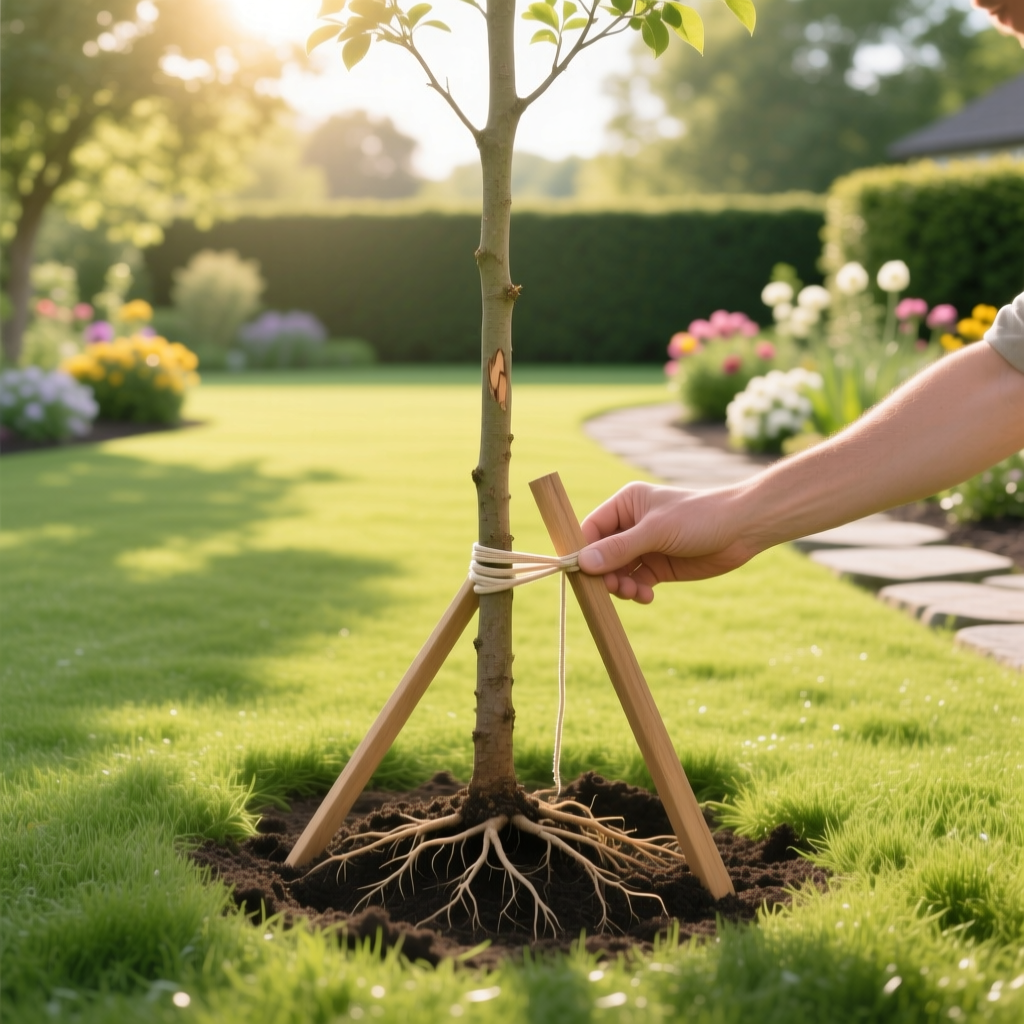
How to Stake a Newly Planted Tree Without Trunk Damage
Lisa ThompsonPublished
Planting a new tree is one of the most rewarding investments you can make in your landscape. However, the first few months after planting are critical, and improper staking is one of the most common mistakes homeowners make. While staking can help stabilize a young tree in windy conditions or loose soil, doing it incorrectly can cause girdling, bark abrasion, weakened trunk development, and even long-term structural failure. The good news is that with the right materials, techniques, and timing, you can support your newly planted tree without causing any harm to its trunk or future growth.
In this comprehensive guide, you will learn when staking is truly necessary, how to choose the right staking materials, step-by-step installation methods that protect the trunk, and how to monitor and remove stakes at the right time. Whether you are planting a small ornamental tree or a large shade tree, these principles will help your tree establish a strong root system and develop a resilient, self-supporting trunk. For more tips on establishing a healthy landscape, check out our tree care guides and lawn care resources.
When to Stake a Newly Planted Tree and When to Skip It
One of the most important decisions in tree staking is knowing whether your tree actually needs support at all. Contrary to popular belief, not every newly planted tree requires staking. In fact, research from horticultural institutions has shown that trees left unstaked often develop stronger trunks and more extensive root systems because they respond to natural wind movement by producing reaction wood, which thickens and strengthens the trunk over time.
Situations That Require Staking
There are several scenarios where staking is genuinely beneficial and even essential for tree survival:
- High-wind areas: If your planting site is exposed to consistent strong winds, staking prevents the root ball from shifting in the soil, which can break newly forming roots.
- Top-heavy trees: Trees with large canopies relative to their root ball size may lean or topple before roots have anchored into surrounding soil.
- Sandy or loose soil: Soil that does not hold firmly around the root ball may allow the tree to shift, creating air pockets that dry out roots.
- Slope plantings: Trees planted on inclines are subject to gravitational pull and water runoff that can destabilize the root ball.
- Bareroot trees: Trees planted without a soil ball around their roots have minimal initial anchorage and may benefit from temporary support.
Situations Where Staking Is Unnecessary
If your tree is a small caliper specimen planted in sheltered conditions with firm, loamy soil, staking may do more harm than good. Trees with trunks less than two inches in diameter that are planted in protected areas with moderate wind exposure generally establish faster without stakes. The gentle movement caused by wind stimulates the production of growth hormones that encourage trunk taper and root development.
Before deciding to stake, perform a simple test: gently push the trunk of the tree. If the root ball moves in the soil, staking is likely needed. If the trunk flexes but the root ball stays firmly in place, the tree can probably support itself. For additional guidance on planting techniques, explore our soil preparation guide to ensure your planting site provides the best possible foundation.
Choosing the Right Materials to Prevent Trunk Damage
The materials you use for staking play a critical role in whether your tree thrives or suffers trunk damage. The wrong materials can cut into bark, restrict the flow of water and nutrients through the cambium layer, and create entry points for disease organisms. Investing in proper staking supplies is a small cost compared to the value of a healthy, well-established tree.
Stake Materials
Stakes can be made from several materials, each with advantages and considerations:
- Wooden stakes: Treated timber stakes or hardwood dowels are affordable, widely available, and easy to drive into the ground. Use stakes that are at least six feet long and one to two inches in diameter for most residential trees. Untreated hardwood stakes will eventually decompose, which naturally signals the time for removal.
- Metal stakes: Steel T-posts or rebar provide excellent durability and holding power in hard soils. They are ideal for larger trees or areas with extreme wind. Always use protective caps on metal stakes to prevent injury.
- Fiberglass stakes: Lightweight and weather-resistant, fiberglass stakes are a premium option that will not rot or rust. They flex slightly in wind, which can be beneficial for allowing natural tree movement.
Tie Materials That Protect Bark
The ties that connect the tree to the stake are the most critical component for preventing trunk damage. Never use wire, nylon rope, chain, or any material that can cut into bark. Instead, choose from these safe alternatives:
- Wide fabric straps: Commercially available tree staking straps made from woven polyester or nylon are at least one inch wide and distribute pressure evenly across the bark. These are the gold standard for professional arborists.
- Rubber tree ties: Flexible rubber ties with wire reinforcement inside allow some movement while providing support. Ensure the rubber portion contacts the trunk, not the wire.
- Burlap or canvas strips: For a budget-friendly and biodegradable option, cut strips of burlap or heavy canvas at least two inches wide. These are gentle on bark but may need replacement if they deteriorate before the tree is established.
- Old pantyhose or stockings: A surprisingly effective recycled option, nylon stockings are soft, stretchy, and will not girdle the trunk. Loop them in a figure-eight pattern between the stake and the tree.
Protective Padding
For extra protection, especially on thin-barked species like maple, cherry, or birch, add a layer of padding between the tie and the trunk. Foam pipe insulation, sections of garden hose slit lengthwise, or commercial tree guards provide a cushion that prevents abrasion during wind events. This is particularly important if you live in an area with frequent storms. For more on protecting trees from environmental stress, visit our tree disease prevention page.
Step-by-Step Staking Techniques That Protect the Trunk
Proper installation is where the science and art of tree staking come together. The goal is to provide enough support to keep the root ball stationary while allowing the upper trunk and canopy to move naturally in the wind. This movement is essential for developing trunk taper, which is the gradual thickening of the trunk from top to bottom that gives a tree its structural strength.
Single Stake Method
The single stake method is suitable for small to medium trees planted in areas with prevailing winds from a consistent direction.
- Position the stake: Drive a single stake into the ground on the side of the prevailing wind, approximately 18 to 24 inches from the trunk. The stake should be driven at least 18 inches into the soil for stability.
- Determine tie height: Find the lowest point on the trunk where the tree can stand upright when the top is gently released. This is typically one-third to one-half of the total tree height. Tying too high restricts movement; tying too low fails to provide adequate support.
- Attach the tie: Loop the tie material around the trunk in a loose figure-eight pattern with the stake between the crossover point and the trunk. This prevents the trunk from rubbing against the stake.
- Allow slack: Leave enough slack in the tie to allow the trunk to move approximately one to two inches in any direction. The tree should be able to sway gently without the root ball shifting.
- Check tension: The tie should be snug enough to hold the tree upright at rest but loose enough that you can slide two fingers between the tie and the bark.
Double Stake Method
The double stake method provides more balanced support and is ideal for larger trees, areas with variable wind directions, or slopes.
- Place two stakes: Drive two stakes into the ground on opposite sides of the tree, perpendicular to the prevailing wind direction. Position them 18 to 24 inches from the trunk, forming a line through the center of the tree.
- Attach ties to both stakes: Use separate ties for each stake, attaching them at the same height on the trunk. The figure-eight pattern should be used for each connection.
- Balance tension: Both ties should have equal slack so the tree is centered between the stakes and can move slightly in all directions.
- Use cross-bracing for large trees: For trees over eight feet tall, add a horizontal cross-bar between the two stakes at the tie height to prevent the stakes from bending toward the tree under wind load.
Angular Stake Method
For trees on slopes or in extremely windy locations, driving stakes at a 45-degree angle into the prevailing wind provides superior anchorage. The angled stake resists pulling forces more effectively than a vertical stake. Attach the tie at the point where the stake exits the ground, using a ground anchor or secondary short stake to prevent the tie from sliding up the angled stake.
Critical Rules for All Staking Methods
Regardless of which method you choose, follow these essential rules to prevent trunk damage:
- Never attach ties directly to the trunk without a protective buffer or wide surface area.
- Never use a single narrow tie, as this concentrates pressure on a small area of bark.
- Never pull the tree into an unnatural position; stake it in its natural, upright orientation.
- Never stake a tree so rigidly that it cannot move at all. Some movement is essential for proper development.
- Inspect ties every two to four weeks and adjust as the trunk grows in diameter.
Proper staking works hand in hand with good planting practices. Make sure your tree was planted at the correct depth with the root flare visible above the soil line. Our mulching guide explains how to apply mulch around newly planted trees to retain moisture without suffocating roots.
Monitoring, Maintenance, and Timely Stake Removal
Installing stakes is only half the process. Ongoing monitoring and timely removal are equally important to prevent the very trunk damage you are trying to avoid. Many tree problems related to staking occur not during installation but during the months that follow, when ties become too tight, stakes shift, or supports are left in place far longer than necessary.
Regular Inspection Schedule
Establish a routine inspection schedule to catch problems before they cause permanent damage:
- Weekly checks during the first month: Look for signs of tie abrasion, stake loosening, or trunk girdling. New trees settle into their planting holes during the first few weeks, and ties may need adjustment.
- Monthly checks thereafter: As the tree grows, the trunk diameter increases. Ties that were perfectly fitted at planting can become constrictive within a single growing season. Loosen and reposition ties as needed.
- Post-storm inspections: After any significant wind or rain event, check that stakes remain firmly anchored and ties have not shifted or tightened unexpectedly.
Signs of Trunk Damage to Watch For
Learn to recognize early warning signs that your staking system is causing harm:
- Bark indentation: If you can see a visible groove or depression in the bark where the tie contacts the trunk, the tie is too tight or too narrow.
- Swelling above or below the tie: Bulging bark indicates that the flow of sugars and water through the phloem and cambium is being restricted. This is a serious condition that requires immediate attention.
- Discoloration or oozing: Dark, wet areas on the bark near tie points may indicate fungal infection entering through abrasion wounds.
- Girdling roots at the surface: While not directly caused by staking, girdling roots combined with a restricted trunk can compound stress on the tree.
When and How to Remove Stakes
The single most important rule of tree staking is that stakes are temporary. Most trees need staking support for only one to two growing seasons. Leaving stakes in place too long creates a dependent tree that has not developed the trunk strength to support itself.
Follow this timeline for stake removal:
- Small trees (under six feet): Remove stakes after one growing season, typically six to twelve months after planting.
- Medium trees (six to twelve feet): Remove stakes after one to two growing seasons.
- Large trees (over twelve feet): Stakes may be needed for up to two full growing seasons, but should be removed no later than the third year.
To test whether the tree is ready for stake removal, gently release the ties and observe the tree on a calm day. If it stands upright without support, it is ready. If it leans significantly or the root ball shifts, reattach the ties loosely and try again in four to six weeks. Gradually loosening ties over several weeks before full removal can help the tree adjust to self-support.
When removing stakes, pull them straight out of the ground to minimize soil disturbance around the root zone. Fill any holes left by the stakes with native soil and tamp gently. For ongoing tree health, read our seasonal tree maintenance guide to learn how to care for your trees throughout the year.
Seasonal Tips and Common Diseases Linked to Improper Staking
The season in which you plant and stake your tree influences both the staking approach and the potential risks. Additionally, wounds caused by improper staking can become entry points for a variety of tree diseases. Understanding these seasonal and pathological considerations helps you protect your investment for the long term.
Spring Planting and Staking
Spring is the most popular season for tree planting, and it offers the advantage of a full growing season ahead for root establishment. When staking spring-planted trees, be aware that rapid trunk growth during spring and early summer means ties will need frequent adjustment. Check ties every two weeks during the peak growth period from late spring through midsummer. Use soft, stretchy tie materials that can accommodate growth between inspections.
Summer Planting Considerations
Trees planted in summer face heat stress and higher water demands. Staking is often more critical for summer plantings because root establishment is slower in hot conditions, and the root ball is more likely to shift before new roots anchor it. Provide shade for the stakes and ties if possible, as UV radiation degrades some tie materials rapidly. Ensure that your watering schedule is adequate for the newly planted tree, as drought-stressed trees are more susceptible to bark damage from ties.
Fall Planting Advantages
Fall is an excellent time to plant trees in many regions because cooler temperatures reduce water stress while soil remains warm enough for root growth. Trees planted in fall typically need staking through the winter and into the following spring. Use durable tie materials that can withstand freeze-thaw cycles, and ensure stakes are driven deeply enough to resist frost heave, which can push stakes upward and alter tie tension.
Winter Precautions
If you must stake a tree during winter, be mindful that frozen ground makes driving stakes difficult. Pre-drilling holes with a soil auger or metal bar can help. Winter winds can be particularly damaging, so consider using the double stake method for added stability. Wrap trunk ties with reflective tape to make them visible during snow cover, preventing accidental damage from snow removal equipment.
Diseases Associated with Staking Wounds
When ties damage bark, they create wounds that can be colonized by pathogenic organisms. Common diseases that exploit staking injuries include:
- Cytospora canker: This fungal disease enters through bark wounds and causes sunken, discolored cankers that girdle branches and trunks. It is especially common on spruce, poplar, and willow trees with staking damage.
- Phytophthora collar rot: If ties are positioned too low on the trunk near the soil line, they can trap moisture against the bark, creating conditions favorable for Phytophthora species that cause root and collar rot.
- Nectria canker: This fungus produces distinctive target-shaped cankers on trunks and branches. Wounds from tight ties provide ideal infection courts.
- Bacterial wetwood: Also known as slime flux, this condition causes dark, foul-smelling liquid to ooze from wounds in the trunk. While not always fatal, it weakens the tree and attracts insects.
To minimize disease risk, always use clean staking materials, avoid wounding the bark during installation, and remove stakes as soon as the tree can support itself. If you notice signs of disease near staking wounds, consult our tree diseases identification guide for treatment options. Proper pruning techniques can also help remove affected branches and improve air circulation around the canopy.
Frequently Asked Questions
How tight should tree stakes be?
Tree ties should be loose enough to allow approximately one to two inches of trunk movement in any direction. A good rule of thumb is that you should be able to slide two fingers comfortably between the tie and the trunk bark. The purpose of staking is to hold the root ball stationary in the soil, not to immobilize the entire tree. The upper trunk and branches need freedom to sway in the wind, as this movement triggers the production of reaction wood that strengthens the trunk. Overly tight stakes are one of the leading causes of trunk girdling and can kill a tree within a single growing season by cutting off the flow of nutrients through the cambium layer.
Can I use wire or rope to stake my tree?
No, you should never use bare wire, thin nylon rope, or chain to stake a tree. These materials concentrate pressure on a very narrow band of bark, which quickly cuts into the trunk as the tree grows and sways. Even wire wrapped in a garden hose can cause damage if the hose compresses over time. Always use wide, flexible materials such as commercial tree straps that are at least one inch wide, rubber tree ties, or broad fabric strips. If you must use wire for structural reasons, thread it through a section of garden hose or foam tubing so that only the soft protective material contacts the bark. Remember that the wider the contact surface, the less pressure is exerted on any single point of the trunk.
How long should I leave stakes on a newly planted tree?
Most trees need stakes for one to two growing seasons, which typically translates to six to eighteen months depending on the species, size at planting, and site conditions. Small ornamental trees may only need stakes for a single season, while large specimen trees in exposed locations might require support for up to two full years. The key is to test the tree periodically by releasing the ties on a calm day and observing whether it can stand upright on its own. Once the tree holds its position without support and the root ball does not shift when you gently push the trunk, it is time to remove the stakes permanently. Leaving stakes on a tree for too long creates a structurally weak trunk that has never been forced to develop the natural taper and reaction wood needed for long-term stability.
What should I do if the bark is already damaged from staking?
If you discover bark damage from staking ties, act quickly to minimize further harm. First, remove or reposition the offending tie immediately. If the damage is superficial and only affects the outer bark, the tree will usually heal on its own by producing callus tissue around the wound edges. Do not apply wound paint or sealants, as research has shown these products can trap moisture and actually slow the healing process. If the damage has girdled more than half the circumference of the trunk, the tree may be in serious danger, and you should consult a certified arborist. Keep the tree well-watered and avoid additional stress such as heavy pruning or fertilization while it recovers. For more information on wound care, see our pruning and wound care guide.
Do all newly planted trees need to be staked?
No, not all newly planted trees need staking, and over-staking is actually a more common problem than under-staking. Trees that are small in size, planted in sheltered locations, and set in firm, well-draining soil often establish faster without any staking at all. The natural movement caused by wind stimulates the tree to build a thicker, stronger trunk with better taper. Staking is truly necessary only when the root ball moves in the soil, the tree is top-heavy relative to its root system, or the planting site is exposed to strong, consistent winds. When in doubt, plant the tree, observe it for a few days in typical weather conditions, and add stakes only if the root ball shifts or the tree leans significantly. This approach allows you to avoid unnecessary staking while still protecting trees that genuinely need support. For more planting advice, browse our complete collection of lawn and landscape care guides.
