
Tree Care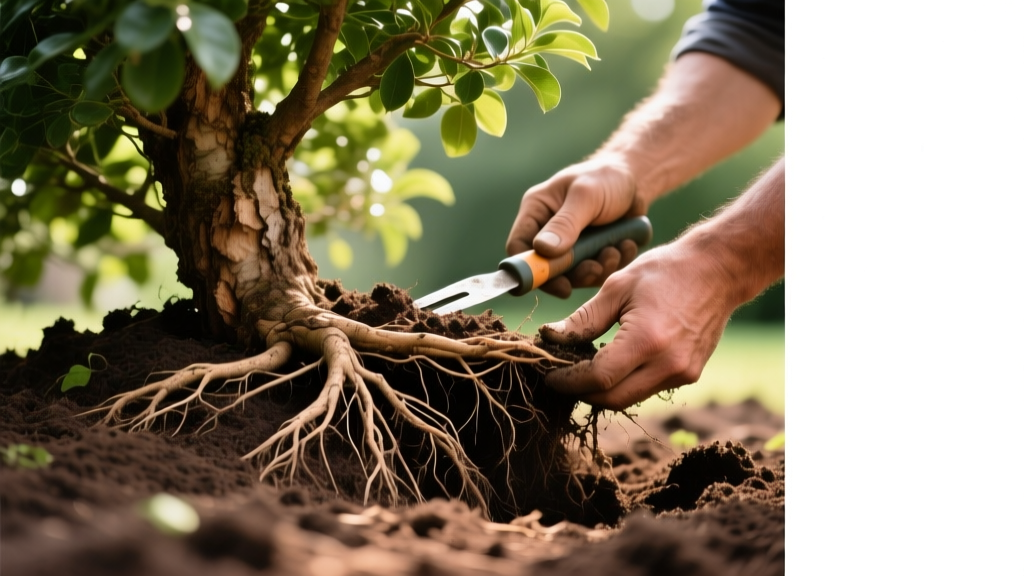
How to Uproot a Bush: Root Diagnosis and Extraction Steps
Diagnosing the Root Cause: Save or Extract?
Before committing to the heavy labor of extraction, you must confirm whether the shrub is salvageable. Uprooting is a destructive, soil-disturbing process that leaves a void in your landscape. According to the Arbor Day Foundation, many above-ground symptoms of decline are actually reversible if caught early, while others indicate irreversible structural or pathogenic failure requiring total removal.
Diagnostic Callout: If the bark at the soil line is peeling away to reveal dark, stringy tissue, or if you spot honey-colored mushrooms (Armillaria mellea) at the base, the root system is dead. Extraction is your only option to prevent the pathogen from spreading to adjacent healthy plants.
| Symptom Presentation | Underlying Diagnosis | Action Required |
|---|---|---|
| Yellowing leaves, wet soil, foul odor at base | Phytophthora root rot | Uproot and destroy |
| Canopy dieback on one side, visible roots wrapping trunk | Girdling roots / Planting depth error | Uproot if mature; correct if <2 years old |
| Sudden wilting during heat, dry soil | Drought stress / Hydrophobic soil | Deep root watering (Save) |
| White fan-like mycelium under bark | Armillaria root rot | Uproot, remove all wood, treat soil |
Tool Matrix: Manual vs. Mechanical Extraction
The size of the root ball dictates your extraction method. A 3-foot tall boxwood might require only manual leverage, while a mature 6-foot juniper or privet requires mechanical advantage. Budget accordingly for the 2026 market pricing on heavy-duty landscaping tools.
| Tool Category | Specific Model / Type | Est. Cost | Best For |
|---|---|---|---|
| Manual Severing | Pulaski Axe (3.5 lb head) | $45 - $65 | Cutting lateral roots up to 2" thick |
| Leverage / Prying | 68-inch Steel Digging Bar | $35 - $50 | Popping the root ball, breaking taproots |
| Mechanical Pulling | WARN 3,500 lb Portable Winch | $280 - $350 | Shrubs over 5ft tall, clay-heavy soils |
| Strapping | Heavy-Duty Nylon Tree Pulling Strap | $25 - $40 | Protecting trunk from winch cable damage |
The 4-Step Uprooting Protocol
Successfully extracting a bush without snapping the taproot or destroying the surrounding lawn requires a systematic approach to soil mechanics and root architecture. Follow these precise steps to ensure a clean removal.
Step 1: Strategic Soil Hydration
Dry, compacted soil increases extraction resistance by up to 40%. Forty-eight hours before you plan to dig, apply exactly 10 to 15 gallons of water directly to the base of the bush. This saturates the top 18 inches of soil, turning hard clay into a workable loam and reducing the friction against the root ball. Do not overwater to the point of surface pooling, which will just create a muddy slip hazard.
Step 2: The 24-Inch Trenching Rule
Most feeder roots and lateral structural roots of established shrubs extend slightly beyond the drip line, but the anchor roots you need to sever are concentrated closer to the trunk. Using a sharp spade or a Pulaski axe, dig a continuous trench 18 inches deep and exactly 24 inches away from the main trunk. As you dig, sever any lateral roots you encounter. According to the University of Minnesota Extension, cleanly cutting roots with a sharp tool prevents the tearing and splintering that can lead to disease transmission in nearby plants.
Step 3: Taproot Severing and Leverage
Once the lateral roots are cut, the bush is only being held down by the taproot or deep central anchor roots. Drive your 68-inch steel digging bar into the trench at a 45-degree angle, aiming directly toward the center of the root ball. Push the top of the bar forward to crack the soil beneath the roots. Repeat this process in four quadrants around the bush until the root ball shifts audibly.
Step 4: Winching and Extraction
For shrubs with a root ball wider than 24 inches, manual pulling will result in back injury or a snapped trunk. Wrap a heavy-duty nylon pulling strap around the base of the trunk (never use a bare steel cable, which will strip the bark and snap the trunk under tension). Connect the strap to a portable electric winch or a manual come-along anchored to a mature, healthy tree or a vehicle hitch. Use a pulley block to double your mechanical advantage if necessary. Apply tension slowly, allowing the soil to release the root ball gradually.
Post-Extraction Soil Remediation
Removing a bush leaves a crater filled with severed roots and potentially compromised soil. Do not immediately plant a replacement shrub in the exact same hole without remediation.
- Root Removal: Extract all wood fragments larger than 1 inch in diameter. Leftover wood will decompose, creating a nitrogen deficit in the soil and harboring fungal pathogens.
- Fungal Treatment: If the bush was removed due to root rot, drench the remaining soil with a biological fungicide containing Trichoderma harzianum. This beneficial fungus will outcompete residual Phytophthora spores.
- Backfilling: Mix native soil with 20% compost by volume to restore soil structure. Mound the backfill 3 inches above the surrounding grade to account for settling over the next six months.
Troubleshooting Edge Cases
The Taproot Snaps During Extraction
If the top growth and upper root ball pull free but the deep taproot snaps off below the soil line, do not panic. For most ornamental shrubs, leaving a 12-inch taproot fragment in the ground is acceptable. It will naturally decay. However, if you are dealing with an invasive species like Russian Olive or Tree of Heaven, the retained root will aggressively resprout. In these cases, drill three 1-inch holes into the exposed root fragment and fill them with a 41% glyphosate or triclopyr solution to kill the remaining tissue.
Extraction in Rocky or Shale-Heavy Soil
In regions with dense shale or glacial till, trenching is nearly impossible. Instead of digging, use a high-pressure water jet (hydro-excavation) to blast the soil away from the root ball. Renting a commercial hydro-vac for a half-day costs roughly $250 to $400 in 2026, but it saves hours of manual digging bar labor and prevents damage to underground utility lines that might be hidden beneath the shrub.

