Tree Care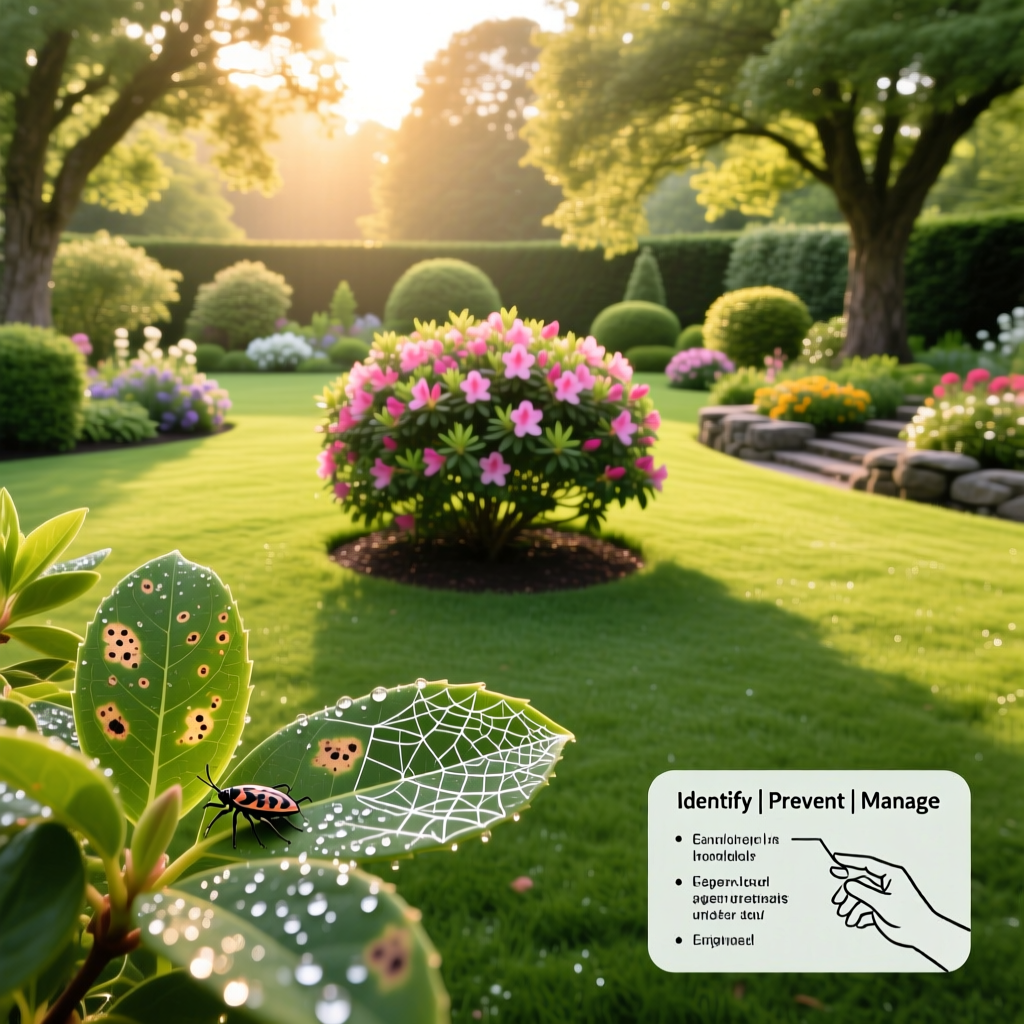
How to Identify & Manage Lace Bug Damage on Ornamental Trees & Shrubs
Lisa ThompsonPublished
Lace bugs are among the most common yet frequently misdiagnosed pests affecting ornamental trees and shrubs in residential landscapes. These tiny, sap-sucking insects can cause significant aesthetic and physiological damage to prized landscape plants if left unchecked. Homeowners often mistake lace bug damage for drought stress, nutrient deficiency, or fungal disease — leading to ineffective treatments and continued plant decline.
Understanding the biology, behavior, and preferred host plants of lace bugs is the first step toward effective management. Whether you are dealing with an active infestation or looking to prevent one, this comprehensive guide will walk you through everything you need to know about identifying and managing lace bug damage on ornamental trees and shrubs. For broader landscape health strategies, explore our lawn care guides and tree care resources to keep your entire yard thriving.
Understanding Lace Bugs: Biology, Behavior & Host Plants
Lace bugs belong to the family Tingidae and are named for the intricate, lace-like pattern on their wings and thorax. Adult lace bugs are small — typically measuring between 1/8 and 3/8 of an inch long — with flattened bodies and delicate, transparent wings held flat over their backs. Despite their ornate appearance under magnification, these insects are serious pests that feed on the undersides of leaves using piercing-sucking mouthparts.
Common Species of Lace Bugs
Several species of lace bugs target ornamental trees and shrubs across different regions. The most frequently encountered species include:
- Azalea Lace Bug (Stephanitis pyrioides): One of the most destructive species, primarily attacking azaleas and rhododendrons. This pest is particularly problematic in partially shaded landscapes.
- Andromeda Lace Bug (Stephanitis takeyai): Targets Japanese andromeda (Pieris japonica) and related shrubs, causing severe stippling on new growth.
- Hawthorn Lace Bug (Corythucha cydoniae): Attacks hawthorn, cotoneaster, pyracantha, and other members of the rose family.
- Sycamore Lace Bug (Corythucha ciliata): Found on sycamore trees and occasionally on other broadleaf trees in urban landscapes.
- Oak Lace Bug (Corythucha arcuata): Feeds on various oak species, particularly white oak and chestnut oak.
- Rhododendron Lace Bug (Stephanitis oberti): Closely related to the azalea lace bug but with a preference for rhododendron species.
Life Cycle & Feeding Behavior
Lace bugs typically complete two to four generations per year depending on the species and local climate conditions. Adults overwinter in protected areas such as bark crevices, leaf litter, and branch junctions. As temperatures warm in spring, females emerge and begin laying small, dark, flask-shaped eggs on the undersides of leaves, often along or near the midrib.
Eggs hatch within one to two weeks, and nymphs begin feeding almost immediately. Nymphs pass through five developmental stages (instars) over approximately three to four weeks before reaching adulthood. Both nymphs and adults feed by inserting their needle-like mouthparts into leaf tissue and extracting chlorophyll-rich cell contents. This feeding creates the characteristic stippling damage that is the hallmark of lace bug infestation.
One critical behavioral trait is that lace bugs strongly prefer the undersides of leaves. This makes early detection difficult, as the upper leaf surface may appear only slightly affected while the underside is heavily colonized. Always inspect the lower leaf surface when evaluating ornamental trees and shrubs for potential pest problems.
Preferred Host Plants
Lace bugs exhibit strong host preferences, and knowing which plants in your landscape are susceptible is essential for proactive monitoring. Commonly affected ornamental trees and shrubs include:
- Azaleas & Rhododendrons
- Japanese Andromeda (Pieris japonica)
- Hawthorn & Cotoneaster
- Sycamore & London Plane Trees
- Oaks (especially white oak group)
- Mountain Laurel
- Serviceberry
- Pyracantha
- Willow
- Basswood & Linden
If your landscape features any of these plants, regular inspection during the growing season is essential. Maintaining overall plant health through proper tree watering practices and healthy soil management helps plants tolerate and recover from lace bug feeding more effectively.
How to Identify Lace Bug Damage on Ornamental Trees & Shrubs
Early identification is the cornerstone of effective lace bug management. Because these insects are small and feed on leaf undersides, infestations can become well-established before a homeowner notices any visible symptoms. Learning the progressive signs of damage will help you catch problems early and intervene before severe defoliation occurs.
Early-Stage Symptoms
The earliest visible sign of lace bug feeding is stippling — tiny, pale yellow or whitish dots scattered across the upper leaf surface. Each dot represents a single feeding puncture where the insect has drained the contents of an individual plant cell. At this stage, the damage may be subtle and easily confused with spider mite feeding or minor nutrient deficiencies.
To confirm lace bug activity, flip the leaves over and examine the undersides carefully. You should look for:
- Live insects: Small, flattened bugs with lacy wings (adults) or dark, spiny nymphs
- Dark fecal spots: Tar-like black droppings that appear as small, shiny dots on the leaf underside — this is one of the most reliable diagnostic indicators
- Egg clusters: Tiny, dark, flask-shaped eggs embedded along leaf veins
- Cast skins: Translucent, empty nymphal skins left behind after molting
Mid-Stage Damage Progression
As feeding continues, the individual stippling spots merge into larger chlorotic (yellowed) areas. The upper leaf surface takes on a bleached, silvery, or bronze appearance. Leaves may begin to look scorched or washed out, and the overall canopy of the affected plant appears unhealthy and thin.
At this stage, the undersides of leaves will typically be heavily marked with dark fecal deposits, giving them a dirty, sooty appearance. The combination of upper-surface chlorosis and lower-surface dark spotting is virtually diagnostic of lace bug damage and helps distinguish it from other common ornamental plant problems.
Severe Infestation Symptoms
When lace bug populations are left unmanaged through multiple generations, the damage becomes severe and unmistakable:
- Extensive leaf yellowing and bronzing affecting large portions of the canopy
- Premature leaf drop — heavily damaged leaves abscise and fall from the plant
- Reduced flowering on ornamental shrubs such as azaleas and rhododendrons
- Stunted new growth and overall plant vigor decline
- Branch dieback in extreme cases, particularly on stressed or young plants
- Increased susceptibility to secondary pests, diseases, and environmental stress
Distinguishing Lace Bug Damage from Other Problems
Several other issues can produce symptoms similar to lace bug damage. Here is how to tell them apart:
- Spider mites: Also cause stippling, but produce fine webbing on leaf undersides and lack the dark fecal spots characteristic of lace bugs.
- Leafhoppers: Cause "hopperburn" — browning of leaf tips and margins — rather than uniform stippling across the leaf surface.
- Nutrient deficiency: Iron chlorosis produces uniform yellowing between veins, without the discrete stippling dots or underside fecal deposits.
- Drought stress: Causes wilting, curling, and marginal browning rather than the pin-point stippling pattern of lace bug feeding.
- Fungal leaf spots: Produce defined lesions with borders, often with fruiting bodies visible, unlike the feeding punctures of lace bugs.
Accurate diagnosis prevents wasted time and resources on the wrong treatment. If you are unsure about what is affecting your plants, consult with a local extension service or certified arborist. Our guide to common tree diseases can also help you rule out other potential causes of leaf discoloration.
Proven Strategies for Managing & Controlling Lace Bug Infestations
Effective lace bug management requires an integrated approach that combines cultural practices, biological controls, and targeted chemical treatments when necessary. The goal is not necessarily total eradication — a small lace bug population causes minimal damage — but rather keeping populations below thresholds that cause unacceptable aesthetic or physiological harm.
Cultural Controls: Prevention Through Proper Plant Care
The foundation of lace bug management starts long before any insecticide is applied. Healthy, well-maintained plants are inherently more resistant to pest damage and recover more quickly from feeding injury.
- Site Selection: Plant susceptible species in appropriate locations. Azaleas and rhodendrons, for example, perform best in partial shade with acidic, well-drained soil. Plants growing in full sun or unsuitable soil conditions are more stressed and more attractive to lace bugs.
- Proper Watering: Maintain consistent soil moisture, particularly during hot, dry periods. Drought-stressed plants produce biochemical signals that actually attract sap-sucking insects. Follow our tree watering guide for best practices.
- Mulching: Apply a two- to three-inch layer of organic mulch around the base of ornamental trees and shrubs to conserve moisture, regulate soil temperature, and reduce root competition from turfgrass.
- Fertilization: Avoid excessive nitrogen fertilization, which promotes rapid, succulent growth that is more attractive to lace bugs. Use slow-release, balanced fertilizers based on soil test results. Learn more about fertilizing fundamentals to support overall landscape health.
- Sanitation: Remove and dispose of heavily infested leaves and fallen debris during the growing season and in autumn to reduce overwintering populations.
Biological Controls: Harnessing Natural Predators
Lace bugs have numerous natural enemies that can provide significant population suppression when conditions are favorable. Preserving and encouraging these beneficial organisms is a key component of sustainable pest management:
- Lady beetles: Both adult and larval lady beetles consume lace bug nymphs and eggs.
- Green lacewings: Lacewing larvae are voracious predators of soft-bodied insects, including lace bug nymphs.
- Minute pirate bugs (Orius species): Small but highly effective predators that actively hunt lace bugs on leaf surfaces.
- Parasitic wasps: Certain mymarid wasps parasitize lace bug eggs, reducing the number of nymphs that hatch.
- Predatory mites: Some species feed on lace bug eggs and young nymphs.
- Entomopathogenic fungi: Naturally occurring fungi such as Beauveria bassiana can infect and kill lace bugs under humid conditions.
To protect beneficial insect populations, avoid broad-spectrum insecticide applications whenever possible. Instead, use targeted treatments that minimize impact on non-target organisms. Planting a diverse landscape with flowering plants that provide nectar and pollen resources supports robust populations of predatory insects throughout the growing season. A biodiverse yard supported by organic lawn care practices creates an ecosystem where natural predators thrive.
Mechanical & Physical Controls
For small infestations or as a supplement to other methods, mechanical controls can be surprisingly effective:
- Water sprays: A strong jet of water directed at the undersides of leaves can dislodge nymphs and adults. This must be repeated regularly, as surviving insects will recolonize.
- Hand removal: On small shrubs, physically removing and destroying heavily infested leaves can reduce populations significantly.
- Sticky barriers: Applying horticultural glue bands around tree trunks can intercept lace bugs migrating from the ground or lower vegetation.
Chemical Controls: Targeted Treatment Options
When cultural and biological controls are insufficient to keep lace bug populations below damaging levels, targeted chemical treatments may be warranted. The key is to use the most selective, least environmentally disruptive option that will achieve adequate control.
Least-Toxic Options
- Insecticidal soaps: Potassium salts of fatty acids that kill soft-bodied insects on contact by disrupting cell membranes. Must be applied directly to insects on leaf undersides. Effective against nymphs but less effective against adults. Requires thorough coverage and repeat applications at five- to seven-day intervals.
- Horticultural oils: Neem oil and petroleum-based horticultural oils kill lace bugs through suffocation and disruption of feeding behavior. Summer-weight oils can be applied during the growing season, while dormant-rate applications in late winter can target overwintering adults and eggs. Oils must contact the insects directly to be effective.
- Botanical insecticides: Products containing azadirachtin (derived from neem) or pyrethrins provide contact and systemic activity against lace bugs with relatively short residual periods that are less harmful to beneficial insects.
Conventional Insecticides
For severe infestations requiring stronger intervention:
- Systemic insecticides: Products containing imidacloprid or dinotefuran can be applied as soil drenches or trunk injections. These are taken up by the plant's vascular system and kill lace bugs as they feed. Systemic treatments provide extended control (several weeks to months) with minimal impact on beneficial insects that do not feed on plant sap. Apply in early spring before populations build.
- Contact insecticides: Products containing bifenthrin, lambda-cyhalothrin, or carbaryl provide rapid knockdown of active populations. However, these broad-spectrum products also kill beneficial predators and pollinators, and should be used only as a last resort.
Application timing is critical. Target treatments for the first generation of nymphs in late spring, when they are small and most vulnerable. Monitoring leaf undersides weekly starting in early spring allows you to time treatments precisely. A second application may be needed for species with multiple generations. Always read and follow label instructions completely — the label is the law.
Seasonal Care Calendar for Preventing Lace Bug Damage
Proactive, season-by-season management is far more effective than reactive crisis treatment. Follow this seasonal care calendar to stay ahead of lace bug problems and keep your ornamental trees and shrubs healthy year-round.
Early Spring (Dormancy Break to Bud Swell)
This is one of the most important windows for lace bug prevention:
- Inspect all susceptible plants carefully, examining leaf undersides of any evergreen hosts that retained foliage through winter.
- Apply dormant horticultural oil sprays to smother overwintering adults and eggs on evergreen species such as azaleas and rhododendrons.
- Apply soil-applied systemic insecticides (if planned) so the active ingredient is translocated into new growth before lace bugs begin feeding.
- Clean up fallen leaf debris and old mulch around susceptible plants to remove overwintering sites.
- Begin a regular monitoring schedule — check leaf undersides at least once per week.
- Ensure plants are receiving adequate water as new growth emerges. Refer to our spring tree care checklist for comprehensive guidance.
Late Spring to Early Summer (First Generation Activity)
This period typically coincides with the first major generation of lace bug nymphs:
- Continue weekly monitoring of susceptible plants, paying special attention to new growth.
- Apply insecticidal soap or horticultural oil at the first sign of nymph activity, ensuring thorough coverage of leaf undersides.
- Encourage beneficial predators by avoiding broad-spectrum insecticide applications.
- Maintain consistent watering and avoid plant stress during this critical growth period.
- If populations exceed treatment thresholds despite initial interventions, consider a targeted systemic or contact insecticide application.
Mid-Summer to Late Summer (Subsequent Generations)
Lace bug populations often peak during hot, dry midsummer conditions:
- Intensify monitoring, as populations can increase rapidly during warm weather.
- Apply repeat treatments of contact products (soaps, oils) at labeled intervals if populations persist.
- Prioritize irrigation — drought-stressed plants suffer more damage and attract more lace bugs.
- Remove and destroy heavily infested leaves to reduce population pressure.
- Avoid pruning during peak infestation periods, as wounds can attract secondary pests and diseases. For proper pruning timing, see our tree pruning guide.
Autumn (Population Decline & Preparation)
As temperatures cool, lace bug activity decreases and adults seek overwintering sites:
- Rake and remove fallen leaves from around susceptible plants to eliminate sheltered overwintering habitat.
- Apply fresh mulch to protect root systems through winter, but avoid piling mulch against trunks.
- Conduct a final inspection of evergreen hosts and treat any remaining active populations before insects move to overwintering sites.
- Assess the season's damage and plan management adjustments for the following year.
- Consider planting resistant cultivars as replacements for chronically infested plants. Learn more about selecting the right plants in our ornamental tree selection guide.
Winter (Dormant Season Planning)
While lace bugs are inactive during winter, this is an ideal time for strategic planning:
- Review records of past infestations to identify patterns and high-risk areas in your landscape.
- Order treatment supplies and schedule application dates for the coming spring.
- Research and source resistant plant cultivars for any planned landscape renovations.
- Perform structural pruning on deciduous trees while they are dormant and easy to inspect. Our winter tree maintenance tips provide detailed guidance.
Long-Term Strategies for Lace Bug-Resistant Landscapes
Beyond seasonal management, several long-term strategies can dramatically reduce lace bug pressure in your landscape over time.
Selecting Resistant Cultivars
Plant breeders have developed numerous ornamental cultivars with improved resistance to lace bug feeding. When planting new azaleas, rhododendrons, or other susceptible species, seek out resistant varieties:
- Azaleas: Indica hybrids and many Kurume azalea cultivars show greater resistance compared to highly susceptible greenhouse and Belgian Indica types. Dark-leafed cultivars tend to be less preferred.
- Rhododendrons: Species with thick, hairy, or heavily indumented leaves (such as Rhododendron yakushimanum hybrids) are less attractive to lace bugs.
- Andromeda: Pieris floribunda is notably more resistant to lace bugs than the commonly planted Pieris japonica.
Landscape Design for Pest Reduction
Thoughtful landscape design can create conditions that naturally suppress lace bug populations:
- Diverse plantings: Monocultures of susceptible plants create ideal conditions for lace bug population explosions. Mix species and cultivars to disrupt pest colonization patterns.
- Companion planting: Include plants that attract and sustain beneficial predator populations, such as yarrow, dill, fennel, sweet alyssum, and other small-flowered species that provide nectar for predatory insects.
- Proper spacing: Adequate air circulation reduces humidity levels that favor lace bug development and makes monitoring and treatment easier.
- Stress reduction: Group plants with similar water and light requirements together to ensure optimal growing conditions and minimize plant stress.
Building a Healthy Soil Foundation
Plant health begins below ground. Soils rich in organic matter and beneficial microorganisms produce plants that are naturally more resistant to pest attack:
- Conduct regular soil tests and amend based on results rather than guessing.
- Incorporate compost and organic amendments to improve soil structure and biology.
- Avoid soil compaction around tree and shrub root zones.
- Maintain appropriate soil pH for each plant species — acid-loving plants like azaleas and rhododendrons require pH levels between 4.5 and 6.0.
- Explore our soil testing guide for detailed instructions on assessing and improving your soil.
By combining resistant cultivars, sound landscape design, and healthy soil management, you create an environment where lace bugs struggle to establish damaging populations — reducing your reliance on chemical interventions and creating a more resilient, beautiful landscape.
Frequently Asked Questions About Lace Bug Damage
Will lace bugs kill my ornamental trees and shrubs?
In most cases, lace bugs will not kill established, healthy trees and shrubs outright. However, chronic, unmanaged infestations over multiple seasons can severely weaken plants, making them vulnerable to secondary pests, diseases, and environmental stress that can ultimately lead to plant death. Young plants, recently transplanted specimens, and plants already under stress from drought, poor soil, or other factors are at greatest risk. The primary impact of lace bugs is aesthetic — the stippling, yellowing, and premature leaf drop significantly diminishes the visual appeal of ornamental plantings. Taking action at the first signs of damage prevents escalation and protects your landscape investment.
What is the best time of year to treat lace bugs?
The optimal treatment window is in early to mid-spring, when the first generation of nymphs has hatched but is still small and vulnerable. This timing varies by region and species but generally corresponds to the period when new leaves are expanding on host plants. Treating the first generation is critical because it prevents the population explosion that typically occurs in subsequent generations during summer. A second treatment may be necessary in mid-summer if monitoring reveals a significant second generation. Soil-applied systemic treatments should be applied in early spring, before or just as new growth begins, to allow time for translocation into the plant canopy. Dormant oil applications in late winter target overwintering populations on evergreen hosts and can reduce the initial spring population significantly.
Can I use natural or organic methods to control lace bugs?
Yes, several organic and natural methods are effective against lace bugs when used correctly and consistently. Insecticidal soaps and horticultural oils (including neem oil) are OMRI-listed products that provide good control of nymphs and moderate control of adults when applied with thorough coverage to leaf undersides. These products have short residual activity, so repeat applications every five to seven days during active infestations are typically necessary. Encouraging natural predators — lady beetles, lacewings, minute pirate bugs, and parasitic wasps — provides long-term biological suppression without any chemical inputs. Planting diverse, flowering companion plants and avoiding broad-spectrum insecticides helps maintain robust predator populations. For severe infestations requiring stronger intervention, botanical insecticides containing azadirachtin offer a bridge between organic and conventional options with relatively low environmental impact.
How do I know if the damage I see is from lace bugs and not another pest?
The most reliable way to confirm lace bug damage is to examine the undersides of affected leaves. Lace bug damage produces a distinctive combination of symptoms: pale stippling on the upper leaf surface paired with dark, shiny, tar-like fecal spots on the lower surface. You may also find the insects themselves — small, flattened bugs with lacy wings (adults) or dark, spiny nymphs — along with cast skins and tiny eggs along leaf veins. Spider mites cause similar stippling but produce fine webbing and lack the dark fecal deposits. Leafhoppers cause marginal browning rather than uniform stippling. Nutrient deficiencies produce more uniform yellowing patterns without the discrete feeding punctures. If you are uncertain, place a white sheet of paper beneath an affected branch and tap the foliage sharply — dislodged lace bugs will be visible as small, dark specks moving on the white surface. For additional help diagnosing plant problems, our common tree diseases guide covers many conditions that can be confused with pest damage.
Should I remove a plant that keeps getting lace bugs every year?
Not necessarily — but chronic, severe infestations are a sign that the plant may be poorly suited to its current location or that the specific cultivar is highly susceptible. Before removing a plant, consider whether cultural adjustments could improve the situation: moving it to a more appropriate light condition (many lace bug-susceptible plants prefer partial shade), improving soil conditions, or implementing a more consistent monitoring and treatment program. If the plant continues to suffer despite improved care, replacing it with a resistant cultivar of the same species or a completely different species is a practical solution. For example, replacing a susceptible Pieris japonica with the more resistant Pieris floribunda, or choosing lace bug-resistant azalea cultivars. Removing chronically stressed plants eliminates a persistent source of lace bug populations that can spread to nearby susceptible plants, improving the overall health of your landscape. Consult our ornamental tree selection guide for replacement ideas that thrive in your conditions.