
Tree Care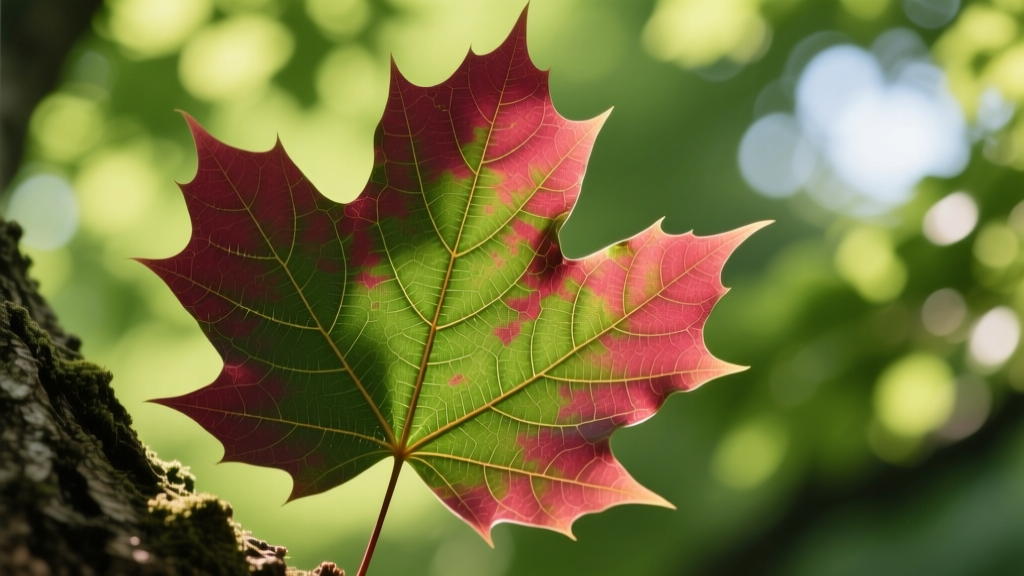
Identify Maple by Leaf: A Visual Guide to Lobes and Veins
The Botanical Framework for Maple Identification
Accurately identifying trees in the Acer genus requires moving beyond superficial fall coloration and examining structural foliar morphology. When you attempt to identify maple by leaf, you must analyze four primary anatomical features: lobe count, sinus depth and shape, margin serration, and venation patterns. While over 120 maple species exist globally, North American landscapes are dominated by a core group of species that exhibit distinct, measurable leaf characteristics.
Maple leaves are broadly classified as palmate, meaning the primary veins radiate outward from a single central point at the base of the petiole (leaf stem), much like fingers on a hand. However, environmental factors and genetic variations create significant overlap. To eliminate guesswork, arborists rely on a systematic diagnostic approach.
Essential Maple Leaf Glossary
- Lobes: The pointed or rounded extensions of the leaf blade. Most maples have 3, 5, or 7 lobes.
- Sinuses: The indentations or gaps between the lobes. These are categorized as U-shaped (rounded) or V-shaped (angular).
- Margin: The edge of the leaf. Can be entire (smooth), serrate (saw-toothed), or dentate (toothed).
- Petiole: The stalk attaching the leaf blade to the stem. Crucial for the "sap test" in specific species.
Step-by-Step Diagnostic Flow
Follow this sequential framework to narrow down the species. Skipping steps often leads to misidentification, particularly between closely related species like Red and Silver maples.
- Verify Leaf Arrangement: Before examining the leaf blade, look at the twig. Maples exhibit opposite leaf and bud arrangement (leaves grow directly across from each other on the stem). If the leaves are alternate, you are not looking at a maple.
- Count the Lobes: Count the primary points. Sugar maples typically have 5, while Red maples often have 3 to 5.
- Examine the Sinuses: Look at the gaps between lobes. Are they deep and rounded (U-shaped), or shallow and sharp (V-shaped)?
- Inspect the Underside: Flip the leaf. Silver coloration or pubescence (fine hairs) on the underside is a primary differentiator for specific species.
Comparative Matrix: 5 Common North American Maples
The following table isolates the defining morphological traits of the most frequently planted and native maples in North America. Use this matrix in the field to cross-reference your specimen.
| Species | Lobe Count | Sinus Shape | Leaf Margin | Underside / Key Trait |
|---|---|---|---|---|
| Sugar Maple (A. saccharum) | 5 (rarely 3) | U-shaped, moderate depth | Smooth to slightly wavy | Palmer green; clear sap |
| Red Maple (A. rubrum) | 3 to 5 | V-shaped, shallow | Finely serrated | Silvery-white; red petioles |
| Silver Maple (A. saccharinum) | 5 | U-shaped, very deep | Coarsely serrated | Distinctly silver/white |
| Norway Maple (A. platanoides) | 5 to 7 | U-shaped, shallow | Few, sharp teeth at tips | Exudes milky white sap |
| Japanese Maple (A. palmatum) | 5 to 9 | Deeply dissected | Finely double-serrate | Highly variable cultivars |
The Norway Maple Sap Test
Norway maple (Acer platanoides) is frequently confused with Sugar maple due to similar leaf shapes and fall coloration. However, Norway maple is an invasive species in many North American regions, making accurate identification critical for ecological management. To differentiate them in the field, perform the petiole snap test. Detach a leaf from the twig and snap the petiole. According to University of Minnesota Extension, Norway maple petioles will exude a distinct, milky-white latex sap, whereas Sugar maple petioles will only show clear, watery sap.
The Boxelder Anomaly
Boxelder (Acer negundo) is the major exception to the palmate leaf rule. It is a maple that features pinnately compound leaves, typically with 3 to 7 distinct leaflets arranged along a central stem. Beginners often mistake Boxelder for Ash or Walnut trees. Always check the twig for opposite bud arrangement to confirm it is indeed an Acer species before ruling it out based on leaflet structure.
Distinguishing Maples from Look-Alikes
Several non-maple species produce palmate leaves that mimic the maple silhouette. The most common imposter is the Sweetgum (Liquidambar styraciflua). Sweetgum leaves feature 5 to 7 pointed lobes with deep sinuses, closely resembling a maple. However, Sweetgum exhibits alternate leaf arrangement. Furthermore, Sweetgum margins are finely serrated along the entire edge, whereas many maples only have teeth at the lobe tips.
Arborist Field Tip: When identifying dormant trees in winter without leaves, examine the terminal buds. Maples typically have multiple scales on their buds, while look-alikes like the Sycamore (Platanus occidentalis) have a single, cap-like bud scale.
Phenotypic Plasticity: Sun vs. Shade Leaves
When attempting to identify maple by leaf, you must account for phenotypic plasticity—the ability of a single genetic organism to alter its physical traits based on environmental conditions. A single Sugar maple tree will produce two distinct types of leaves depending on canopy placement.
According to the USDA Forest Service Silvics of North America, "sun leaves" (those at the top of the canopy exposed to direct UV radiation) are typically smaller, thicker, and feature much deeper sinuses. This deep lobing reduces the boundary layer of still air around the leaf, promoting convective cooling and preventing photoinhibition. Conversely, "shade leaves" (lower in the canopy) are broader, thinner, and possess shallower sinuses to maximize surface area for capturing diffuse, scattered light. If you are sampling a leaf for identification, always pull from the mid-canopy to get the most morphologically representative specimen.
Summary of Diagnostic Best Practices
Accurate tree identification requires synthesizing multiple data points. Never rely on a single fallen leaf, as wind damage, insect herbivory, or genetic mutations can alter lobe counts and margins. Collect at least three leaves from different branches, verify the opposite bud arrangement on the twig, perform the sap test if Norway maple is suspected, and cross-reference your findings with the comparative matrix above. By standardizing your diagnostic flow, you eliminate the common errors that plague amateur tree identification.

