
Tree Care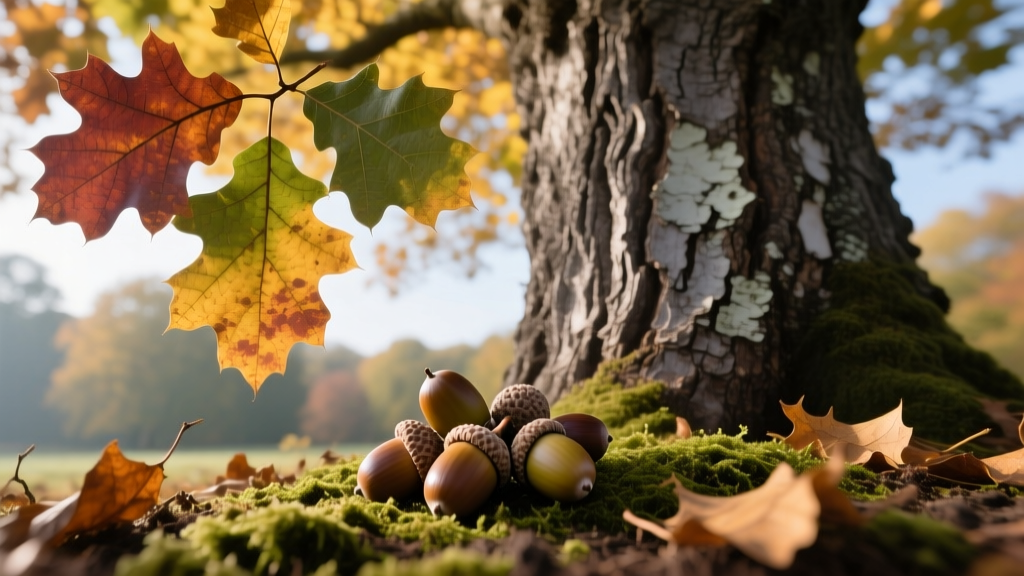
What Do Oak Trees Look Like? Leaf, Bark & Acorn ID Guide
Oaks (genus Quercus) are foundational keystone species in North American landscapes, supporting over 500 species of caterpillars and providing critical mast for wildlife. However, accurately identifying the specific oak species in your yard is not just an academic exercise—it dictates your pruning schedule, disease management strategy, and soil amendment choices. Misidentifying a red oak as a white oak can lead to catastrophic losses from oak wilt if pruned at the wrong time of year.
Because there are over 90 oak species native to North America, answering the question of what oak trees look like requires breaking down their morphology into four distinct diagnostic categories: leaf structure, bark texture, acorn morphology, and twig characteristics. Below is a comprehensive field guide to identifying the oaks in your landscape.
The Critical Divide: White Oaks vs. Red Oaks
Before identifying a specific species, you must determine which of the two primary subgenera your tree belongs to: the white oak group (Quercus subgenus Leucobalanus) or the red/black oak group (Quercus subgenus Erythrobalanus). This distinction is the most vital piece of information for arborists and homeowners, primarily due to susceptibility to Bretziella fagacearum, the fungus responsible for oak wilt.
| Diagnostic Feature | White Oak Group (e.g., White, Bur, Chestnut) | Red Oak Group (e.g., Red, Pin, Black, Scarlet) |
|---|---|---|
| Leaf Lobe Tips | Rounded, smooth, lacking bristles | Sharp, pointed, tipped with a distinct bristle |
| Acorn Maturation | 1 year (drops same autumn it forms) | 2 years (remains on tree through first winter) |
| Acorn Taste | Sweet, low tannin (preferred by wildlife) | Bitter, high tannin |
| Inner Bark Color | Light gray to white | Pinkish, reddish, or dark brown |
| Oak Wilt Risk | Low (fungus contained by tyloses in xylem) | Extremely High (rapid canopy death via root grafts) |
According to the Texas A&M Forest Service, red oaks can succumb to oak wilt within weeks of infection, while white oaks may survive for years due to specialized water-conducting cells called tyloses that block the fungus from spreading. Consequently, you must never prune red oaks between April and July when Nitidulid sap beetles are most active.
Decoding Oak Leaves: Lobes, Sinuses, and Margins
When observing what oak leaves look like, focus on the architecture of the leaf blade. Oak leaves are generally alternate, simple, and deciduous (though some southern species like the Live Oak are evergreen). The primary identifiers are the lobes (the protruding sections) and the sinuses (the indentations between lobes).
The Bristle Test: Run your thumb gently along the tip of a leaf lobe. If you feel a sharp, hair-like extension (a bristle or awn), you are holding a red oak leaf. If the tip is entirely smooth and rounded, it belongs to the white oak group. Pin oaks (Quercus palustris) feature exceptionally deep sinuses that cut almost to the midrib, creating a distinct, skeletal appearance.
Leaf sizes vary dramatically. The massive leaves of the Swamp White Oak (Quercus bicolor) can reach 8 inches long with shallow, rounded lobes and a distinctively silvery-white underside. In contrast, the Blackjack Oak (Quercus marilandica) produces thick, leathery, bell-shaped leaves that are only 4 to 6 inches long with three shallow lobes at the broad apex.
Bark Textures: From Sapling to Centenarian
Bark identification requires context regarding the tree's age. Sapling oaks of almost all species feature relatively smooth, light gray bark. It is only as the tree matures and the trunk expands that the distinctive ridges, plates, and furrows develop.
- White Oak (Quercus alba): Mature bark is light ash-gray and breaks into small, overlapping, scaly plates or flakes. It often appears almost white in direct sunlight.
- Northern Red Oak (Quercus rubra): Features dark gray to brownish-black bark with long, uninterrupted vertical ridges separated by deep, dark furrows. On mature specimens, the ridges often have a distinct "ski-track" or silvery stripe running down the center.
- Shumard Oak (Quercus shumardii): Bark is deeply furrowed and dark, but the inner bark exposed in the furrows is a vibrant, distinctive reddish-orange.
- Bur Oak (Quercus macrocarpa): Develops incredibly thick, rugged, deeply ridged bark that resembles shagbark hickory, an adaptation to survive frequent prairie fires.
Acorns and Twigs: The Winter Identification Keys
When leaves drop in late autumn, you must rely on acorns (mast) and twig structures to determine what oak trees look like in a dormant state. The acorn consists of the nut and the cupule (cap). The depth of the cupule and the texture of its scales are highly diagnostic.
"Acorn production is not annual for most oaks. Mast years, where a tree drops thousands of acorns, occur every 2 to 5 years as an evolutionary defense against seed predators. Finding zero acorns under a healthy mature oak in a given autumn is entirely normal."
The Bur Oak produces the largest acorns of any North American species, with nuts measuring up to 1.5 inches long, heavily fringed by a deep, burr-like cap that covers more than half the nut. Conversely, the Cherrybark Oak (Quercus pagoda) yields tiny, shallow-capped acorns barely half an inch in length.
Terminal Buds and Pith
Examine the tip of a dormant twig. Red oaks typically feature a cluster of three to five prominent, pointed terminal buds that are often reddish-brown and slightly hairy. White oak terminal buds are shorter, blunt, and smooth. If you snap a twig, the pith (the central core) of a red oak is usually star-shaped or pentagonal in cross-section, while white oak pith is circular.
Common Look-Alikes and How to Tell Them Apart
Homeowners frequently confuse oaks with other deciduous hardwoods. Use these specific morphological checks to rule out common imposters, as noted by the Arbor Day Foundation's Tree Identification Guide.
Sweetgum vs. Oak
Sweetgum (Liquidambar styraciflua) leaves are often mistaken for oak leaves due to their deeply cut lobes. However, sweetgum leaves are palmate (star-shaped) with five to seven lobes radiating from a single central point, much like a maple. Oak leaves are pinnate, meaning the lobes radiate sequentially along a central midrib vein, not from a single basal point.
Maple vs. Oak
While some maples (like the Red Maple) have lobed leaves, maples always exhibit opposite bud and leaf arrangement on the twig. Oaks exclusively feature an alternate arrangement. If you see two leaves or buds emerging from the exact same node on opposite sides of the twig, you are looking at a maple, not an oak.
Site Selection and Soil pH Requirements
Identifying your oak species dictates its ideal planting location. Pin oaks and Willow oaks are highly adapted to heavy, poorly drained clay soils and can tolerate seasonal flooding. However, they require acidic soil (pH 5.0 to 6.5). If planted in alkaline soils (pH above 7.0), Pin oaks rapidly develop severe iron chlorosis, characterized by yellowing leaves with dark green veins, which will eventually kill the tree. White oaks and Bur oaks are far more tolerant of alkaline soils and drought conditions, making them superior choices for upland, well-drained suburban lots. Always conduct a $15-$25 soil test through your local university extension office before planting a new oak to ensure the soil pH matches the species' physiological requirements.

