
Tree Care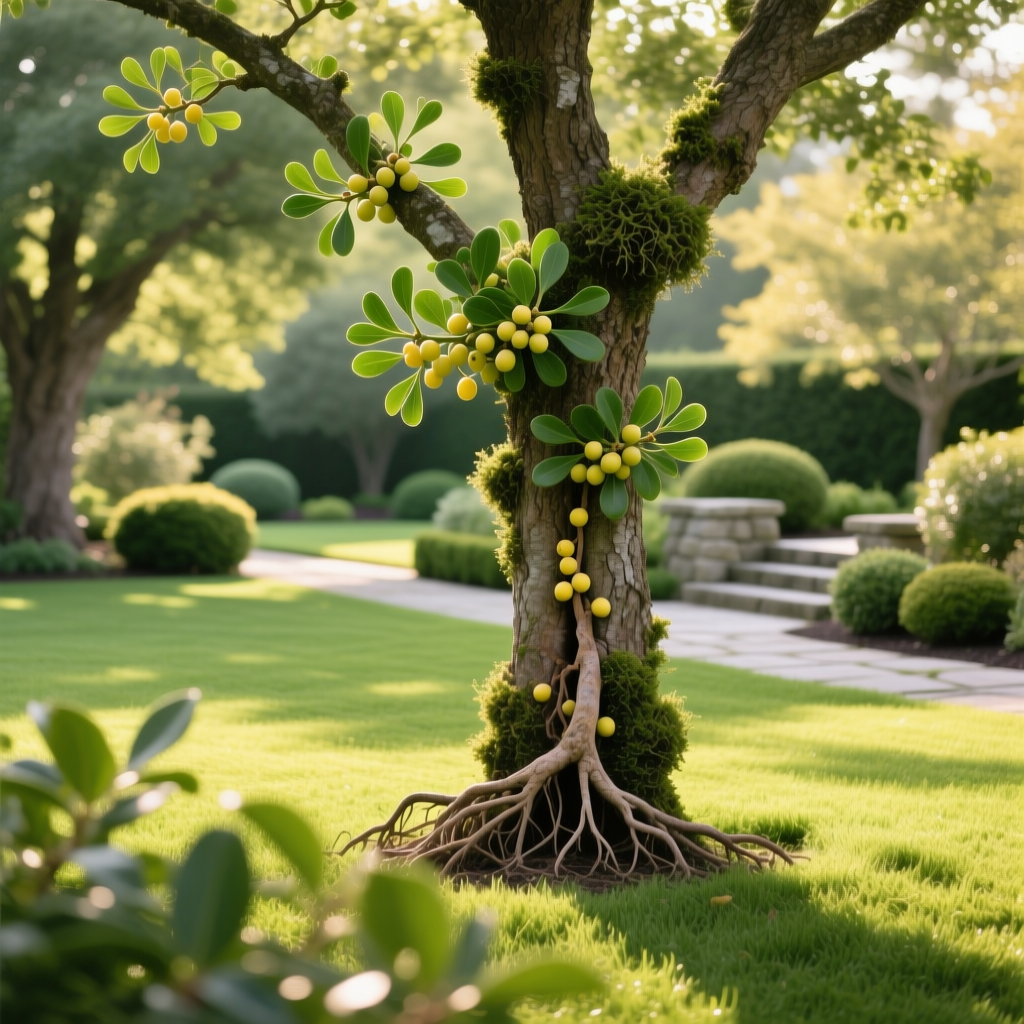
How to Identify & Remove Parasitic Mistletoe from Landscape Trees
Anna KowalskiPublished
While mistletoe is widely celebrated in holiday traditions and romanticized in popular culture, for homeowners and arborists, it represents a significant threat to the health and longevity of landscape trees. Mistletoe is not merely an epiphyte (a plant that grows on another plant for physical support); it is a parasitic plant that actively steals vital resources from its host. If left unchecked, a severe mistletoe infestation can lead to stunted growth, structural weakness, increased susceptibility to secondary diseases, and eventually, the premature death of the tree.
Managing this persistent parasite requires a comprehensive understanding of its biology, how it spreads, and the most effective mechanical and cultural control methods available. Whether you are dealing with a minor outbreak in a single backyard oak or a widespread infestation across a mature suburban canopy, taking proactive steps is essential. This comprehensive guide will walk you through everything you need to know to identify, manage, and remove parasitic mistletoe from your landscape trees, ensuring your outdoor space remains healthy, safe, and beautiful for generations to come.
Identifying Parasitic Mistletoe in Your Landscape
Before you can effectively treat or remove mistletoe, you must be able to accurately identify it and distinguish it from other common tree growths, such as epicormic shoots or witches' brooms caused by fungal infections. Mistletoe belongs to a diverse group of parasitic plants, but the most common types found in North American landscapes are broadleaf mistletoes (genus Phoradendron) and dwarf mistletoes (genus Arceuthobium).
Broadleaf mistletoe is the variety most people recognize. It features thick, leathery, green leaves that grow in opposite pairs along the stem. During the fall and winter months, it produces small, sticky, white or translucent berries. These clumps of foliage often form dense, rounded masses high up in the tree canopy, sometimes referred to as 'witches' brooms,' though true witches' brooms are typically caused by pathogens rather than parasites. Because broadleaf mistletoe retains its green leaves year-round, it is particularly easy to spot in deciduous trees during the winter when the host tree has dropped its own foliage.
Dwarf mistletoe, on the other hand, is much smaller and lacks true leaves. It appears as small, yellowish, greenish, or reddish shoots erupting directly from the bark of the host tree, primarily affecting conifers like pines, spruces, and firs. Dwarf mistletoe causes severe swelling on the infected branches, leading to distorted growth and significant structural weakness.
Understanding how mistletoe spreads is also crucial for identification and prevention. The sticky berries are a favorite food source for various bird species, including cedar waxwings, robins, and the phainopepla. After consuming the berries, birds either excrete the seeds or wipe their beaks on tree branches to clean off the sticky residue, known as viscin. This viscin acts like a biological glue, firmly attaching the seed to the bark of a new host tree. Once the seed germinates, it sends out a specialized root-like structure called a radicle, which penetrates the tree's bark and establishes a connection with the host's vascular system.
The Impact of Mistletoe on Tree Health & Vigor
Mistletoe is classified as a hemiparasite. This means that while it contains chlorophyll and can perform some photosynthesis to create its own carbohydrates, it relies entirely on the host tree for water, minerals, and essential nutrients. It achieves this through the haustorium, a complex internal structure that bypasses the tree's outer bark and taps directly into the xylem—the tissue responsible for transporting water and dissolved minerals from the roots to the leaves.
The immediate impact of this resource theft is increased water stress. A tree heavily infested with mistletoe must work much harder to draw enough water from the soil to support both its own foliage and the parasitic clumps. During periods of drought or extreme summer heat, the host tree will often exhibit wilting, premature leaf drop, and dieback in the branches located above or around the mistletoe colonies. The tree essentially starves and dehydrates from the inside out.
Beyond nutrient and water theft, mistletoe causes severe structural damage. The physical presence of the haustorium disrupts the normal flow of sap, causing the branch to swell and weaken at the point of infection. Dense clumps of broadleaf mistletoe can become incredibly heavy, especially after a rainstorm or when coated in winter ice. This added weight, combined with the compromised structural integrity of the infected wood, significantly increases the risk of branch failure. Falling limbs pose a severe hazard to property, pedestrians, and underlying lawn areas.
Furthermore, trees stressed by parasitic infestations are far more vulnerable to secondary invaders. Borers, bark beetles, and various fungal pathogens are naturally drawn to weakened trees. A mistletoe infestation is rarely an isolated problem; it is often the catalyst for a cascade of health issues that can ultimately lead to the total loss of the landscape tree if not addressed through proper common tree diseases management and proactive care.
Effective Pruning & Removal Techniques
The most reliable and immediate method for controlling mistletoe is mechanical removal through strategic pruning. However, simply snapping off the visible green clumps is entirely ineffective. Because the haustorium remains embedded deep within the wood, the mistletoe will simply resprout, often sending out multiple new shoots in a hydra-like fashion. To truly remove the parasite, you must cut out the infected wood.
When planning your pruning strategy, it is vital to follow proper tree pruning techniques to avoid causing unnecessary harm to the host tree. The goal is to remove the mistletoe while preserving the tree's natural defense mechanisms and structural balance.
- Assess the Infection Level: If a branch is heavily infested with multiple clumps of mistletoe and shows significant dieback, the best course of action is to remove the entire branch back to the main trunk or a major lateral branch. Make the cut just outside the branch collar to promote rapid healing and compartmentalization.
- Pruning Below the Infection: If the mistletoe is located on a major scaffold branch that you do not want to remove entirely, you must cut the branch at least 12 to 18 inches below the visible point of attachment. The haustorium can extend far beyond the visible swelling, and cutting too close to the clump will leave parasitic tissue behind to regenerate.
- Flush Cuts and Bark Tearing: Never make flush cuts directly against the trunk, and never tear the bark by allowing heavy branches to fall uncontrolled. Clean, sharp cuts made with sanitized pruning saws or loppers are essential to prevent the introduction of fungal spores and wood-decaying organisms.
- Tool Sanitation: Always clean your pruning tools with a disinfectant solution, such as a 10% bleach solution or isopropyl alcohol, between cuts and especially between different trees. This prevents the accidental transmission of pathogens from an infected tree to a healthy one.
For large, mature trees where the mistletoe is located high in the canopy, ground-level pruning is impossible and highly dangerous. In these cases, it is strongly recommended to hire a certified arborist equipped with the proper climbing gear or aerial lifts to safely access and remove the infected wood without damaging the surrounding landscape or turf.
Chemical Treatments & Long-Term Management
While pruning is the primary defense against mistletoe, chemical controls can be used as a supplementary measure, particularly in cases where pruning would require the removal of too much live canopy, severely compromising the tree's health. The most commonly used chemical treatment for broadleaf mistletoe is ethephon, a plant growth regulator that breaks down into ethylene gas within the plant tissues.
When applied to the foliage of the mistletoe, ethephon causes the parasitic shoots to abscise, or drop off, usually within a few weeks. However, it is critical to understand that ethephon does not kill the internal haustorium. It only removes the visible, photosynthetic growth. Because the root-like structure remains alive inside the host's wood, the mistletoe will eventually resprout. Therefore, chemical treatment is not a one-time cure but rather a long-term management strategy that requires reapplication every few years to keep the parasite suppressed.
Chemical applications must be timed perfectly, typically during the dormant season or early spring before the host tree leafs out, to ensure maximum coverage of the mistletoe and to minimize drift onto desirable plants. Due to the complexities of chemical application and the potential for phytotoxicity, this route is best handled by licensed pest control professionals or certified arborists.
Long-term management of mistletoe relies heavily on maintaining the overall vigor of the host tree. A robust, healthy tree can better tolerate the resource drain caused by a mild parasitic infection. This involves deep, infrequent watering practices that encourage deep root growth, as outlined in our guide to watering mature trees. Additionally, maintaining proper soil nutrition through soil testing and amendments ensures the tree has access to the micronutrients it needs to outcompete the parasite and compartmentalize pruning wounds effectively.
Mulching is another vital component of long-term tree health. A wide ring of organic mulch helps retain soil moisture, regulates soil temperature, and reduces competition from turfgrass roots. Reviewing mulching basics can help you establish the perfect environment for your trees to thrive, making them naturally more resilient against environmental stressors and parasitic attacks.
Seasonal Tips for Mistletoe Control & Tree Care
Managing mistletoe is a year-round endeavor, with different seasons offering unique opportunities for inspection, treatment, and prevention. Aligning your tree care routine with the natural cycles of the parasite and the host tree will yield the best results.
Winter: This is the absolute best time for inspecting deciduous trees for broadleaf mistletoe. With the host tree's leaves gone, the green, leafy clumps of the parasite stand out starkly against the gray winter sky. Use this time to map out the extent of the infestation and schedule professional pruning services before the spring growth flush begins. Winter is also the ideal time to apply dormant horticultural oils for secondary pests that may be targeting your stressed trees.
Spring: As temperatures warm, both the tree and the mistletoe begin their active growth phases. If you are utilizing chemical controls like ethephon, early spring (before the host tree fully leafs out) is often the recommended window for application. Ensure that any pruning wounds made during the winter are healing properly and that the tree is receiving adequate spring moisture to support new, healthy foliage.
Summer: Summer is a period of high stress for infested trees. The combination of heat, high transpiration rates, and the water-stealing nature of the mistletoe can lead to severe canopy dieback. Focus your efforts on deep, supplemental watering and maintaining a thick layer of mulch over the root zone to conserve moisture. Avoid heavy pruning during the heat of summer, as this can expose the inner bark to sunscald and further stress the tree.
Fall: During the autumn months, mistletoe produces its sticky, white berries. This is the primary dispersal period. While you cannot easily stop birds from eating the berries, you can monitor your trees and neighboring properties for new seedlings. Promptly removing young, newly established mistletoe plants before they develop a deep haustorium is much easier than dealing with a mature, entrenched colony.
Frequently Asked Questions
Will mistletoe kill my tree?
Mistletoe rarely kills a mature, healthy tree outright in a short period. However, it acts as a chronic stressor that slowly degrades the tree's vitality over many years. By continuously siphoning water and nutrients, mistletoe weakens the tree's immune system, making it highly susceptible to fatal secondary issues like severe drought stress, root rot, bark beetle infestations, and wood-decaying fungi. In cases of extreme, unmanaged infestation, the cumulative structural damage and resource depletion will eventually lead to the tree's death.
Can I just pull the mistletoe off the branch?
No, pulling or snapping the visible green clumps off the branch is highly discouraged. This method only removes the external growth while leaving the haustorium (the internal root system) completely intact within the wood. Not only will the mistletoe rapidly resprout, but the physical tearing can also strip the bark from the host branch, creating open wounds that invite disease and decay. Always use clean, sharp pruning tools to cut the wood below the infection site.
How does mistletoe spread to other trees?
Mistletoe spreads primarily through the intervention of birds. The plant produces sticky, nutrient-rich berries that attract various bird species. After eating the berries, the birds excrete the seeds or wipe their beaks on nearby branches to remove the sticky viscin. This glue-like substance firmly anchors the seed to the bark of a new host tree, where it germinates and penetrates the vascular system. Mistletoe can also spread slowly from branch to branch within the same tree via root-like runners beneath the bark.
Are there tree species resistant to mistletoe?
While no tree species is entirely immune to parasitic attack, some are highly resistant or rarely affected. Broadleaf mistletoe tends to favor specific hosts, including oaks, hickories, maples, elms, and certain fruit trees like apples and pears. Conifers are generally targeted by the more destructive dwarf mistletoe. Trees such as Bradford pears, ginkgo, and certain species of magnolias are rarely bothered by mistletoe. If you live in an area with high mistletoe prevalence, consulting with a local extension office or arborist about resistant species is a smart strategy for new landscape plantings.
Should I hire an arborist for mistletoe removal?
If the mistletoe is located on small, accessible lower branches, a homeowner with proper pruning knowledge and sanitized tools can safely perform the removal. However, if the infestation is high in the canopy, involves large scaffold branches, or requires the use of ladders and chainsaws, you should absolutely hire a certified arborist. Professional arborists have the specialized equipment, climbing skills, and insurance necessary to safely remove heavy, compromised limbs without causing injury to themselves or damage to your property and underlying lawn.

