Tree Care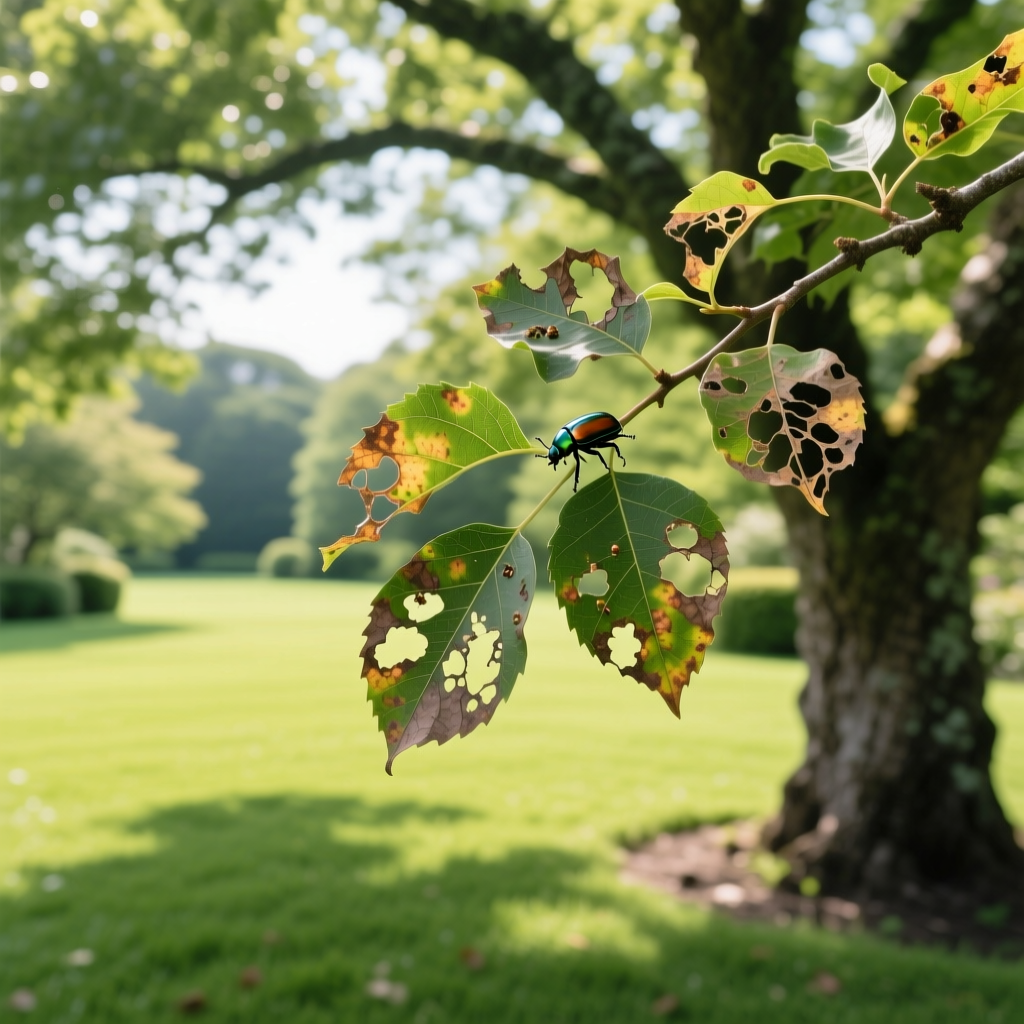
Identifying & Managing Japanese Beetle Damage on Ornamental Trees
Sarah ChenPublished
Japanese beetles (Popillia japonica) are among the most destructive pests that threaten ornamental trees across North America. Originally introduced from Japan, these metallic green and copper-colored insects have become a persistent nuisance for homeowners, landscapers, and arborists alike. Their voracious feeding habits can skeletonize leaves, weaken tree structures, and ultimately compromise the long-term health of prized ornamental specimens in your yard.
If you have invested time and resources into cultivating beautiful ornamental trees—whether flowering cherries, Japanese maples, lindens, or birches—understanding how to identify Japanese beetle damage and implement effective management strategies is essential. Left unchecked, repeated infestations can cause significant defoliation, making trees more susceptible to secondary diseases, drought stress, and other environmental pressures. A proactive approach combining early detection, cultural controls, biological treatments, and targeted chemical interventions offers the best defense for your landscape.
In this comprehensive guide, we will explore everything you need to know about Japanese beetle damage on ornamental trees, from recognizing the earliest signs of infestation to implementing season-long management plans that protect your investment. For broader guidance on maintaining a healthy landscape, explore our tree care resources and lawn care guides to ensure every element of your outdoor space thrives.
Identifying Japanese Beetles and Their Damage on Ornamental Trees
Before you can effectively manage Japanese beetles, you need to accurately identify both the insects themselves and the distinctive damage they cause. Misidentification can lead to unnecessary treatments or, worse, overlooking a serious infestation until it has caused substantial harm to your ornamental trees.
Recognizing Adult Japanese Beetles
Adult Japanese beetles are relatively easy to identify once you know what to look for. They measure approximately half an inch in length and feature a striking metallic green body with coppery-brown wing covers (elytra). A row of white tufts of hair runs along each side of the abdomen, which is a key distinguishing feature that separates them from similar-looking beetles. These adults typically emerge from the soil in early summer and remain active for roughly four to six weeks, during which time they feed, mate, and lay eggs prolifically.
Japanese beetles are most active during warm, sunny days and tend to congregate in large groups on the upper canopy leaves of their preferred host trees. Their tendency to aggregate means that damage often appears concentrated in specific areas of the tree crown, making early detection possible if you inspect your trees regularly during the summer months.
Characteristic Skeletonizing Damage
The hallmark sign of Japanese beetle feeding is a pattern known as skeletonizing. Unlike many insects that chew holes through the center of leaves, Japanese beetles feed on the soft tissue between leaf veins, leaving behind a delicate, lace-like network of veins. This skeletonized appearance is unmistakable once you have seen it and serves as one of the most reliable indicators of Japanese beetle activity.
Damage typically begins at the top of the tree canopy and on the sun-exposed sides, as the beetles prefer feeding in direct sunlight. Leaves that are heavily skeletonized will eventually turn brown, curl up, and drop prematurely. While a single season of moderate feeding may not kill a mature, established tree, consecutive years of heavy defoliation can significantly weaken ornamental specimens, reducing their vigor and making them vulnerable to borers, canker diseases, and winter injury.
Identifying Grub Damage Below Ground
Japanese beetle larvae, commonly known as white grubs, live in the soil and feed on the roots of grasses and ornamental plants. While grub damage is most commonly associated with lawn damage, heavy grub populations beneath ornamental tree canopies can also affect shallow-rooted species and newly transplanted trees. Grubs are C-shaped, creamy white, with brown head capsules, and can be found in the top few inches of soil from late summer through spring.
If you notice unexplained wilting, yellowing, or decline in ornamental trees—particularly young specimens—and you also observe patches of damaged turf nearby, grub activity may be a contributing factor. Digging carefully around the root zone can help confirm their presence.
Trees Most Susceptible to Japanese Beetle Damage
Japanese beetles are known to feed on more than 300 species of plants, but they show strong preferences for certain ornamental trees. Understanding which trees in your landscape are most at risk allows you to prioritize monitoring and treatment efforts. Highly preferred species include:
- Japanese maple (Acer palmatum)
- Norway maple (Acer platanoides)
- American linden (Tilia americana)
- Crabapple (Malus species)
- Flowering cherry and plum (Prunus species)
- Birch (Betula species)
- Elm (Ulmus species)
- Rose of Sharon (Hibiscus syriacus)
- Horsechestnut (Aesculus hippocastanum)
- Mountain ash (Sorbus species)
If your landscape includes any of these species, regular summer inspections are critical. For information on selecting and caring for pest-resistant ornamental varieties, consult our guide to choosing disease-resistant ornamental trees.
Cultural and Mechanical Management Strategies
The foundation of any effective Japanese beetle management plan begins with cultural and mechanical controls. These non-chemical approaches reduce beetle populations and minimize damage without the environmental concerns associated with broad-spectrum pesticides. When combined with good overall tree care practices, cultural methods can significantly reduce the impact of Japanese beetles on your ornamental landscape.
Hand-Picking and Physical Removal
For small to moderate infestations, hand-picking remains one of the most effective and immediate control methods. Japanese beetles are relatively sluggish in the early morning hours when temperatures are cooler, making dawn the ideal time for removal. Fill a bucket with soapy water and hold it beneath clusters of beetles on branches. Gently shake or tap the branches, and the beetles will drop into the solution, where they are quickly killed.
This method requires consistency—daily removal during peak beetle activity can dramatically reduce feeding damage over the course of the season. While it may seem labor-intensive, many homeowners find that a brief morning walk through the garden with a bucket of soapy water becomes a manageable routine that yields excellent results.
Using Row Covers and Netting
For smaller ornamental trees or recently transplanted specimens that are especially vulnerable, physical barriers such as fine mesh netting or row covers can provide effective protection during peak beetle emergence. Drape the material over the entire tree canopy and secure it at the base to prevent beetles from accessing the foliage. This approach is particularly valuable for young trees that cannot tolerate significant defoliation and for high-value specimen plantings where any damage is unacceptable.
Remove covers periodically to allow for rainfall penetration and to monitor tree health underneath. Be aware that netting should not be left on trees indefinitely, as it can restrict growth and interfere with proper air circulation around the foliage.
Maintaining Tree Health to Improve Resilience
Healthy, vigorous trees are far more capable of withstanding and recovering from Japanese beetle defoliation than stressed specimens. Proper tree care practices form the backbone of an integrated pest management strategy. Key cultural practices include:
- Deep, infrequent watering during dry periods to maintain root health and canopy vigor
- Mulching around the base of trees with two to four inches of organic material to conserve moisture, regulate soil temperature, and reduce competition from turfgrass
- Balanced fertilization based on soil test results to ensure trees receive adequate nutrients without excessive nitrogen, which can promote soft, succulent growth that attracts beetles
- Proper pruning to remove dead, damaged, or diseased branches and to improve air circulation within the canopy
For detailed guidance on seasonal tree maintenance, visit our seasonal tree maintenance checklist. Maintaining proper soil health is equally important—our soil testing guide can help you understand your soil conditions and amend them appropriately.
Selecting Resistant Tree Varieties
If Japanese beetles are a persistent problem in your area, consider gradually replacing highly susceptible ornamental species with varieties that show natural resistance. Trees that Japanese beetles tend to avoid include red maple, silver maple, white oak, red oak, hickory, tulip poplar, dogwood, and most conifers. When planning new plantings or replacements, choosing resistant species can dramatically reduce your long-term management burden.
Consult our guide to low-maintenance ornamental trees for additional species recommendations that combine beauty with pest resilience.
Biological Controls and Natural Predators
Biological control methods harness natural enemies of Japanese beetles to reduce populations over time. While these approaches may not provide the immediate results of chemical treatments, they offer sustainable, long-term suppression that benefits your entire landscape ecosystem. Integrating biological controls with cultural practices creates a robust defense system that becomes more effective with each passing season.
Milky Spore Disease (Paenibacillus popilliae)
Milky spore is a naturally occurring bacterium that specifically targets Japanese beetle grubs in the soil. When applied to turf and soil areas around ornamental trees, milky spore infects grubs that ingest the bacterial spores, killing them within one to two weeks. The dead grubs then release billions of new spores into the soil, creating a self-sustaining population that can provide control for many years after initial application.
Apply milky spore to soil areas where grubs are known to develop, including lawn areas adjacent to ornamental tree beds. The treatment is most effective when applied over a broad area, as beetles can fly in from untreated neighboring properties. Results typically build over two to three years as the spore population establishes in the soil. Milky spore is completely safe for beneficial insects, earthworms, pets, and humans, making it an excellent choice for environmentally conscious homeowners.
Beneficial Nematodes
Certain species of entomopathogenic nematodes, particularly Heterorhabditis bacteriophora (Hb nematodes), are effective biological controls for Japanese beetle grubs. These microscopic worms seek out grubs in the soil, enter their bodies, and release bacteria that kill the host within two to three days. The nematodes then reproduce inside the dead grub and emerge to seek new hosts.
Apply nematodes to moist soil during late summer or early fall when grubs are small and actively feeding near the soil surface. Irrigate the treatment area before and after application to ensure nematodes can move through the soil effectively. Nematodes are sensitive to sunlight and desiccation, so apply them in the early morning or evening and water them in immediately. For more on maintaining healthy soil biology, check our organic lawn care methods guide.
Encouraging Natural Predators
A diverse landscape supports a variety of natural predators that help keep Japanese beetle populations in check. Birds such as starlings, grackles, meadowlarks, and robins consume significant numbers of both adult beetles and grubs. Encouraging bird activity in your yard through the provision of bird baths, nesting sites, and diverse plantings can contribute to natural beetle suppression.
Ground-dwelling predators including toads, shrews, and ground beetles also feed on Japanese beetle grubs. Maintaining areas of natural ground cover and avoiding broad-spectrum insecticides that harm these beneficial creatures helps preserve this natural biological control. Parasitic wasps, particularly species of Tiphia, specifically target Japanese beetle grubs and can be attracted to the landscape by planting nectar-rich flowering plants.
Chemical Control Options for Severe Infestations
When Japanese beetle populations are high and cultural and biological methods alone cannot prevent unacceptable damage to valued ornamental trees, targeted chemical treatments may be necessary. Modern insecticides offer effective control when applied correctly and at the appropriate timing. However, chemical treatments should be viewed as one component of an integrated pest management strategy rather than a standalone solution.
Foliar Sprays for Adult Beetle Control
Contact and systemic insecticides applied to tree foliage can provide rapid knockdown of adult Japanese beetles and protect leaves from further feeding damage. Products containing active ingredients such as carbaryl, bifenthrin, or lambda-cyhalothrin offer effective contact control with residual activity lasting one to three weeks depending on the product and environmental conditions.
Timing is critical for foliar applications. Begin treatments when beetles first appear and damage is just beginning, typically in early summer. Repeat applications may be necessary during years of heavy beetle pressure, as new beetles continuously emerge from the soil over a period of several weeks. Always follow label instructions precisely, and avoid spraying during bloom periods when pollinators are active. Apply treatments in the early morning or late evening when bees are less active, and avoid spraying on windy days to prevent drift.
Systemic Soil Drenches and Trunk Injections
Systemic insecticides offer an alternative approach that avoids many of the concerns associated with foliar sprays. Products containing imidacloprid or dinotefuran can be applied as soil drenches around the base of ornamental trees in spring, several weeks before beetle emergence. The tree roots absorb the active ingredient and translocate it throughout the canopy, where it provides protection against feeding beetles for an extended period.
Soil drench applications are most effective when applied to moist soil and watered in thoroughly. They offer the advantage of minimal impact on beneficial insects and pollinators, since the insecticide is contained within the tree tissues rather than on leaf surfaces. However, systemic products should not be applied to trees that are in bloom or about to bloom, and they should be used cautiously near waterways or in areas with shallow water tables.
For large, high-value specimen trees, professional trunk injection services can deliver systemic insecticides directly into the tree vascular system. This method provides targeted control with virtually no environmental exposure and is particularly useful for trees in sensitive locations where soil or foliar applications are impractical.
Grub Control Treatments
Controlling Japanese beetle grubs in the soil reduces the number of adults that emerge in your landscape the following summer. Preventive grub control products containing chlorantraniliprole or clothianidin can be applied to lawn areas and tree beds in early summer before eggs hatch. These products are most effective when applied before grub populations reach damaging levels.
Curative treatments containing trichlorfon can be applied in late summer or early fall if grub populations are discovered after eggs have hatched. For more information on managing grubs in lawn areas surrounding your ornamental trees, refer to our lawn grub prevention and treatment guide.
Understanding the Limitations of Beetle Traps
Japanese beetle traps that use floral lures and sex pheromones are widely available and can capture impressive numbers of beetles. However, research has consistently shown that traps often attract more beetles to the area than they capture, potentially increasing damage to nearby ornamental trees. If you choose to use traps, place them at least fifty feet away from the trees you are trying to protect, and position them along property borders to draw beetles away from your landscape rather than toward it.
Seasonal Management Calendar and Long-Term Tree Recovery
Effectively managing Japanese beetles requires a year-round perspective rather than a reactive approach limited to the weeks when adults are visible. By understanding the beetle life cycle and timing your management activities to correspond with vulnerable life stages, you can maximize the impact of your efforts and minimize damage to ornamental trees throughout the growing season and beyond.
Spring Preparation (Early to Late Spring)
Spring is the time for preventive action. Apply systemic soil drenches around susceptible ornamental trees as new growth begins, allowing time for root uptake before beetles emerge. Inspect tree canopies for any lingering winter damage and perform proper pruning to remove dead or weakened branches that could compound stress from beetle feeding. Ensure trees are receiving adequate water as they break dormancy, and apply fresh mulch around the root zone to conserve moisture during the coming heat of summer.
If you plan to use milky spore or beneficial nematodes for grub control, early spring is an acceptable application window, though late summer applications targeting newly hatched grubs tend to be more effective.
Summer Vigilance (Early to Late Summer)
Summer is the active battle period when adult beetles emerge, feed, mate, and lay eggs. Monitor susceptible trees at least twice weekly during peak beetle activity. Implement hand-picking routines in the early morning, and apply foliar sprays or other contact treatments as needed when beetle numbers exceed your tolerance threshold. Continue regular watering and avoid pruning during peak stress periods unless absolutely necessary to remove severely damaged branches.
In late summer, shift your focus to grub management. Apply preventive grub treatments to lawn areas and tree beds if you have not done so already. Monitor for signs of grub activity, including wilting turf and increased bird or skunk digging in the soil.
Fall Assessment and Recovery (Early to Late Fall)
After beetle activity has ended, assess the cumulative damage to each ornamental tree. Trees that experienced significant defoliation will benefit from deep watering through the fall months to support root growth and nutrient storage before winter dormancy. Apply a slow-release, balanced fertilizer in early fall if soil tests indicate nutrient deficiencies, but avoid heavy nitrogen applications that could stimulate vulnerable late-season growth.
Curative grub treatments can be applied in early fall if populations are high. Rake and remove heavily damaged fallen leaves from around the base of affected trees to reduce overwintering sites for fungal pathogens that may exploit beetle-weakened trees. For comprehensive fall care guidance, see our fall tree care tips.
Winter Planning (Dormant Season)
Use the dormant season to evaluate the effectiveness of your management program and plan improvements for the following year. Review which trees sustained the most damage, which control methods worked best, and whether any landscape modifications—such as replacing highly susceptible species with resistant alternatives—should be incorporated into your long-term plan. Order biological control products such as milky spore and nematodes during the winter so they are on hand for early spring or summer applications.
Supporting Long-Term Tree Recovery
Trees that have suffered repeated Japanese beetle defoliation may require several seasons of dedicated care to fully recover their vigor. Prioritize deep root watering during dry periods, maintain consistent mulching practices, and monitor for secondary pest and disease problems that often follow defoliation stress. Borers, in particular, are attracted to weakened trees and can cause severe damage if not detected early. Learn more about identifying and managing secondary pests in our tree borer damage guide.
With consistent care and a well-executed integrated pest management plan, most ornamental trees can recover from Japanese beetle damage and continue to provide beauty and value to your landscape for decades to come.
Frequently Asked Questions
Will Japanese beetles kill my ornamental trees?
In most cases, a single season of Japanese beetle feeding will not kill a mature, healthy ornamental tree. These pests primarily damage leaves through skeletonization, which reduces the tree's ability to photosynthesize but rarely causes immediate mortality. However, consecutive years of heavy defoliation can progressively weaken trees, making them susceptible to secondary pests like borers, diseases such as cankers, and environmental stresses including drought and winter injury. Young trees, recently transplanted specimens, and trees already under stress from poor soil conditions or drought are at greater risk of severe consequences from Japanese beetle damage.
What is the best time of day to hand-pick Japanese beetles?
Early morning, just after sunrise, is the most effective time for hand-picking Japanese beetles. During the cool temperatures of dawn, the beetles are sluggish and less likely to fly away when disturbed. They also tend to cluster together on leaves overnight, making them easier to collect in groups. Carry a container of soapy water and hold it beneath beetle clusters while you tap or shake branches. The beetles will drop into the solution and drown quickly. Consistent daily hand-picking during the first two weeks of beetle emergence can significantly reduce overall populations and damage throughout the season.
Are Japanese beetle traps effective for protecting ornamental trees?
Japanese beetle traps are controversial among entomologists and horticulturists because research indicates they often do more harm than good when placed near valued plants. The combination of floral attractants and sex pheromones in these traps can lure beetles from considerable distances, drawing more insects into your landscape than the traps actually capture. Beetles that are attracted but not trapped may feed on nearby ornamental trees before eventually finding the trap. If you choose to use traps, place them well away from the trees you wish to protect—ideally along the far boundary of your property—and consider them a supplemental tool rather than a primary management strategy.
How can I tell the difference between Japanese beetle damage and other leaf-feeding pests?
Japanese beetle damage has a distinctive skeletonized appearance where the soft leaf tissue between veins has been consumed, leaving a lace-like network of veins intact. This pattern differs from the damage caused by other common leaf-feeding pests. Caterpillars typically chew irregular holes or consume entire leaf margins. Sawfly larvae may skeletonize leaves similarly but are usually found feeding in groups on specific host plants like roses or pines. Leaf miners create winding tunnels within leaf tissue rather than skeletonizing the surface. Japanese beetles also tend to feed from the top of the canopy downward and prefer sun-exposed leaves, which helps distinguish their damage pattern from pests that feed on lower, shaded branches.
Should I treat my lawn for grubs if I have Japanese beetle problems on my trees?
Treating lawn areas for Japanese beetle grubs can be a valuable component of your overall management strategy, as it reduces the number of adult beetles that emerge in your immediate landscape the following summer. Since Japanese beetle females prefer to lay eggs in irrigated, sunny turf areas, lawn spaces near ornamental trees are often prime egg-laying sites. Applying preventive grub treatments in early summer or using biological controls like milky spore and beneficial nematodes can reduce local beetle emergence. However, keep in mind that adult Japanese beetles are strong fliers capable of traveling several miles, so eliminating grubs on your property alone will not eliminate all beetle pressure. Grub control should be combined with canopy protection strategies for comprehensive management. For more on lawn-level grub control, visit our lawn care section for detailed treatment guides.