
Tree Care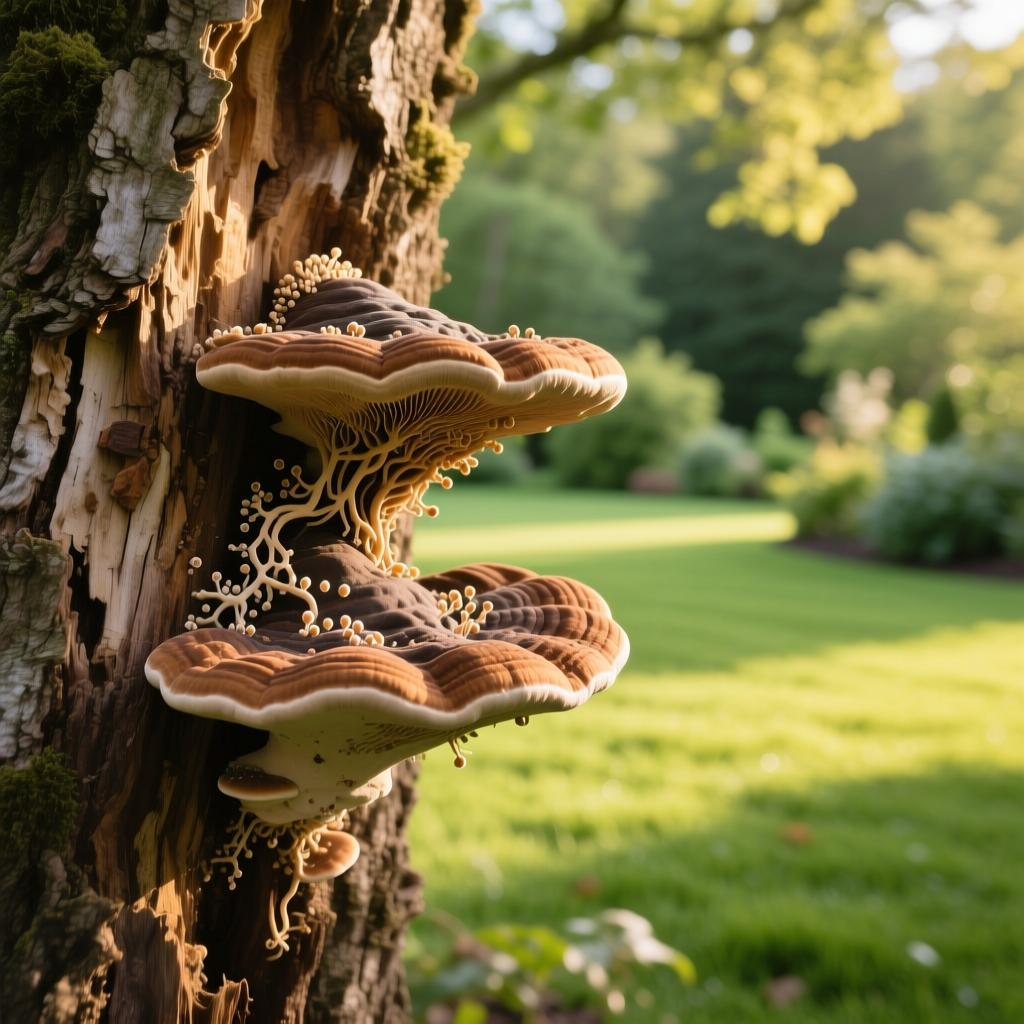
Identifying & Managing Wood Decay Fungi & Tree Conks
Lisa ThompsonPublished
Identifying & Managing Wood Decay Fungi & Tree Conks
Trees are the cornerstone of a beautiful, healthy landscape, providing shade, structure, & ecological benefits to your yard. However, beneath the bark & within the heartwood of even the most majestic trees, a silent threat can be growing. Wood decay fungi are nature's recyclers, breaking down dead organic matter. When these fungi find their way into living trees through wounds or compromised root systems, they can cause severe structural damage, ultimately leading to tree failure. The most visible sign of this internal destruction is the emergence of tree conks, also known as bracket fungi or basidiocarps.
Understanding how to identify, manage, & prevent wood decay fungi is a critical component of comprehensive landscape management. While a fungal conk might look like a fascinating natural curiosity, it is often the fruiting body of a much larger, destructive organism living inside the trunk. In this extensive guide, we will explore the biology of wood decay, how to spot the early warning signs, proper pruning techniques to prevent infection, & actionable management strategies to keep your landscape safe. For more foundational advice on maintaining your entire property, be sure to explore our complete yard maintenance guide.
Understanding Wood Decay Fungi & Tree Conks
To effectively manage wood decay, it is essential to understand the biology of the organisms responsible. Wood decay fungi primarily belong to the phylum Basidiomycota. These fungi secrete enzymes that break down the structural components of wood, specifically cellulose, hemicellulose, & lignin. Depending on which components the fungi consume, the decay is generally classified into three categories: white rot, brown rot, & soft rot.
White Rot Fungi: These fungi break down both lignin & cellulose. The affected wood becomes pale, spongy, stringy, & lightweight. White rot is the most common type of decay found in hardwood trees & is frequently associated with conks like the Artist's Conk (Ganoderma applanatum) & Turkey Tail (Trametes versicolor).
Brown Rot Fungi: These fungi primarily consume cellulose, leaving the lignin behind. The resulting wood is brown, crumbly, & often breaks into distinct cubical pieces, a phenomenon known as cubical fracture. Brown rot is more commonly associated with coniferous trees & can severely compromise the structural integrity of the trunk without showing immediate external signs.
Soft Rot Fungi: These are less aggressive & typically attack wood that is already highly saturated with moisture or in contact with the soil. They break down cellulose but leave the lignin largely intact, resulting in a soft, punky texture.
The tree conk itself is merely the reproductive structure of the fungus, analogous to an apple on an apple tree. Its purpose is to release millions of microscopic spores into the wind to infect other trees. The real damage is caused by the mycelium, a vast network of thread-like hyphae that permeates the wood, digesting it from the inside out. By the time a conk appears on the trunk, the fungus has typically been active inside the tree for several years, meaning significant internal decay has already occurred. For a broader look at various pathogens that can affect your landscape, review our guide on common tree diseases.
Identifying the Signs of Internal Decay
Because the mycelium operates entirely out of sight, arborists & homeowners must rely on secondary indicators to diagnose internal wood decay before a conk even forms. Catching the problem early allows for better risk management & potential intervention. Here are the primary signs that a tree may be harboring wood decay fungi:
- Crown Dieback & Thinning: A tree struggling with internal decay will often divert energy away from its canopy to fight the infection or produce defensive compounds. This results in undersized leaves, premature fall coloration, & dead branches in the upper crown.
- Epicormic Sprouting: Also known as water sprouts, these are sudden, vigorous shoots that emerge from the trunk or large branches. They indicate that the tree is under severe stress & is attempting to compensate for a failing vascular system or damaged canopy.
- Bark Abnormalities: Look for areas where the bark is sloughing off, revealing dead wood beneath. Sunken cankers, weeping fissures, & dark, wet streaks on the trunk can also indicate fungal activity & internal rot.
- Presence of Carpenter Ants & Woodpeckers: Carpenter ants do not eat wood; they excavate it to build nests. They strongly prefer soft, decayed wood. If you see carpenter ant frass (sawdust-like debris) at the base of the tree, or notice woodpeckers actively feeding on the trunk, it is a strong indicator of internal softening.
- Hollow Sounds: Arborists often use a rubber mallet to strike the trunk. A solid, healthy tree produces a sharp, resonant thud, while a tree with advanced heart rot will emit a dull, hollow sound.
- Root Flare Issues: Many devastating root rot fungi, such as Armillaria (Oak Root Fungus), attack the base of the tree. Look for mushrooms growing at the soil line, white fan-shaped mycelial mats under the bark at the root flare, or a sudden leaning of the trunk.
When tree conks finally emerge, they typically appear at the site of old pruning wounds, branch stubs, or areas where the bark has been damaged by lawnmowers or string trimmers. Identifying the specific type of conk can help determine the aggressiveness of the fungus & the likely rate of decay.
Pruning & Wound Care to Prevent Fungal Infection
Trees have evolved remarkable defense mechanisms to deal with injury & infection, a process known as Compartmentalization of Decay in Trees (CODIT). When a tree is wounded, it does not heal by replacing damaged tissue like human skin does. Instead, it builds chemical & physical walls around the injury to seal off the damaged area & prevent the spread of pathogens. However, improper pruning can overwhelm these defenses, giving wood decay fungi a direct highway into the heartwood.
Preventing fungal infections starts with proper pruning practices. To learn the step-by-step mechanics of making perfect cuts, read our detailed tutorial on proper tree pruning techniques. Here are the golden rules for pruning to prevent wood decay:
1. Never Make Flush Cuts: A flush cut removes the branch collar, the swollen area where the branch meets the trunk. The branch collar contains specialized chemical zones essential for CODIT. Removing it creates a massive, elongated wound that the tree cannot properly compartmentalize, virtually guaranteeing fungal entry into the main trunk.
2. Avoid Leaving Branch Stubs: Conversely, leaving a long stub is equally damaging. A stub has no vascular connection to the trunk, so it will die. The fungus will colonize the dead stub & eventually grow directly into the main trunk. Cuts should be made just outside the branch bark ridge & the branch collar.
3. Prune During the Dormant Season: Most wood decay fungi release their spores during the warm, wet months of spring & early summer. Pruning during the late fall or winter dormancy period minimizes the risk of fresh wounds being immediately inoculated by airborne spores.
4. Sanitize Your Tools: If you are pruning a tree known to have fungal issues, or moving between different trees, sanitize your pruning saws & shears. A solution of 70% isopropyl alcohol or a 10% bleach solution is effective at killing fungal spores & preventing cross-contamination.
5. Rethink Wound Dressings: Historically, arborists painted pruning cuts with tar, asphalt, or commercial wound dressings to keep fungi out. Modern arboriculture has proven that these dressings actually trap moisture & existing spores against the wood, accelerating decay. The best wound dressing is a clean, properly angled cut that allows the tree's natural CODIT process to take over.
Managing & Treating Trees with Fungal Conks
Once a tree conk has appeared, the internal decay is already well-established. It is a common misconception that removing the conk or applying chemical treatments will cure the tree. Fungicides are entirely ineffective against wood decay fungi because the mycelium is protected deep inside the wood, & the chemicals cannot penetrate the heartwood in sufficient concentrations. Therefore, management focuses on risk assessment, structural support, & promoting overall tree vigor.
Risk Assessment & Target Zones
The presence of a conk does not automatically mean the tree must be removed. Arborists evaluate risk based on the concept of the 'target zone.' If a tree with a conk is located in the back corner of a wooded lot where no one walks & no structures exist, it poses a low risk & can be left to serve as a valuable wildlife habitat. However, if the tree is situated over a driveway, a patio, a roof, or a high-traffic lawn area, the risk of catastrophic failure is unacceptable. For a professional approach to evaluating hazardous trees, consult our tree risk assessment guidelines.
Structural Support Systems
In some cases, a tree with localized decay can be preserved using cabling & bracing. High-strength steel cables can be installed in the upper canopy to limit the movement of heavy, compromised limbs, reducing the likelihood of them snapping during high winds. Threaded steel rods can also be drilled through weak branch unions to provide rigid support. These systems must be installed by certified arborists & require annual inspections.
Promoting Tree Vigor & Soil Health
While you cannot cure the decay, you can help the tree grow new, healthy wood around the compromised area. A vigorous tree can compartmentalize decay much faster than a stressed tree. Ensure the tree receives deep, infrequent watering during droughts. Apply a wide ring of organic mulch around the base to retain moisture, regulate soil temperature, & prevent lawnmower damage to the trunk. Avoid soil compaction around the root zone, as compacted soil deprives roots of oxygen & weakens the tree's overall immune response. Improving the underlying earth is crucial; learn more about maintaining a healthy root environment in our guide to soil health and aeration.
When Removal is Necessary
If the conk is located at the base of the trunk or on the root flare, it often indicates root rot. Root rot compromises the tree's anchor system, making it highly susceptible to uprooting during storms. Similarly, if multiple conks are present on the main trunk, or if the canopy shows severe dieback, the structural integrity is likely compromised beyond safe management, & proactive removal is the only responsible option.
Seasonal Tips for Monitoring Tree Health
Effective tree care requires year-round vigilance. Wood decay fungi operate continuously, but the visible symptoms & optimal management strategies change with the seasons. Incorporating these seasonal checks into your landscape routine will help you stay ahead of potential hazards.
Spring: As the canopy leafs out, monitor for delayed budding, undersized leaves, or branches that fail to produce foliage. This is a prime time to spot crown dieback associated with internal decay. Spring is also when many fungi begin their active growth phase; inspect old wounds for the emergence of new, fleshy conks.
Summer: Heat & drought stress severely weaken a tree's ability to fight off pathogens. Ensure your mature trees are receiving adequate water. Summer storms with high winds are the most common cause of tree failure; if you have identified a tree with a conk, monitor it closely during severe weather events & restrict access to the area beneath it.
Fall: As leaves drop, the trunk & branch structure become fully visible. This is the best time to conduct a thorough visual inspection of the bark, looking for sloughing, cankers, & the hard, woody conks that persist through the winter. Fall is also the time to clean up excessive leaf litter & deadwood around the base of the tree to reduce the habitat for opportunistic fungi.
Winter: The dormant season is the ideal time for structural pruning & hazard mitigation. Without leaves blocking the view, arborists can easily identify deadwood, poor branch unions, & fungal fruiting bodies. Winter pruning also minimizes the risk of spreading diseases & prevents the stress of sap loss that occurs when certain species are pruned in late winter or early spring.
Frequently Asked Questions
Are tree conks always a sign that the tree must be removed?
Not necessarily. The necessity of removal depends on the location of the conk, the type of fungus, the extent of the decay, & the tree's target zone. A single conk on a large, mature hardwood in an open field may only require monitoring. However, a conk at the base of a tree near a home or driveway indicates a high risk of structural failure & usually warrants removal. A certified arborist can perform a resistance drill or sonic tomography test to measure the exact thickness of the remaining healthy wood.
Can I remove a tree conk to stop the decay?
No. Removing the conk is akin to picking an apple off a tree; it does not stop the underlying organism from growing. The conk is simply the fruiting body releasing spores. The actual fungus, the mycelium, is deeply embedded within the heartwood or sapwood. Cutting off the conk will not slow the internal decay process, & the fungus will simply produce a new conk during the next favorable fruiting season.
How do wood decay fungi spread to other trees in my yard?
Wood decay fungi spread primarily through airborne spores released by the conks. These spores land on other trees & germinate if they find a suitable entry point, such as a pruning wound, a broken branch, or a bark abrasion. Some species, like Armillaria, can also spread underground through root-to-root contact or via rhizomorphs (shoestring-like fungal structures) that grow through the soil to attack healthy roots. Maintaining tree vigor & avoiding root damage are the best ways to prevent cross-infection.
What is the difference between heart rot and sap rot?
Heart rot occurs in the non-living central core of the tree (the heartwood). Because the heartwood is already dead, the tree's active chemical defenses are less effective here, allowing the fungus to spread extensively. Sap rot occurs in the living outer layers (the sapwood). Sap rot is generally more aggressive from the tree's perspective because it disrupts the vascular system, cutting off the flow of water & nutrients to the canopy, leading to rapid crown dieback & tree death.
Can fungicides cure wood decay fungi?
Currently, there are no fungicides capable of curing or eradicating wood decay fungi once they have established inside a tree. Systemic fungicides are effective against foliar diseases & certain vascular wilts, but they cannot penetrate the dense, dead cells of the heartwood where decay fungi reside. Management must rely on physical risk reduction, structural support, & promoting the tree's natural compartmentalization processes.

