
Tree Care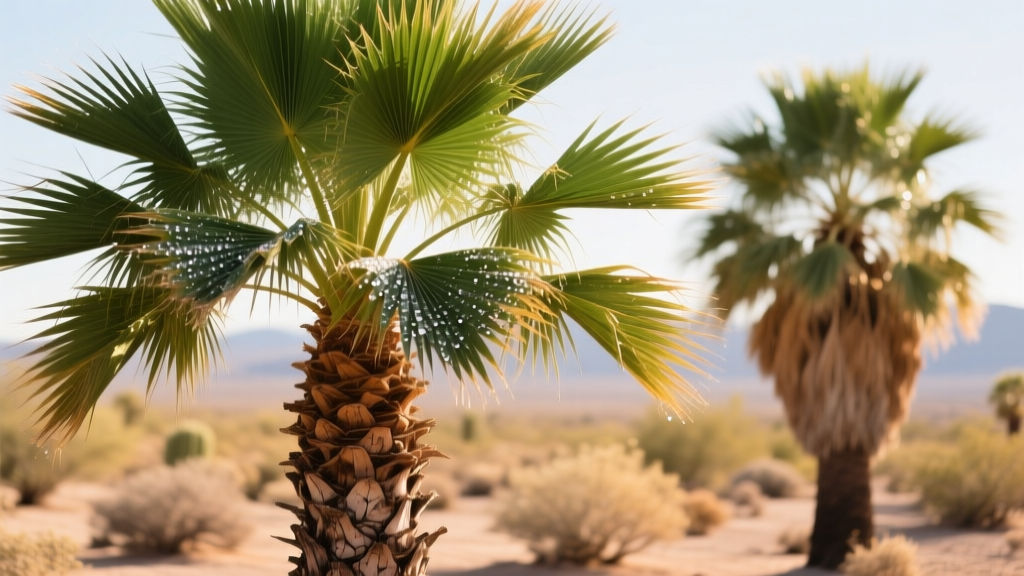
Cold-Hardy Types of Palm Trees in El Paso Texas: A Guide
The El Paso Microclimate: Why Most Palms Fail
El Paso sits primarily in USDA Hardiness Zone 8a, with minimum winter temperatures dipping to 10°F–15°F, and occasional Arctic fronts pushing the mercury near 0°F. According to the USDA Plant Hardiness Zone Map, this thermal volatility eliminates 90% of tropical palm species. Furthermore, the region's arid climate, intense summer UV radiation, and notoriously alkaline caliche soil create a hostile environment for shallow-rooted tropicals. Homeowners who attempt to plant Queen Palms (Syagrus romanzoffiana) or Royal Palms (Roystonea regia) typically experience total specimen loss within the first three winters. To succeed, you must select specific cold-hardy types of palm trees in El Paso Texas that possess innate physiological adaptations to freezing temperatures and high soil pH.
Caliche Warning: El Paso's subsurface caliche layer (calcium carbonate) acts like concrete, preventing drainage and trapping water. Planting a palm directly into unbroken caliche will cause root asphyxiation and Phytophthora root rot within 60 days. Always test drainage before planting.
Identifying the Best Types of Palm Trees in El Paso Texas
When evaluating species for the Chihuahuan Desert environment, focus on trunk morphology, frond structure, and documented cold-hardiness thresholds. Below are the four most reliable species for El Paso landscapes.
1. Windmill Palm (Trachycarpus fortunei)
The Windmill Palm is the undisputed champion of cold tolerance, surviving temperatures down to -5°F when mature. Identification: Look for a slender, solitary trunk covered in a dense, fibrous, hairy brown mat (the remains of old leaf bases). The fronds are palmate (fan-shaped), deeply divided, and typically 2 to 3 feet across. Growth & Cost: It is a slow grower, adding only 6 to 12 inches per year. As of 2026, a 15-gallon specimen at local El Paso nurseries typically costs between $180 and $250. Edge Case: Windmill palms prefer partial shade during the brutal July afternoon; plant them on the east side of a structure to prevent frond scorch.
2. Mexican Fan Palm (Washingtonia robusta)
While slightly less cold-hardy than the Windmill, the Mexican Fan Palm is the iconic tall palm of the Southwest, enduring dips to 15°F. Identification: Characterized by a smooth, light gray, heavily ringed trunk that bulges slightly at the base. The bright green fan fronds feature distinct reddish-brown petioles (leaf stems) and long, white thread-like filaments hanging from the leaf margins. Growth & Cost: Extremely fast-growing, capable of adding 2 to 4 feet annually. A 24-inch box specimen ranges from $350 to $500. Failure Mode: Young specimens under 6 feet tall lack the trunk mass to retain heat and will die if exposed to a hard freeze without wrapping.
3. Mediterranean Fan Palm (Chamaerops humilis)
This is the only palm species native to Europe and one of the most drought-tolerant options available. Identification: A clumping, multi-trunked palm with a very short, often hidden trunk. The fan fronds are stiff, deeply divided into narrow segments, and range from deep green to a striking silver-blue (in the cerifera variety). Growth & Cost: Very slow-growing, rarely exceeding 10 feet in height. Expect to pay $250 to $400 for a mature, multi-trunked 15-gallon pot. Landscape Use: Ideal for xeriscaping and tight courtyard spaces where overhead power lines prohibit taller species.
4. Pindo Palm / Jelly Palm (Butia odorata)
For homeowners seeking a feathery, pinnate frond rather than a fan shape, the Pindo Palm is the only viable cold-hardy option for El Paso. Identification: Features a thick, stout trunk covered in persistent, woody leaf bases. The fronds arch gracefully downward and are blue-green to gray-green. Growth & Cost: Slow to moderate growth. A 7-foot specimen costs around $450. Crucial Placement Rule: Pindo palms produce heavy clusters of bright orange, edible fruit in late summer. Plant them at least 10 feet away from concrete driveways and patios, as the fruit drop creates severe, nearly impossible-to-remove stains on porous stone and concrete.
Species Identification & Hardiness Matrix
Use this decision matrix to select the correct palm based on your specific yard constraints and microclimate conditions.
| Species | Frond Type | Mature Height | Cold Tolerance | Drought Tolerance | Best Placement |
|---|---|---|---|---|---|
| Windmill Palm | Palmate (Fan) | 20-30 ft | -5°F | Moderate | East-facing, partial shade |
| Mexican Fan Palm | Palmate (Fan) | 60-80 ft | 15°F | High | Open areas, full sun, away from roofs |
| Mediterranean Fan | Palmate (Fan) | 8-15 ft | 5°F | Very High | Courtyards, rock gardens, under eaves |
| Pindo Palm | Pinnate (Feather) | 15-20 ft | 10°F | High | Lawn borders, away from hardscapes |
Overcoming Caliche Soil: The Planting Protocol
According to soil management guidelines from the Texas A&M AgriLife Extension, altering the native soil profile in El Paso requires mechanical intervention. You cannot simply dig a hole with a standard post-hole digger; you will likely hit a caliche shelf between 12 and 18 inches deep.
- Excavation: Dig a hole three times the width of the root ball, but only as deep as the root ball itself. Palms must never be planted deeper than their original soil line, or the trunk base will rot. If you hit caliche, use a mattock or rent an electric rotary hammer with a spade bit to fracture the hardpan layer to a depth of 24 inches to ensure vertical drainage.
- Soil Amendment: Do not backfill with pure native soil. Mix 50% native soil with 50% high-quality composted pine bark. Add 2 cups of elemental sulfur (such as Espoma Organic Soil Acidifier) to the backfill mix to counteract the high pH (often 8.0 to 8.5 in El Paso) and unlock nutrient availability.
- Mulching: Apply a 3-inch layer of shredded hardwood mulch in a 4-foot diameter ring around the trunk. Keep the mulch exactly 3 inches away from the trunk base to prevent collar rot.
Winterizing Protocol for Zone 8a Freezes
Even cold-hardy types of palm trees in El Paso Texas require intervention during severe Arctic outbreaks. When the National Weather Service issues a hard freeze warning (temperatures below 25°F for more than 4 hours), execute this wrapping protocol:
- Trunk Wrapping: Wrap the trunk of Mexican Fan and Pindo palms with burlap or a specialized frost blanket (e.g., DeWitt Pro-19 frost fabric). Start at the base and overlap the material by 2 inches as you move up to the canopy. Secure with twine. Never use plastic sheeting; plastic traps solar heat during the day, causing premature bud break, and transfers cold directly to the trunk at night.
- Canopy Protection: For smaller Windmill and Mediterranean palms, drape the frost blanket entirely over the canopy, securing the edges to the ground with landscape staples to trap geothermal heat rising from the soil.
- Hydration: Water the root zone deeply 48 hours before the freeze. Moist soil retains and radiates heat significantly better than dry, arid desert soil.
Troubleshooting Iron Chlorosis in Alkaline Yards
The most common failure mode for established palms in El Paso is not cold damage, but iron chlorosis. This presents as severe yellowing of the newest fronds at the top of the canopy, while the veins remain green. Because El Paso's alkaline soil locks up standard iron supplements, applying basic iron sulfate will yield zero results.
The Fix: You must use an EDDHA-chelated iron product (such as Sequestrene 138), which remains stable and available to the plant roots in soils with a pH up to 9.0. Apply 2 ounces of EDDHA chelated iron per inch of trunk diameter. Dissolve it in a 5-gallon bucket of water and drench it directly into the soil within the drip line of the canopy. You should see the new fronds flush green within 21 to 30 days during the active growing season (May through August).

