
Tree Care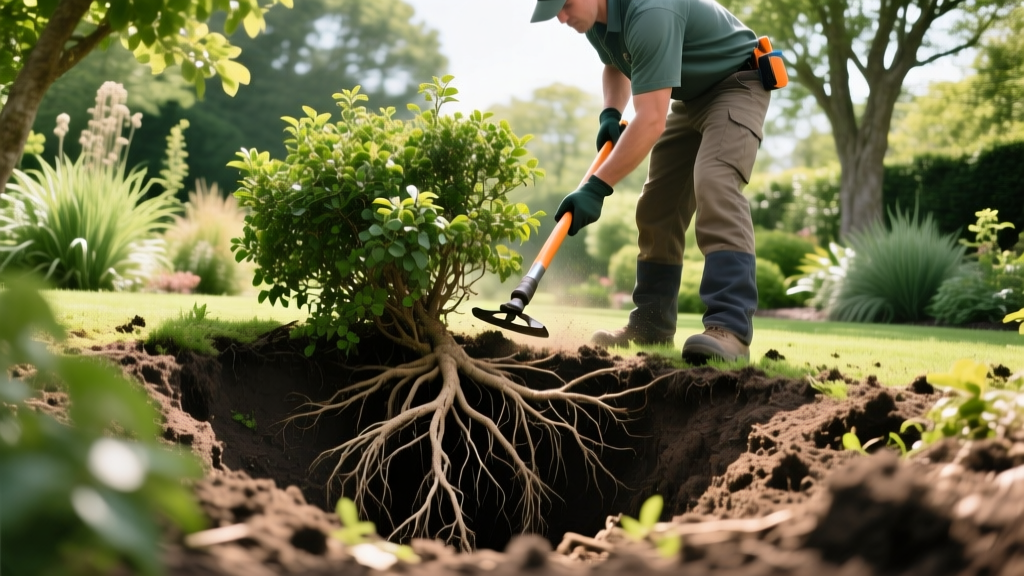
Invasive Shrub Removal Playbook: Kill Roots and Prevent Regrowth
The Threat of Invasive Shrubs in Residential Landscapes
When treating a landscape, invasive shrubs like Autumn Olive (Elaeagnus umbellata), Bush Honeysuckle (Lonicera maackii), and Privet (Ligustrum spp.) operate exactly like aggressive weeds. They monopolize soil nutrients, alter soil pH through allelopathy, and create dense shade that chokes out native turf and understory plants. Standard pruning is insufficient; these species possess massive carbohydrate reserves in their root crowns, allowing them to push out aggressive sucker growth within weeks of being cut down. Effective shrub removal requires a tactical, multi-phase approach that targets both the above-ground biomass and the subterranean root system.
According to the National Invasive Species Information Center, woody invasives cost the U.S. billions annually in ecological and property damage. For homeowners, ignoring a mature invasive shrub can lead to foundation damage from aggressive root foraging and a 15-20% reduction in usable yard space. This playbook outlines the exact mechanical and chemical protocols required to eradicate these landscape pests permanently.
Decision Matrix: Mechanical vs. Chemical Eradication
Selecting the wrong removal method guarantees regrowth. Use this matrix to determine your primary attack vector based on the shrub's trunk diameter and species vigor.
| Shrub Trunk Diameter | Recommended Method | Primary Tool / Chemical | Regrowth Risk |
|---|---|---|---|
| Less than 2 inches | Basal Bark or Pulling | Triclopyr Ester + Basal Oil / Weed Wrench | Low (if roots extracted) |
| 2 to 6 inches | Cut-Stump Treatment | Silky Gomboy Saw + Triclopyr Amine | Medium (requires monitoring) |
| Over 6 inches | Cut-Stump + Root Grubbing | Chainsaw + Mattock + Garlon 4 Ultra | High (massive root reserves) |
Phase 1: Mechanical Felling and Canopy Clearing
The goal of the first phase is to remove the canopy while leaving a clean, level stump for chemical application. Do not cut the shrub flush with the ground yet; leave a 2-to-3-inch stump. This elevated platform prevents soil and debris from contaminating the herbicide application zone and provides a handle for manual extraction later.
Tool Selection for Clean Cuts
A ragged cut damages the cambium layer, causing the plant to seal off the wound with sap before herbicides can be absorbed. For stems under 3 inches, use a high-carbon steel pull saw like the Silky Gomboy 210mm ($62). The impulse-hardened teeth slice through dense honeysuckle wood without binding. For larger multi-stemmed privet clusters, a 14-inch gas-powered chainsaw with a 3/8-inch low-profile chain is necessary to prevent stalling in fibrous wood.
Pro Tip: Clear all brush and leaf litter in a 3-foot radius around the stump immediately after felling. This eliminates hiding spots for emerging suckers and ensures you have clear access for the next phase.
Phase 2: Chemical Root Kill (The Cut-Stump Method)
Cutting an invasive shrub without killing the root system triggers a survival mechanism called epicormic sprouting. The root crown will push out dozens of water sprouts, creating a denser, more unmanageable thicket than before. To prevent this, you must apply a systemic herbicide directly to the exposed cambium.
The 15-Minute Rule and Herbicide Selection
Woody plants begin sealing their vascular tissue within 15 to 30 minutes of being cut. You must apply the herbicide immediately. Penn State Extension recommends Triclopyr as the gold standard for woody invasive control, as it translocates effectively down to the root tips without lingering in the soil to damage surrounding turfgrass.
Herbicide Mixing Protocol (Cut-Stump):
- Growing Season (Spring/Summer): Mix Triclopyr amine (e.g., Ortho BrushClear) at a 20% to 30% concentration with water. Add a non-ionic surfactant (0.5%) to break surface tension.
- Dormant Season (Late Fall/Winter): Water-based mixes freeze and fail to penetrate. Use Triclopyr ester (e.g., Garlon 4 Ultra) mixed at 20% to 25% with a penetrating basal oil or diesel substitute.
- Application: Use a 1-quart hand-pump sprayer with a cone nozzle, or a foam brush for precision. Paint only the outer 1 inch of the stump (the cambium ring). The center heartwood is dead tissue and will not transport the chemical.
Alternative: Basal Bark Treatment
For shrubs under 4 inches in diameter where cutting is impractical, use the basal bark method. Mix 20% Triclopyr ester with 80% basal oil. Spray the bottom 12 to 15 inches of the trunk, ensuring the bark is thoroughly wetted but not dripping. The oil carrier penetrates the rough bark and enters the vascular system, killing the shrub standing. This is highly effective against Multiflora Rose and Autumn Olive.
Phase 3: Physical Root Extraction for Small to Medium Shrubs
If you prefer to avoid herbicides, or if the shrub is small enough for manual extraction, physical root grubbing is the only viable organic option. Simply pulling the trunk will snap it at the root crown, leaving the root mass intact to resprout.
Leveraging Physics with Extraction Tools
For shrubs with a basal diameter of 1 to 3 inches, invest in a specialized extraction tool like the Extractigator or a Uprooter Weed Wrench ($160-$240). These tools feature a heavy-duty steel jaw that grips the trunk and a long fulcrum arm. By stepping on the lever or pulling the handle, you use mechanical advantage to pop the entire root ball out of the soil with minimal back strain.
For larger specimens, you must sever the lateral anchor roots. Use a Pulaski axe or a 4-pound mattock ($45) to trench a circle 12 inches out from the trunk. Sever all roots thicker than a pencil, then use a digging bar to pry the central taproot upward. Remove as much woody root mass as possible; even fragments larger than 2 inches left in the soil can regenerate.
Cost Breakdown: DIY Shrub Removal vs. Professional Services
Understanding the financial commitment helps homeowners decide whether to tackle the project over a weekend or hire a licensed land management crew. Prices below reflect 2026 market averages for residential properties.
| Removal Method | Estimated Cost per Shrub | Time Investment | Best Use Case |
|---|---|---|---|
| DIY Chemical (Cut-Stump) | $15 - $35 (materials) | 30 - 45 minutes | Large, established shrubs near desirable plants |
| DIY Mechanical Extraction | $0 - $250 (tool amortization) | 1 - 3 hours | Small to medium shrubs in organic-only yards |
| Professional Tree/Shrub Service | $175 - $450 | 0 hours (done for you) | Massive specimens, steep slopes, or time-poor homeowners |
The 12-Month Post-Removal Monitoring Protocol
Shrub removal is not a one-day event; it is a 12-month campaign. Invasive species like Privet and Honeysuckle have evolved to survive trauma. Even with perfect cut-stump herbicide application, dormant lateral roots may push up new shoots 6 to 10 feet away from the original stump.
- Month 1-3 (Immediate Aftermath): Inspect the stump weekly. If you see green callus tissue forming over the cut without signs of necrosis (browning/blackening), the herbicide failed. Re-cut the stump 1 inch lower to expose fresh wood and reapply the Triclopyr mixture immediately.
- Month 4-8 (Spring/Summer Flush): Walk a 15-foot radius around the removal site. Look for bright green, fast-growing suckers emerging from the turf or mulch beds. Do not pull these; pulling breaks them off at the root. Instead, use a targeted foliar spray of 2% Glyphosate or 2% Triclopyr amine directly on the new leaves.
- Month 9-12 (Soil Remediation): The void left by the removed shrub will likely be colonized by opportunistic annual weeds. Aerate the compacted soil left by the root ball, apply a 1/2-inch topdressing of compost, and overseed with a competitive, shade-tolerant turfgrass like fine fescue, or plant native groundcovers like Pachysandra to occupy the ecological niche and prevent new invasive seeds from germinating.
For further reading on identifying and managing specific woody invasives in your region, consult the Bugwood Network's Invasive.org database, which provides high-resolution imagery and state-specific management guidelines for over 1,000 pest plant species.

