
Tree Care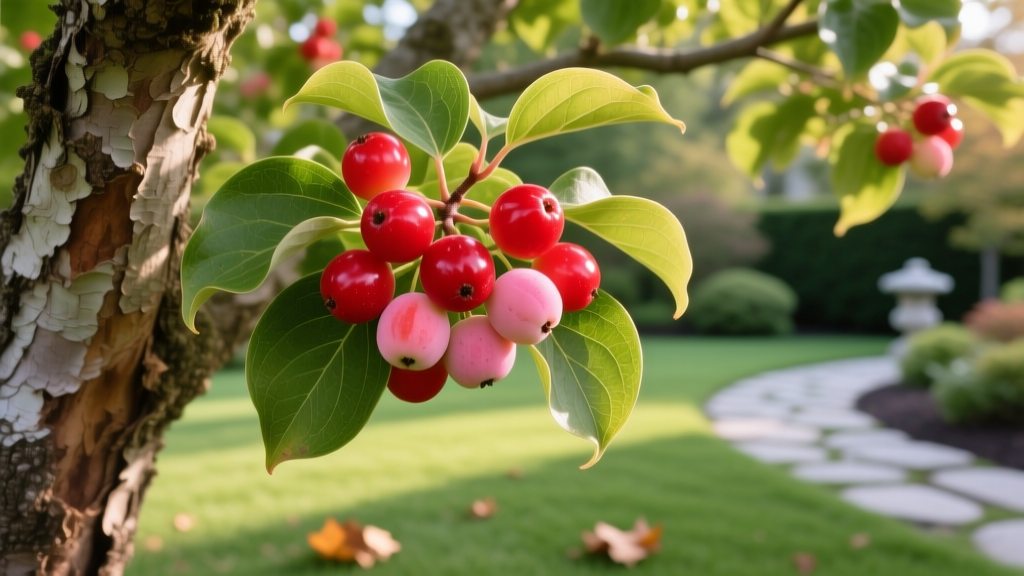
Is Japanese Dogwood Fruit Edible? Diagnosis, Harvest, and Tree Care
The Verdict: Is Japanese Dogwood Fruit Edible?
Yes, the fruit of the Japanese dogwood (Cornus kousa) is entirely edible for humans, but it is frequently misunderstood. Unlike a traditional berry, the Kousa dogwood produces a syncarp—a fused aggregate of drupes that resembles a bumpy, pinkish-red raspberry or lychee. When fully ripe in late summer to early fall, the inner pulp is exceptionally sweet, often compared to a cross between a ripe mango and a persimmon. However, homeowners frequently diagnose the fruit as 'inedible' or 'bitter' because they attempt to eat the rind or harvest the syncarps before they have fully softened.
To successfully forage and utilize Japanese dogwood fruit, you must correctly identify the tree species, understand the botanical structure of the fruit, and diagnose any environmental factors preventing your tree from producing a viable crop.
Species Diagnosis: Confirming You Have Cornus kousa
The most critical safety and culinary step is confirming your tree is actually a Japanese dogwood. Many homeowners confuse Cornus kousa with the native Eastern flowering dogwood (Cornus florida) or the Cornelian cherry (Cornus mas). While none of these are highly toxic to humans, their palatability and culinary value vary drastically.
| Species | Common Name | Fruit Appearance | Edibility & Taste Profile |
|---|---|---|---|
| Cornus kousa | Japanese / Kousa Dogwood | 1-1.5 inch bumpy, spherical pink/red syncarp | Excellent. Sweet, creamy inner pulp; bitter rind. |
| Cornus florida | Eastern Flowering Dogwood | 0.5 inch smooth, glossy red drupes in clusters | Poor. Extremely astringent and bitter; meant for birds. |
| Cornus mas | Cornelian Cherry Dogwood | 0.5 inch oblong, smooth, cherry-red drupe | Good. Tart, cranberry-like flavor; excellent for jams. |
Diagnostic Warning: If your tree blooms in early spring before the leaves emerge, and produces smooth, glossy red berries in autumn, you likely have Cornus florida. Do not attempt to make jam or eat these raw. Cornus kousa blooms in late spring (after leaf-out) and produces the large, bumpy syncarps in late summer. According to the NC State Extension, Kousa dogwoods also feature exfoliating, jigsaw-puzzle-like bark on mature trunks, a key diagnostic feature in winter.
The 'Bitter Skin' Problem: Proper Harvest and Preparation
The most common complaint from first-time foragers is that Japanese dogwood fruit tastes gritty, bitter, and leaves a strange sensation in the mouth. This is a preparation error, not a flaw in the fruit itself.
Understanding the Rind and Seeds
The outer rind of the Cornus kousa syncarp contains calcium oxalate crystals and high levels of tannins. While not lethal, consuming the rind in large quantities can cause mild gastrointestinal distress and a distinctly unpleasant, gritty mouthfeel. Furthermore, the interior houses several hard, inedible seeds that must be separated from the pulp.
Step-by-Step Prep Framework
- Harvest Timing: Wait until late August or September. The fruit must be deep pink/red and yield slightly to a gentle squeeze, similar to a ripe peach. Fruit that is hard or pale green will not ripen off the tree and will remain highly astringent.
- The Squeeze Method: Wash the fruit thoroughly. Pinch the base of the syncarp and gently squeeze. The sweet, orange-hued inner pulp will extrude from the top, leaving the bitter rind behind in your fingers.
- Seed Separation: Pass the extruded pulp through a coarse food mill or a wide-mesh sieve to separate the creamy flesh from the hard seeds. Do not use a blender, as pulverizing the seeds will release bitter compounds into the pulp.
Troubleshooting Poor Fruit Set on Japanese Dogwoods
If your Cornus kousa blooms heavily in May but fails to produce edible syncarps by September, you must diagnose the underlying environmental or cultural failure. The Missouri Botanical Garden notes that while Kousa dogwoods are generally resilient, fruit production requires specific physiological conditions.
1. Juvenile Phase Diagnostics
Unlike some fast-fruiting shrubs, Cornus kousa has a prolonged juvenile phase. Trees grown from seed may take 7 to 10 years to produce their first viable crop of syncarps. Grafted or cutting-propagated nursery specimens typically fruit within 4 to 5 years. If your tree is under 5 years old and lacks fruit, no intervention is required; simply maintain consistent watering.
2. Pollination and Weather Stress
Kousa dogwoods are not wind-pollinated; they rely entirely on native bees and syrphid flies. A cold, wet snap during the late-spring blooming period will suppress insect activity, resulting in zero fruit set. To mitigate this, avoid using broad-spectrum insecticides (like carbaryl or permethrin) within a 50-foot radius of the tree during May and June.
3. Moisture Deficit During Drupelet Fusion
The most frequent cause of premature fruit drop in July is drought stress. The fusion of the drupelets into a syncarp requires massive cellular water uptake.
- The Fix: Apply 1.5 to 2 inches of water per week during June and July. Use a soaker hose placed at the drip line (not directly against the trunk, which invites rot). Maintain a 3-inch layer of arborist wood chips over the root zone to retain soil moisture.
Pest and Disease Diagnostics Affecting Fruit Quality
While Cornus kousa is highly resistant to the devastating dogwood anthracnose (Discula destructiva) that plagues Cornus florida, it is not immune to issues that degrade fruit quality and overall tree vigor.
Dogwood Borer (Synanthedon scitula)
The dogwood borer is a clearwing moth whose larvae tunnel into the trunk and major scaffolding branches.
- Symptoms: Look for sloughing bark, sawdust-like frass near the soil line, and premature autumn leaf drop. A severe infestation girdles the phloem, cutting off carbohydrate transport to the developing fruit, causing the syncarps to shrivel and drop in August.
- Solution: Prevent borers by avoiding mechanical damage to the trunk (keep string trimmers far away). If frass is detected, apply a permethrin-based trunk spray in early May and again in mid-July, targeting the lower 2 feet of the trunk and root flare, as detailed by the Clemson Home & Garden Information Center.
Powdery Mildew (Erysiphe pulchra)
Powdery mildew coats the leaves in a white, fungal dust by mid-summer. While it rarely kills the tree, it severely reduces photosynthetic capacity. Less photosynthesis means less sugar translocated to the fruit, resulting in small, hard, and flavorless syncarps. Improve air circulation by selectively pruning crossing interior branches in late winter, and apply a preventative fungicide containing myclobutanil if your region experiences high humidity in June.
Culinary Solutions: Utilizing a Bumper Crop
Once you have successfully extracted the pulp, Cornus kousa fruit is a highly versatile ingredient. Because the pulp is naturally low in pectin and acid, it requires specific adjustments for preservation.
| Culinary Application | Preparation Adjustments | Yield Estimate |
|---|---|---|
| Raw Consumption | None. Eat fresh immediately after extruding from the rind. | 1 cup per 15-20 large fruits. |
| Kousa Dogwood Jam | Must add commercial liquid pectin and 2 tbsp lemon juice per cup of pulp to achieve a gel set. | 1 pint of jam per 3 cups of extracted pulp. |
| Fruit Leather | Mix pulp with an equal part of unsweetened applesauce to provide structural pectin before dehydrating at 135°F for 6-8 hours. | 2 large drying sheets per 2 cups of pulp. |
Frequently Asked Questions
Are Japanese dogwood fruits toxic to dogs or cats?
While the fleshy inner pulp is non-toxic to pets, the hard seeds pose a significant intestinal blockage risk for small dogs, and the calcium oxalate in the rind can cause oral irritation and drooling if chewed. It is best to rake up fallen, rotting fruit from the lawn if your pets are known to forage in the yard.
Why does my Kousa dogwood fruit taste like pine?
If the fruit has a resinous or pine-like flavor, it was likely harvested too early. Cornus kousa syncarps develop complex sugars only in the final two weeks of ripening on the branch. Wait until the fruit is deeply colored and physically soft to the touch before harvesting.

