
Tree Care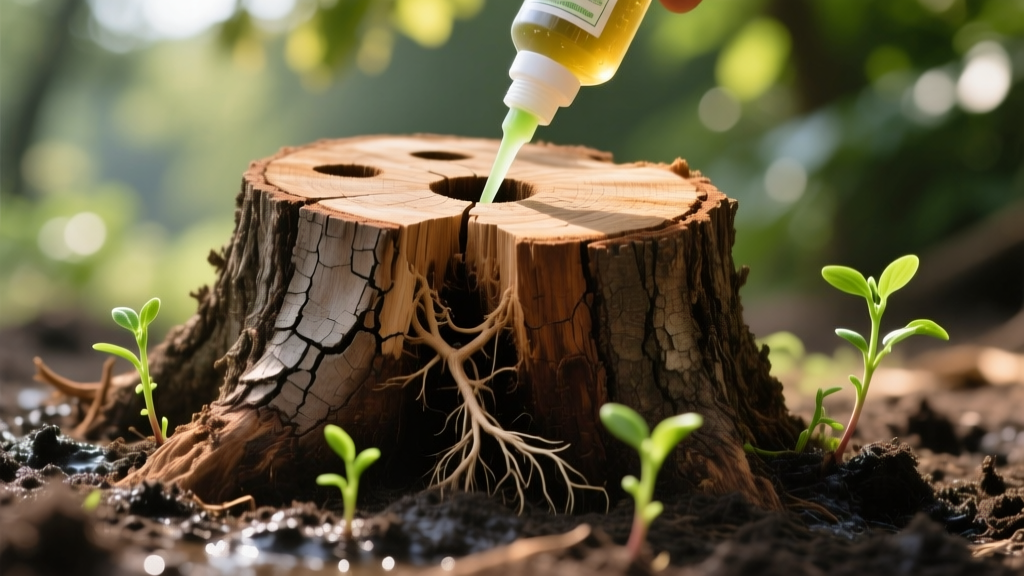
Proven Methods for Killing Tree Stumps and Preventing Root Suckers
The Biology of Stump Survival: Why They Refuse to Die
When a tree is felled, the root system often retains enough carbohydrate reserves to fuel epicormic sprouting for several years. Species like cottonwood, elm, willow, and poplar are notoriously aggressive, pushing up dozens of root suckers that drain nutrients and ruin lawn aesthetics. Simply cutting the trunk does not kill the root system; it merely triggers a survival response. To succeed at killing tree stumps permanently, you must either destroy the vascular cambium layer to halt translocation or accelerate the decomposition of the heartwood so the roots starve.
According to University of Minnesota Extension, the effectiveness of any stump eradication method depends heavily on the tree species, the time of year, and the moisture content of the wood. Below is a comprehensive, professional-grade guide to eliminating stumps using chemical, organic, and mechanical protocols.
Chemical Eradication: Choosing the Right Active Ingredient
For rapid elimination of the root system and prevention of suckering, systemic herbicides are the industry standard. However, the ready-to-use consumer sprays (typically 2% concentration) are entirely ineffective on cut stumps. You must use concentrated formulations.
Triclopyr vs. Glyphosate
- Triclopyr (Ester or Amine Form): Highly effective on broadleaf and woody species. Products like Ortho Brush-B-Gon (8.8% concentration) or professional Garlon 4 (61.6% concentration, requires dilution) are ideal. Triclopyr mimics plant growth hormones, causing the vascular system to collapse. It is the superior choice for stubborn species like oak, hickory, and elm.
- Glyphosate (41% or higher): Standard consumer Roundup is too weak. You need agricultural-strength glyphosate (such as Compare-N-Save 41% or Roundup Pro). Glyphosate inhibits the EPSP synthase enzyme, starving the roots of essential amino acids. It works exceptionally well on maple, ash, and birch.
Critical Warning: Never use soil-applied herbicides like picloram or imazapyr near desirable trees. These chemicals remain active in the soil for years and can be absorbed by neighboring trees through root grafts, inadvertently killing your healthy landscape canopy.
The Drill-and-Fill Protocol for Maximum Translocation
Painting herbicide on the outer bark of an old, dried stump is a waste of chemicals. The phloem and xylem are dead. You must deliver the chemical directly into the living cambium ring. The drill-and-fill method ensures deep penetration.
- Expose Fresh Wood: If the stump has been cut for more than 48 hours, use a chainsaw to slice off the top 1/2 inch, exposing fresh, moist wood.
- Select the Right Bit: Use a 1/2-inch or 3/4-inch spade bit (not a standard twist bit). Spade bits create wide, flat-bottomed reservoirs that hold liquid without spilling.
- Drill the Reservoirs: Drill holes 8 to 10 inches deep, angling the drill at 45 degrees toward the center of the stump. Space the holes 2 inches apart, concentrating strictly on the outer 2 inches of the stump (the cambium layer).
- Apply the Herbicide: Within 15 minutes of drilling, fill each hole to the brim with your concentrated herbicide using a squeeze bottle or syringe.
- Seal and Wait: Cover the stump with a heavy-duty black contractor trash bag and secure it with bungee cords. This prevents rain from washing out the chemical and blocks sunlight from triggering dormant buds.
Organic Decay Accelerators: Potassium Nitrate vs. Epsom Salt
If you prefer to avoid synthetic herbicides, or if the stump is located near a water well or sensitive garden beds, you can accelerate the natural rotting process. This method does not instantly kill the roots, but it rapidly degrades the wood structure, making manual removal easier and eventually starving the root system.
| Method | Active Agent | Time to Decay | Avg Cost per Stump | Sucker Prevention |
|---|---|---|---|---|
| Chemical Herbicide | Triclopyr / Glyphosate | 1-3 Months | $15 - $30 | Excellent (Systemic) |
| Stump Remover Granules | Potassium Nitrate (98%) | 4-6 Weeks | $10 - $20 | Good (Accelerates Rot) |
| Epsom Salt Treatment | Magnesium Sulfate | 6-12 Months | $5 - $10 | Poor (Slow Desiccation) |
| Mechanical Grinding | Steel Cutting Wheel | Immediate | $150 - $400 | Moderate (Roots Remain) |
The Potassium Nitrate Method
Products like Spectracide Stump Remover utilize 98% potassium nitrate. This chemical acts as a powerful oxidizer that rapidly breaks down lignin and cellulose. Follow the same drill-and-fill protocol mentioned above, but instead of liquid, fill the holes with the granules and top them off with hot water to dissolve the chemical into the wood fibers. Cover with a tarp. Within six weeks, the wood will become spongy enough to break apart with a mattock or axe.
The Epsom Salt Myth vs. Reality
Many DIY blogs recommend Epsom salt (magnesium sulfate) for killing tree stumps. While high concentrations of magnesium sulfate will desiccate (dry out) the wood, it does not systemically kill the deep root network. Furthermore, leaching massive amounts of magnesium into your soil can cause nutrient lockout, preventing your surrounding grass and plants from absorbing calcium and potassium. Use Epsom salt only as a last resort for small, isolated stumps.
Mechanical Removal: When to Call a Stump Grinder
If you need to replant in the exact same location or lay sod immediately, chemical and organic methods are too slow. Stump grinding is the only immediate solution. As of 2026, professional stump grinding rates average $4 to $7 per inch of stump diameter. A 24-inch oak stump will cost roughly $100 to $170 to grind.
However, grinding only removes the stump and the upper lateral roots (usually down to 8-12 inches). The deep taproot and lower laterals remain. If the tree species is prone to suckering (like the Bradford Pear or Tree of Heaven), the remaining roots may still push up shoots. To prevent this, ask the arborist to grind slightly deeper on the outer edges, and immediately apply a localized triclopyr treatment to any exposed, fresh root ends before backfilling with topsoil.
Troubleshooting: Why Your Stump is Still Sprouting
If you have treated a stump and are still seeing root suckers emerging from the lawn months later, you have likely encountered one of these failure modes:
- Application on Dry Wood: If you applied herbicide to a stump that was cut weeks ago, the vascular tissue was already blocked by tyloses and resin. The chemical never reached the roots. You must re-cut the stump or use a basal bark treatment with a triclopyr ester mixed with a penetrating oil.
- Rain Washout: If it rained within 24 hours of your drill-and-fill application and the stump was not covered with a tarp, the chemical was diluted and washed into the topsoil, failing to translocate.
- Root Grafting: In dense forests or tightly planted yards, trees of the same species often graft their roots together underground. If you kill one stump, a neighboring living tree may be pumping carbohydrates into the dead stump's root system, keeping it alive. In this case, you must sever the lateral roots with a trenching shovel 3 feet away from the stump.
Frequently Asked Questions
Can I burn a stump out with charcoal and diesel?
While technically possible, burning stumps is heavily restricted in most urban and suburban municipalities due to fire codes. Furthermore, smoldering underground roots can ignite dry peat or utility lines weeks after the surface fire appears extinguished. Chemical or mechanical removal is significantly safer and more predictable.
How long does it take for a treated stump to completely rot away?
After the root system is successfully killed with herbicide, the physical wood structure still takes 3 to 7 years to decompose naturally, depending on soil moisture and fungal activity. To speed up the physical breakdown after the tree is dead, inoculate the stump with wood-decay fungi or apply potassium nitrate.
Is it safe to plant a new tree right over a chemically treated stump?
No. If you used a soil-residual herbicide or heavily saturated the ground with glyphosate, the soil chemistry may inhibit the establishment of a new sapling. Wait at least 12 months, or physically remove the treated wood and replace the soil in a 4-foot radius before planting a new tree.
For further reading on woody plant management and safe chemical handling, consult the University of Wisconsin-Madison Extension guidelines on stump removal and always read the manufacturer's label before applying any herbicide.

