
Tree Care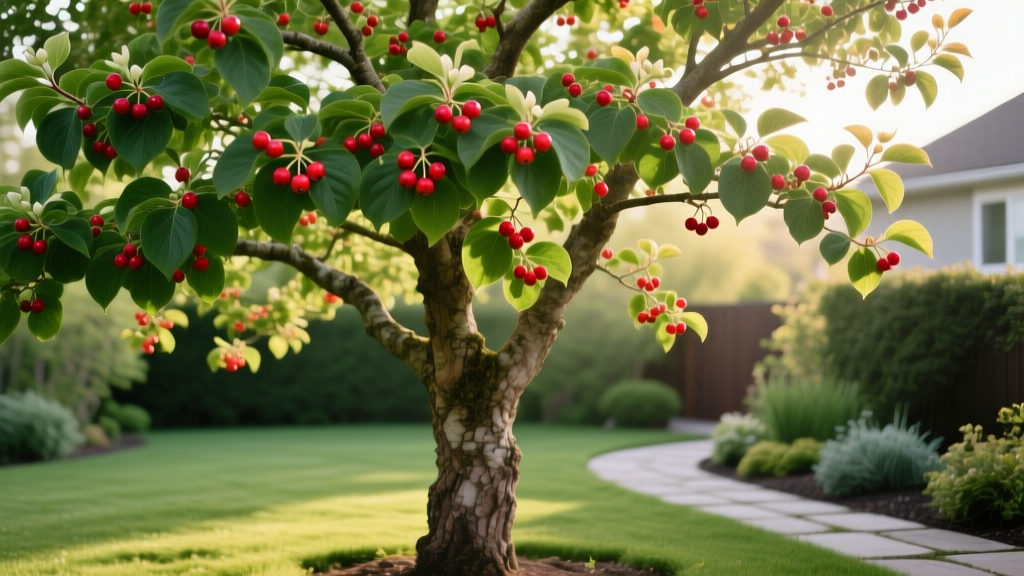
How to Grow a Fruiting Dogwood Tree for Edible Yards
When most homeowners think of dogwoods, they picture the iconic, cloud-like white or pink spring blooms of the native flowering dogwood. However, the fruiting dogwood tree—specifically the Kousa dogwood (Cornus kousa)—offers a spectacular dual-season performance. Not only does it produce stunning, star-shaped bracts in late spring, but it also yields striking, raspberry-like edible drupes in late summer and early fall.
For beginners looking to integrate edible landscaping into their garden without sacrificing ornamental beauty, the Kousa fruiting dogwood is an elite choice. This guide breaks down the exact planting specifications, cultivar selections, and maintenance routines required to establish a thriving, fruit-bearing dogwood in your yard.
Kousa vs. Native Flowering Dogwood: Which Fruits Best?
Before purchasing, it is critical to understand the difference between the two most common dogwoods sold in nurseries. While both produce fruit, their edibility, bloom times, and disease resistance vary drastically.
| Feature | Kousa Dogwood (Cornus kousa) | Native Flowering Dogwood (Cornus florida) |
|---|---|---|
| Bloom Time | Late spring (May-June), after leaves emerge | Early spring (April), before leaves emerge |
| Fruit Appearance | Large (1-2 inch), spiky, pinkish-red, raspberry-like | Small, smooth, bright red clusters |
| Fruit Edibility | Edible and sweet (pulp only) | Toxic to humans (mildly), loved by birds |
| Disease Resistance | Highly resistant to Dogwood Anthracnose and Powdery Mildew | Highly susceptible to Anthracnose (Discula destructiva) |
| Bark Texture | Exfoliating, jigsaw-puzzle pattern (mature trees) | Smooth, dark gray, blocky on older trunks |
⚠️ Safety Warning: Never consume the berries of the native Cornus florida. While they are a vital food source for over 30 species of migratory birds, they cause gastrointestinal distress in humans. Only harvest fruit from positively identified Kousa dogwoods.
Top Kousa Cultivars for Heavy Fruit Production
If your primary goal is a heavy fruit yield, avoid generic seed-grown Kousa dogwoods, which can take up to a decade to fruit and produce inconsistent yields. Instead, invest in named, grafted, or cutting-propagated cultivars. As of 2026, expect to pay between $65 and $95 for a 5-gallon container of a named cultivar, and $180 to $275 for a 15-gallon balled-and-burlapped (B&B) specimen.
- 'Milky Way': The gold standard for fruiting. Produces an overwhelming profusion of white bracts followed by massive crops of large, deep-red fruit. Highly vigorous.
- 'Satomi': Features deep pink bracts and striking dark pink to red fruit. The fruit is slightly smaller than 'Milky Way' but exceptionally sweet.
- 'Wolf Eyes': A variegated cultivar with wavy, cream-margined leaves. While the fruit yield is slightly lower, the visual contrast of the red fruit against the variegated foliage is unmatched.
Step-by-Step Planting Guide for Kousa Dogwoods
Kousa dogwoods are remarkably adaptable, but proper planting depth and soil preparation dictate whether your tree will thrive or succumb to root rot. According to the NC State Extension Plant Toolbox, Kousa dogwoods prefer well-drained, acidic soils and perform best in USDA Hardiness Zones 5 through 8.
1. Site Selection and Sun Exposure
Unlike native dogwoods that demand deep shade, Kousa dogwoods tolerate and even prefer full sun to partial shade. For maximum fruit production, select a site that receives at least 6 hours of direct morning sunlight. Ensure the site is protected from harsh, drying winter winds.
2. Digging and Soil Amendment
Dig a planting hole that is exactly as deep as the root ball, but 2.5 to 3 times as wide. Do not amend the backfill soil with heavy compost or peat moss. Amending the planting hole creates a 'bathtub effect' in heavy clay soils, trapping water and drowning the roots. Backfill with the native soil you just dug out.
3. Setting the Root Flare
This is where 80% of beginner tree plantings fail. Locate the root flare (the point where the trunk widens at the base). The root flare must sit 1 to 2 inches above the surrounding grade. Planting a dogwood too deep invites fatal Phytophthora root rot.
4. Mulching Protocol
Apply a 2 to 3-inch layer of organic hardwood or pine bark mulch in a 4-foot diameter ring around the tree. Keep the mulch at least 3 inches away from the trunk itself to prevent bark decay and rodent damage. Never 'volcano mulch' a dogwood.
Watering, Soil pH, and Fertilization
Kousa dogwoods have shallow, fibrous root systems that are highly sensitive to summer drought stress. Maintaining consistent moisture is non-negotiable during the first two growing seasons.
💡 Pro Tip for Soil pH: Dogwoods require acidic soil with a pH between 5.5 and 6.5. If your soil pH is above 7.0, the tree will suffer from iron chlorosis (yellowing leaves with green veins). Test your soil before planting and amend with elemental sulfur if necessary to lower the pH.
Watering Schedule
During the first year, provide 1 to 1.5 inches of water per week. Use a soaker hose wrapped around the root zone for 45 minutes twice a week during dry spells. Avoid overhead sprinklers, which keep the foliage wet and encourage fungal pathogens.
Fertilization Strategy
Do not fertilize a newly planted dogwood for the first year. In year two, apply a slow-release, acid-forming fertilizer (such as a 10-10-10 or an azalea/camellia specific blend) in early March, just before bud break. Apply at a rate of 1 cup per inch of trunk diameter, broadcasting it evenly under the drip line. Never fertilize after July, as late-season growth will not harden off before winter.
Pruning and Disease Prevention
One of the primary reasons beginners choose the Kousa fruiting dogwood over the native Cornus florida is its robust disease resistance. As noted by Clemson University's Home and Garden Information Center, Kousa dogwoods are highly resistant to the fungal dogwood anthracnose that has decimated native populations. However, they are not entirely immune to poor cultural practices.
Pruning for Airflow and Structure
Kousa dogwoods naturally develop a beautiful, horizontal, tiered branching structure. Minimal pruning is required. Limit your pruning to late winter (February) while the tree is fully dormant.
- Remove any dead, damaged, or diseased wood.
- Prune out crossing or rubbing branches to prevent bark wounds that invite borers.
- Remove lower 'sucker' branches to elevate the canopy and improve air circulation, which reduces the risk of powdery mildew.
Managing Dogwood Borers
The dogwood borer (Synanthedon scitula) is the most destructive insect pest. They target trees with mechanical wounds (from lawnmowers or string trimmers). Prevent borers by maintaining a wide mulch ring to keep mowers away from the trunk, and avoid pruning in spring or summer when adult moths are actively laying eggs.
Harvesting and Using Kousa Dogwood Fruit
Kousa dogwood fruits ripen in late August through October, depending on your local climate. The fruit is technically an aggregate of fused drupes. When ripe, the fruit turns from hard and green to soft, yielding, and deep pinkish-red.
The Squeeze Test
Gently squeeze the fruit. If it feels soft, similar to a ripe peach or avocado, it is ready to harvest. If it is hard, leave it on the tree. Fruit that drops naturally to the ground is also perfectly ripe and can be gathered from clean mulch.
How to Eat It
The outer skin of the Kousa fruit is gritty, bitter, and generally unpleasant. To eat it fresh, simply pinch the stem end and squeeze the sweet, custard-like, pale yellow pulp directly into your mouth, discarding the skin and seeds. The flavor is often described as a cross between a ripe persimmon and a mango. The pulp can also be scooped out and blended into smoothies, jams, or baked goods, provided you strain out the numerous hard seeds.
Frequently Asked Questions
Will a single Kousa dogwood tree produce fruit, or do I need two?
Kousa dogwoods are self-fertile. A single, isolated tree will produce a full crop of fruit without the need for a cross-pollinating partner, provided there are local pollinators (bees and flies) active during its late-spring bloom window.
Why is my mature Kousa dogwood not producing fruit?
If your tree is over 7 years old and fails to fruit, evaluate your light exposure and nitrogen levels. Trees planted in heavy shade will prioritize foliage over blooms. Additionally, excessive nitrogen from nearby lawn fertilizers will cause vigorous vegetative growth at the expense of flower and fruit production.
Do deer eat Kousa dogwood trees?
Kousa dogwoods are considered highly deer-resistant. While a starving deer in late winter might nibble on the lower twigs, the foliage and bark are generally avoided, making this tree an excellent choice for suburban edges and rural properties with high deer pressure.

