
Tree Care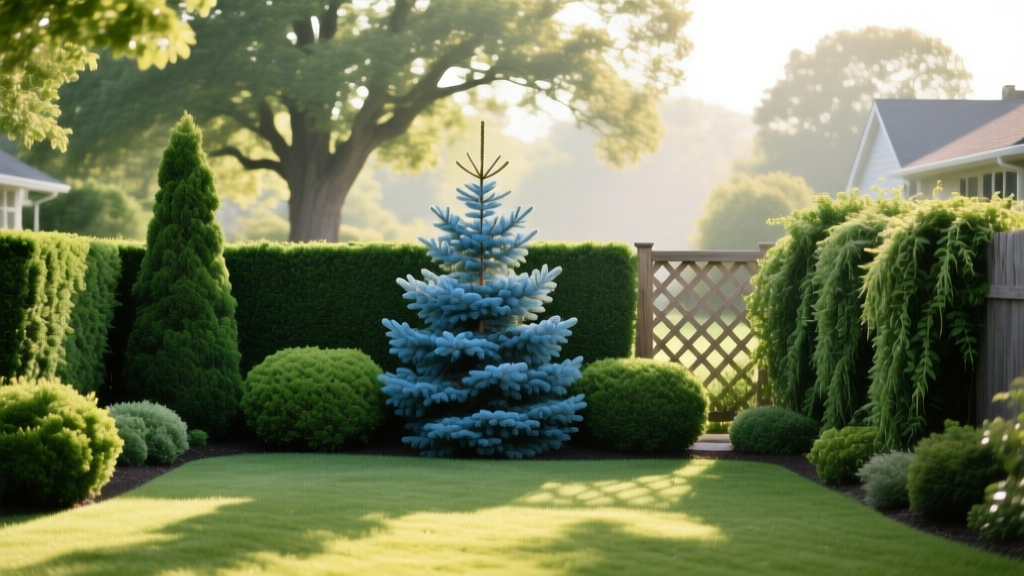
Landscaping With Evergreens and Shrubs: A Beginner's Layout Guide
The Core Framework: Layering Evergreens for Year-Round Structure
Successful landscaping with evergreens and shrubs relies on a structured, three-tier layering system. Unlike perennial beds that die back in winter, evergreens provide the permanent architectural bones of your yard. Beginners often make the mistake of planting a single row of identical shrubs, resulting in a flat, monotonous wall. Instead, design in staggered layers to create depth, conceal bare lower branches, and guide the eye through the landscape.
Background Anchors (Tall Evergreens)
Your back row should consist of tall, narrow, or broadleaf evergreens that serve as privacy screens or windbreaks. Thuja occidentalis 'Emerald Green' is the industry standard for USDA Zones 3-7, reaching 12-15 feet tall but staying a manageable 3-4 feet wide. Plant these 3 to 4 feet apart, measured from the center of the root ball, to form a dense hedge without overcrowding, which invites fungal diseases like Seiridium canker.
Mid-Level Fillers (Texture and Seasonal Interest)
The middle tier breaks up the vertical lines of the anchors. Broadleaf evergreens like Rhododendron 'PJM' or Pieris japonica 'Mountain Fire' offer spring blooms and vibrant new growth. Space these 4 to 5 feet apart. They typically mature at 4-6 feet tall, perfectly masking the often-bare lower trunks of the background arborvitae or junipers.
Foreground Edgers (Low-Growing Shrubs)
The front row defines the bed's edge and transitions smoothly into the lawn. Dwarf boxwood (Buxus sempervirens 'Suffruticosa') or Japanese holly (Ilex crenata 'Helleri') are ideal. Plant these 1.5 to 2 feet apart. They stay under 2 feet tall and respond exceptionally well to light shearing to maintain a crisp, formal boundary.
The 3-Tier Spacing Rule: Never plant shrubs in a straight, single-file line. Stagger your planting holes in a zig-zag or triangular pattern. This increases density, improves air circulation, and creates a natural, professional look even before the plants reach maturity.
Soil Preparation and the 'Root Flare' Rule
The most common reason newly planted evergreens fail within the first two years is improper planting depth and poor soil amendment. Evergreens require well-draining soil with a slightly acidic pH (6.0 to 6.5).
When amending heavy clay soil, avoid using peat moss. Peat moss retains too much water and becomes hydrophobic (repels water) once it dries out, creating a 'bathtub effect' that drowns roots. Instead, amend your native soil with pine bark fines at a ratio of 80% native soil to 20% pine bark. This permanently improves aeration and drainage without altering the soil moisture dynamics too drastically.
According to the Arbor Day Foundation, the 'root flare'—the point where the trunk widens at the base and transitions into roots—must be visibly exposed above the soil line. Planting an evergreen even one inch too deep buries this flare, suffocating the phloem tissue and inviting fatal Phytophthora root rot. Dig your hole exactly as deep as the root ball, but twice as wide, and backfill without compacting the soil.
Species Selection Matrix for USDA Zones 5-8
Choosing the right cultivar prevents years of overgrowth and maintenance headaches. Below is a decision matrix for beginner-friendly, low-maintenance evergreens commonly available at local nurseries.
| Common Name | Botanical Cultivar | Mature Size (H x W) | Spacing | Avg. Cost (3-Gal) | Light Requirement |
|---|---|---|---|---|---|
| Arborvitae | Thuja 'Emerald Green' | 12-15 ft x 3-4 ft | 3-4 ft | $45 - $85 | Full Sun |
| Dwarf Boxwood | Buxus 'Suffruticosa' | 2-3 ft x 2-3 ft | 1.5-2 ft | $25 - $40 | Part Shade to Sun |
| Rhododendron | Rhododendron 'PJM' | 4-6 ft x 4-6 ft | 4-5 ft | $35 - $60 | Dappled Shade |
| Japanese Holly | Ilex crenata 'Helleri' | 2-3 ft x 3-4 ft | 2-3 ft | $30 - $45 | Full to Part Sun |
| Juniper | Juniperus 'Blue Star' | 1-2 ft x 2-3 ft | 2-3 ft | $25 - $35 | Full Sun |
Common Failure Modes in Shrub Landscaping
Even with perfect planting, environmental stressors can decimate an evergreen bed. Anticipate these three failure modes and implement the preventative protocols below.
1. Winter Desiccation
Evergreens continue to transpire (lose water through their needles/leaves) during winter. When the ground freezes, roots cannot replace this lost moisture, resulting in brown, scorched foliage on the windward side of the shrub. The University of Minnesota Extension recommends applying an anti-desiccant spray, such as Wilt Pruf, in late November and again in late January when temperatures are above 40°F (4°C). This coats the foliage in a protective polymer resin, reducing moisture loss by up to 50%.
2. Volcano Mulching
Piling mulch against the trunk of a shrub (volcano mulching) keeps the bark constantly wet, leading to stem girdling roots and fungal cankers. Apply a 2-to-3-inch layer of double-shredded hardwood or pine straw over the root zone, but maintain a strict 3-inch mulch-free halo directly around the main trunk.
3. Alkaline Soil Chlorosis
Broadleaf evergreens like rhododendrons and pieris are highly susceptible to iron chlorosis if the soil pH rises above 6.5. Symptoms include yellowing leaves with dark green veins. Do not use standard synthetic fertilizers, which often contain lime. Instead, feed acid-loving evergreens once a year in early spring with an acid-forming organic fertilizer like Espoma Holly-tone (4-3-4 NPK) at a rate of 1 cup per foot of branch spread.
First-Year Watering and Feeding Schedule
The first 12 months are critical for establishing a robust root system. Rely on this specific schedule rather than guessing when to water:
- Weeks 1-4: Water deeply every 2 days. Apply 2 to 3 gallons per shrub directly at the root ball. Shallow sprinkling encourages surface roots that will bake in the summer sun.
- Months 2-6: Transition to watering twice a week. Apply 4 to 5 gallons per shrub. Use a soil probe to check moisture 6 inches below the surface; if it feels dry and crumbly, it is time to water.
- Months 7-12: Water once a week deeply, providing roughly 1.5 inches of water (including rainfall).
- Fertilizing: Do not fertilize at the time of planting. Wait until the following early spring (April/May) to apply your first round of slow-release, acid-forming fertilizer.
By adhering to strict spacing metrics, respecting the root flare, and proactively managing winter moisture loss, your evergreen landscape will mature into a dense, vibrant, and structurally sound foundation for your property.

