Tree Care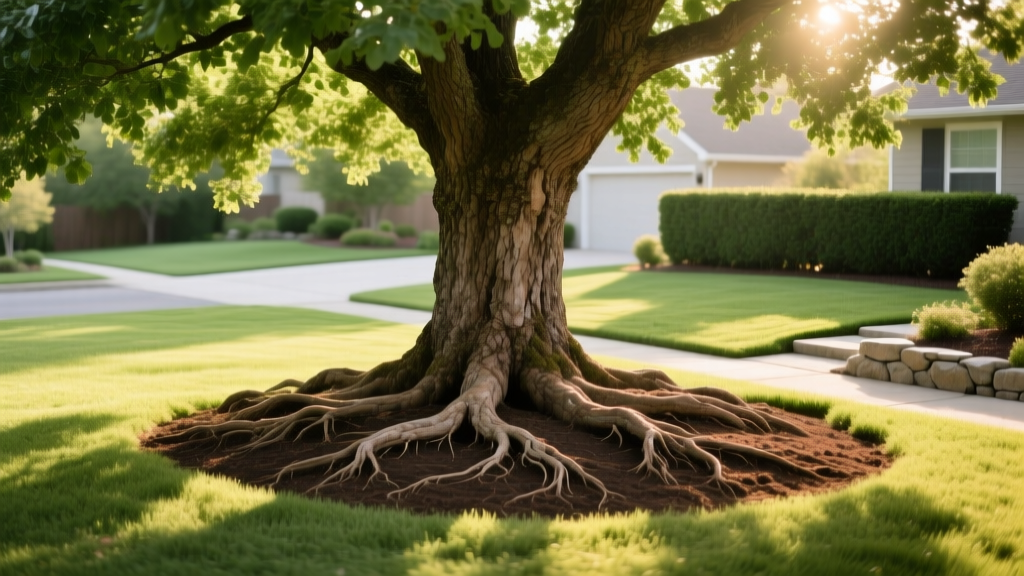
How to Manage Exposed Tree and Roots Safely in Your Yard
Dealing with surface roots is one of the most common challenges in residential landscaping. When the tree and roots become exposed, they create tripping hazards, damage lawn mowers, and buckle concrete driveways. However, improperly covering or cutting these roots can starve the tree of oxygen and water, leading to rapid decline or death. This practical guide provides exact measurements, material costs, and arborist-approved techniques to manage exposed roots safely while preserving the structural integrity of your tree.
The Anatomy of the Problem: Why Tree and Roots Surface
Contrary to popular belief, tree root systems rarely mirror the canopy above. According to the University of Minnesota Extension, up to 90% of a tree's fine, water-absorbing roots are located in the top 12 to 18 inches of soil. When these shallow lateral roots become visible, it is usually due to one of three factors:
- Soil Compaction and Erosion: Heavy foot traffic, construction equipment, and rainfall wash away the top 2 inches of loam, exposing the underlying root structure.
- Heavy Clay Soils: Clay particles hold water tightly but lack pore space for oxygen. Roots are forced to grow upward toward the surface to access the oxygen they need for cellular respiration.
- Species Genetics: Certain species are naturally predisposed to shallow root systems. Silver maples (Acer saccharinum), poplars (Populus), willows (Salix), and Norway spruce (Picea abies) are notorious for aggressive surface rooting.
⚠️ Critical Warning: Never add topsoil or compost over exposed tree and roots. Adding more than 2 inches of soil over a tree's critical root zone will suffocate the fine root hairs, causing a slow, irreversible decline that often takes 3 to 5 years to fully manifest.
Step-by-Step Guide to Safely Mulching Exposed Roots
Mulching is the safest, most cost-effective method for managing the space around a tree and roots. It suppresses turf grass (which competes heavily for water) and mimics the natural forest floor. Follow these exact specifications for a 2026 arborist-standard mulch bed.
Step 1: Calculate the Critical Root Zone (CRZ)
Measure the Diameter at Breast Height (DBH) of your tree trunk at 4.5 feet above the ground. The CRZ is calculated as 1 foot of radius for every 1 inch of DBH. For a mature oak with a 24-inch DBH, your mulch ring should extend at least 24 feet from the trunk in all directions. If this is impractical, aim for a minimum 8-foot to 10-foot radius.
Step 2: Remove Competing Turf
Do not use a rototiller or a sharp spade to aggressively dig out the grass. Instead, use a flat-edged sod cutter or a sharp half-moon edger to slice the grass roots just below the soil surface, then gently lift the sod away. This prevents severing the tree's fine absorbing roots.
Step 3: Apply the Correct Mulch Depth
Apply exactly 2 to 3 inches of coarse, organic mulch (such as double-shredded hardwood bark or pine bark nuggets). Coarse mulch allows water and oxygen to penetrate while preventing the matting that occurs with fine mulches. Keep the mulch at least 3 inches away from the actual trunk bark to prevent rot and rodent damage.
Alternatives to Mulch: Groundcovers and Permeable Hardscaping
If a mulch bed does not fit your landscape design, you can plant shallow-rooted groundcovers or install permeable hardscaping over the tree and roots. The Morton Arboretum recommends selecting plants that require minimal digging and thrive in dry shade.
| Option | Root Tolerance | Installation Cost (per sq. ft.) | Maintenance Level |
|---|---|---|---|
| Creeping Thyme | High (shallow planting) | $2.50 - $4.00 | Low (requires full sun) |
| Liriope (Monkey Grass) | Medium | $3.00 - $5.50 | Low (shade tolerant) |
| Hostas | Medium | $4.00 - $7.00 | Medium (slug control) |
| Permeable Pavers | High (if base is 2in max) | $12.00 - $18.00 | Low (sweep joints) |
When Root Pruning is Unavoidable: Rules and Costs
Sometimes, the tree and roots conflict with critical infrastructure, such as a heaving concrete driveway or a cracked foundation. If a root must be cut, strict arboricultural rules apply to prevent catastrophic tree failure.
- The 2-Inch Rule: Never sever a structural root larger than 2 inches in diameter. Cutting larger roots compromises the tree's mechanical anchor, increasing the risk of windthrow during storms.
- The CRZ Boundary: Never prune roots inside the Critical Root Zone. Cuts should only be made at the outer edges of the root system.
- Clean Cuts Only: Use a sharp pruning saw to make a clean, flush cut. Tearing the root bark with heavy machinery invites pathogenic fungi like Armillaria (root rot).
2026 Cost Expectations: If a root is causing structural damage but is too large to cut safely, hire an ISA Certified Arborist to perform an AirSpade excavation. An AirSpade uses compressed air at supersonic speeds to safely excavate soil without damaging the root bark. Arborists can then carefully reroute the root or install a root barrier. Expect to pay between $400 and $750 for a half-day AirSpade service.
Radial Trenching for Compacted Root Zones
If your tree and roots are surfacing because the surrounding soil is heavily compacted (often the case in yards with high foot traffic or recent construction), simply mulching will not solve the underlying oxygen deprivation. Radial trenching is a proven method to relieve compaction.
Using an AirSpade or a handheld soil auger, dig narrow trenches (4 inches wide, 12 inches deep) radiating outward from the trunk like the spokes of a wheel, starting 3 feet away from the trunk and extending to the drip line. Fill these trenches with a 50/50 mix of coarse compost and expanded shale. This creates permanent macropores that channel oxygen and water directly to the deeper root system, encouraging the tree to send new roots downward rather than upward.
Common Mistakes That Will Kill Your Tree
Homeowners often attempt quick fixes that ultimately destroy the tree. Avoid these critical errors:
- Building a Raised Bed Around the Trunk: Piling 12 inches of garden soil around the base of a tree to plant flowers will suffocate the trunk flare and cause fatal girdling roots.
- Paving Over the Root Zone: Pouring a solid concrete patio over the CRZ cuts off water and gas exchange. If hardscaping is required, use permeable pavers set on a shallow 2-inch base of crushed gravel.
- Applying Herbicides: Broadleaf weed killers (like 2,4-D) applied to the lawn over the root zone will be absorbed by the tree's fine surface roots, causing severe leaf curling and dieback.
Frequently Asked Questions
Can I cover exposed tree and roots with concrete to make a walkway?
No. Solid concrete is impermeable to water and oxygen. Covering the root zone with concrete will slowly starve the tree, leading to canopy dieback within 2 to 4 years. Use permeable pavers or a raised wooden boardwalk that allows air and rain to reach the soil below.
Will cutting one large surface root kill the tree?
Cutting a single large root (over 3 inches) will not immediately kill a healthy, mature tree, but it removes up to 25% of the tree's structural support on that side. This creates a severe lean hazard during high winds. Always consult an arborist to assess the risk before cutting structural roots.
How often should I refresh the mulch over the tree and roots?
Organic mulch decomposes over time. Refresh the mulch layer annually in the spring, ensuring the total depth never exceeds 3 inches. Rake the existing mulch to break up any hydrophobic crusts before adding a fresh 1-inch top layer.