Tree Care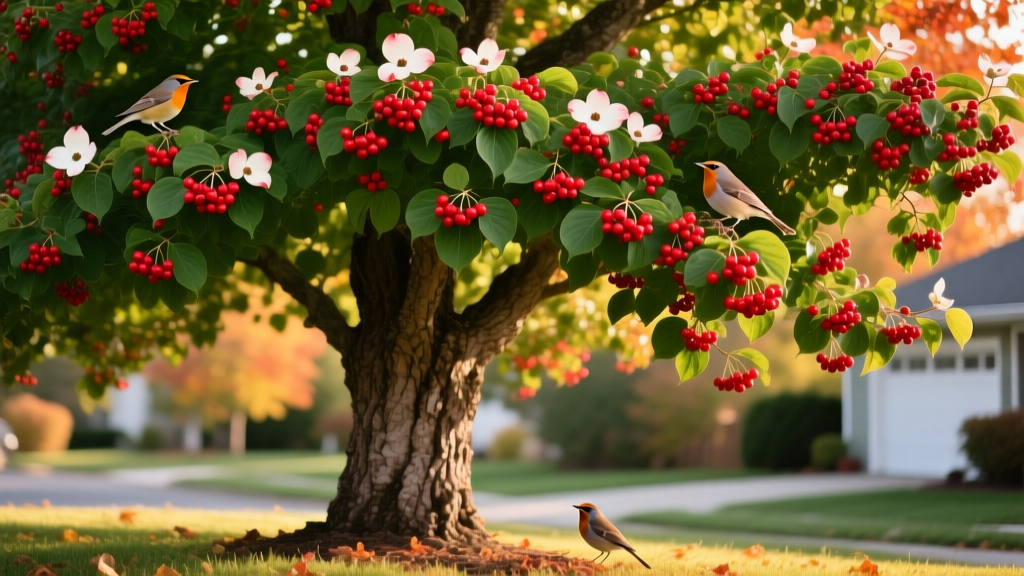
How to Maximize Flowering Dogwood Berries for Wildlife & Yard Safety
The Biology of Flowering Dogwood Berries
The flowering dogwood (Cornus florida) is prized for its spring bracts, but its autumn fruit is equally critical to the landscape ecosystem. What homeowners commonly call "berries" are botanically classified as drupes—small, fleshy fruits enclosing a single hard seed (endocarp). These drupes typically measure 1/4 to 1/2 inch in diameter and transition from hard green to glossy, vibrant crimson by late September or early October.
Unlike the Kousa dogwood (Cornus kousa), which produces large, edible, raspberry-like aggregate fruits, the native flowering dogwood produces clusters of distinct, individual drupes. According to the NC State Extension Plant Database, a mature, healthy Cornus florida can produce thousands of these drupes annually, serving as a high-lipid food source crucial for migratory and overwintering birds.
📊 Quick Data Profile: Cornus florida Drupes
- Fruit Type: Drupe (fleshy exocarp, stony endocarp)
- Average Lipid Content: 28% to 32% crude fat (peak autumn)
- Ripening Window: Late September through November
- Persistence: Often consumed within 2-3 weeks of ripening by avian foragers
Are Flowering Dogwood Berries Poisonous to Pets and Humans?
A frequent concern for homeowners is the toxicity of fallen dogwood berries. It is vital to distinguish between human consumption and pet exposure.
Human Toxicity
Flowering dogwood berries are not considered edible for humans. They contain tannins and specific anthocyanins that make them intensely bitter. Ingesting them can cause mild to moderate gastrointestinal distress, including nausea, vomiting, and diarrhea. They should never be foraged for human culinary use.
Pet Safety (Dogs and Cats)
The ASPCA does not list Cornus florida among its highly toxic plants for dogs or cats. However, the high tannin content and hard endocarps can cause mechanical irritation and mild stomach upset if a dog consumes a large quantity of fallen fruit.
⚠️ Yard Management Tip: If your dog is a known forager or scavenger, rake up heavy accumulations of dropped dogwood drupes from patios and high-traffic lawn areas in October. While not lethal, a large ingestion can result in an expensive emergency vet visit for gastrointestinal blockage or severe diarrhea.
Step-by-Step Guide to Maximizing Berry Production
If your flowering dogwood is mature (over 7 years old) but fails to produce a heavy berry crop, the issue usually stems from improper light exposure, incorrect soil pH, or unbalanced fertilization. Follow this protocol to encourage heavy fruiting.
1. Correct the Soil pH
Dogwoods require acidic soil to efficiently uptake the micronutrients necessary for flower and fruit development. Test your soil in early spring. The optimal pH range is 5.5 to 6.5. If your pH is above 7.0, apply elemental sulfur at a rate of 1.5 pounds per 100 square feet to lower it gradually.
2. Apply the Right Fertilizer Ratio
Excess nitrogen promotes vegetative leaf growth at the expense of fruiting. Avoid high-nitrogen lawn fertilizers (like 30-0-4) near the tree's drip line. Instead, use a balanced, slow-release fertilizer with a 12-4-8 or 16-4-8 N-P-K ratio. Apply 1/4 pound of actual nitrogen per inch of trunk diameter in early March, just before bud break.
3. Strategic Pruning for Airflow
Dense canopies trap moisture, leading to powdery mildew and anthracnose, which can abort fruit development. Prune out dead, crossing, or inward-growing branches in late winter (February) to allow UV penetration to the inner scaffolding, which stimulates fruiting spurs.
Troubleshooting Poor Fruit Set
Use this diagnostic matrix to identify why your dogwood is failing to produce autumn berries.
| Symptom | Probable Cause | Corrective Action |
|---|---|---|
| Tree flowers in spring, but berries drop green in July. | Summer drought stress; tree aborts fruit to conserve water. | Apply 2-4 inches of mulch; deep water 1 inch weekly during July/August dry spells. |
| No spring flowers, therefore no autumn berries. | Improper pruning timing or excessive shade. | Only prune in late winter. Thin surrounding canopy to allow 4-6 hours of dappled sunlight. |
| Berries form but turn brown and shrivel before ripening. | Dogwood anthracnose (Discula destructiva) or powdery mildew. | Apply fungicide (chlorothalonil or copper-based) at bud break and petal fall. |
| Heavy leaf growth, very few berries. | Excess nitrogen from adjacent lawn treatments. | Stop lawn fertilization within the drip line; switch to 12-4-8 tree-specific fertilizer. |
Leveraging Berries for Wildlife Habitat
The high lipid content (up to 32% crude fat) of Cornus florida drupes makes them a premium energy source for birds preparing for migration or surviving winter. According to University of Maryland Extension, over 35 species of birds actively forage on these berries.
Top Avian Consumers
- Northern Cardinal: Prefers to forage on lower-hanging clusters near shrub borders.
- American Robin: Will strip entire branches in large flocks during late October.
- Cedar Waxwing: Highly attracted to the bright red color; often consumes berries whole in rapid succession.
- Eastern Bluebird: Relies heavily on high-fat dogwood drupes when insect populations crash in late autumn.
- Hermit Thrush: Forages for fallen drupes on the forest floor or mulch beds.
"To maximize wildlife value, avoid planting flowering dogwoods as isolated lawn specimens. Group them with understory shrubs like viburnum and spicebush to create a multi-tiered foraging corridor that protects birds from aerial predators while they feed on the drupes."
How to Propagate Dogwoods from Harvested Berries
For advanced gardeners, harvesting dogwood berries to propagate new trees is a rewarding project. However, Cornus florida seeds exhibit complex dormancy. The hard endocarp prevents water absorption, and the embryo requires specific temperature shifts to germinate.
Seed Extraction and Stratification Protocol
- Harvest: Pick fully red, soft drupes in mid-October. Do not use brown or shriveled fruit.
- Maceration: Soak the berries in water for 24 hours. Crush them gently by hand or against a wire screen to separate the fleshy exocarp from the hard seeds. Viable seeds will sink; discard floaters.
- Warm Stratification: Mix the clean seeds with moist (not wet) peat moss or sand in a sealed plastic bag. Store at room temperature (68°F to 72°F) for 60 days to soften the endocarp.
- Cold Stratification: Move the bag to a refrigerator set between 38°F and 41°F for 90 to 120 days. This simulates winter and breaks epicotyl dormancy.
- Sowing: In early April, sow the stratified seeds 1/4 inch deep in a well-draining seedling mix (50% peat, 50% perlite). Maintain soil moisture and provide 50% shade cloth until the seedlings establish their first true leaves.
For more detailed horticultural protocols, Penn State Extension offers comprehensive guides on managing native tree seed dormancy and preventing fungal damping-off in seedling trays.
Frequently Asked Questions
Do I need a male and female flowering dogwood to get berries?
No. Cornus florida is a monoecious species, meaning each perfect flower contains both male (stamen) and female (pistil) reproductive organs. A single, isolated tree will produce berries as long as pollinators are active during the spring bloom window.
Why do the berries disappear so quickly in the fall?
The high nutritional value and bright color of the drupes make them a primary target for migratory birds. A flock of Cedar Waxwings or Robins can strip a mature 20-foot dogwood of its entire berry crop in less than 48 hours. This rapid consumption is a sign of a healthy, ecologically functional landscape.
Can I use dogwood berries to make jelly or tea?
No. While Kousa dogwood (Cornus kousa) fruit is sometimes used in preserves, the native flowering dogwood (Cornus florida) berries are highly astringent, bitter, and will cause gastrointestinal distress if ingested by humans. Stick to culinary fruits for human consumption.