
Tree Care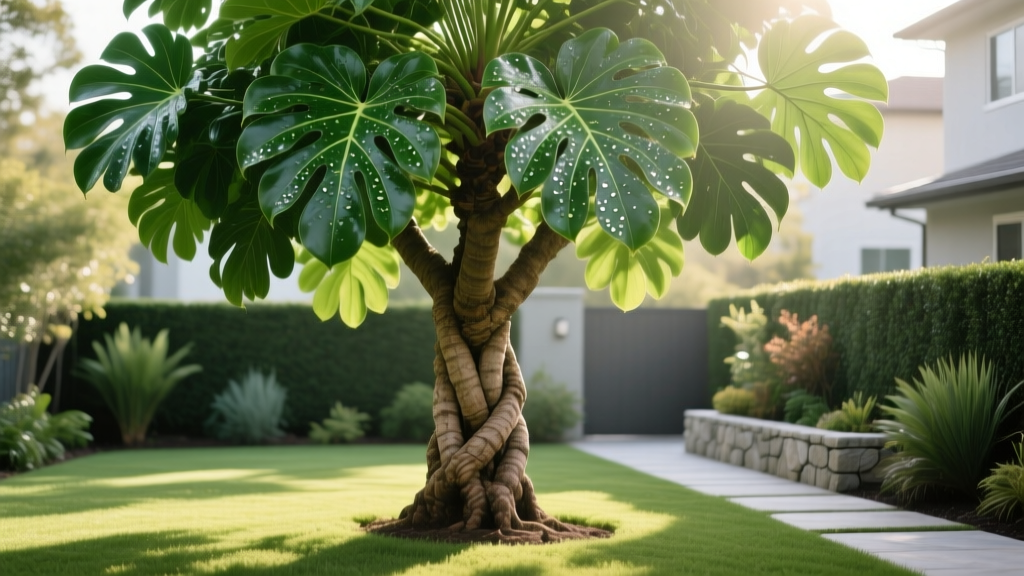
Managing a Money Tree Full Grown: Size, Pruning, and Care Guide
The Pachira aquatica, universally marketed as the 'money tree,' is most frequently sold as a diminutive, 12-inch braided houseplant. However, this tropical wetland species is naturally a massive canopy tree. When allowed to mature without the constraints of commercial braiding and small nursery pots, a money tree full grown can become a striking, large-scale specimen. Transitioning a tabletop novelty into a mature landscape or indoor tree requires a fundamental shift in horticultural strategy, moving from basic survival watering to active structural management.
The Reality of a Money Tree Full Grown: Dimensions and Growth Rates
The ultimate size of your Pachira aquatica depends entirely on its environment. In its native Central and South American wetlands, and in equivalent USDA Hardiness Zones 10b through 12, it behaves as a vigorous landscape tree. Indoors, it is restricted by container volume and light availability, but can still achieve significant height. According to the Missouri Botanical Garden, the species is highly adaptable but demands specific spatial allowances as it matures.
| Metric | Indoor Specimen (Container Bound) | Outdoor Specimen (Zones 10b-12) |
|---|---|---|
| Maximum Height | 6 to 10 feet | 30 to 60 feet |
| Canopy Spread | 3 to 5 feet | 15 to 20 feet |
| Trunk Caliper (Diameter) | 1.5 to 3 inches | 8 to 12+ inches |
| Annual Growth Rate | 6 to 12 inches | 24 to 36 inches |
| Trunk Structure | Often braided, thin, flexible | Single or multi-trunk, thick, buttressed base |
Transitioning from Braided Houseplant to Mature Specimen
Commercial growers braid young Pachira trunks while they are highly flexible. As the tree matures, secondary growth (thickening of the trunk via the vascular cambium) causes the trunks to fuse. If you intend to grow your money tree full grown as a single, thick-trunked specimen, you must address the braid early in its maturation process.
Warning: The Girdling Hazard
Nursery braids are often secured with rubber bands, zip ties, or tight twine at the top and bottom. As the trunk caliper expands, these bindings will girdle the tree, cutting off the phloem and eventually killing the upper canopy. Inspect the top and bottom of the braid immediately upon purchase and remove all synthetic bindings with sterilized snips.
Nursery braids are often secured with rubber bands, zip ties, or tight twine at the top and bottom. As the trunk caliper expands, these bindings will girdle the tree, cutting off the phloem and eventually killing the upper canopy. Inspect the top and bottom of the braid immediately upon purchase and remove all synthetic bindings with sterilized snips.
Step-by-Step Unbraiding Protocol
- Assess Fusion: Gently squeeze the midpoint of the braid. If the trunks feel like a single solid mass and bark has grown over the gaps, they have fused. Attempting to separate them will tear the cambium and invite fungal pathogens. Leave fused braids intact.
- Separate Unfused Trunks: If the trunks are still distinct, carefully unwind them from the top down. Support the base of each trunk with one hand to prevent root-snap.
- Select the Leader: Choose the thickest, healthiest trunk to serve as the central leader. Prune the remaining unfused trunks at the soil line using sterilized bypass pruners. The root system will redirect energy to the dominant trunk, accelerating caliper expansion.
Outdoor Planting in Zones 10b-12: The Landscape Approach
For homeowners in South Florida, Southern California, or Hawaii, planting a money tree full grown outdoors allows it to reach its genetic potential. Pachira aquatica is a wetland species, meaning it tolerates poor drainage better than most tropicals, but it still requires specific site preparation to thrive in a residential landscape.
Site Selection and Soil Preparation
Select a location that receives morning sun and dappled afternoon shade. While mature trees can handle full sun, sudden exposure from an indoor environment will cause severe leaf scorch. Test your soil pH; Pachira prefers a slightly acidic to neutral range of 6.0 to 7.5. If your native soil is highly alkaline (above 7.8), the tree will suffer from iron chlorosis, presenting as interveinal yellowing on new growth.
- Digging the Hole: Excavate a hole twice the width of the root ball but exactly the same depth. Planting too deep will suffocate the shallow lateral roots.
- Amendments: Avoid heavy peat moss in the planting hole, which creates a 'bathtub effect' in clay soils. Instead, backfill with a 50/50 mix of native soil and coarse pine bark fines to maintain macro-porosity.
- Mulching: Apply a 3-inch layer of arborist wood chips, but maintain a strict 4-inch mulch-free radius around the trunk base to prevent collar rot.
Indoor Management for Maximum Size
Pushing an indoor money tree to its maximum 8-to-10-foot potential requires aggressive container management and supplemental lighting. Standard indoor ambient light (typically 50-100 foot-candles) is insufficient for mature trunk thickening.
The Up-Potting Schedule
Root restriction is the primary limiting factor for indoor growth. Follow this progressive up-potting schedule, moving to the next size only when roots circle the interior of the current pot (verified by sliding the root ball out for inspection):
- Year 1-2: 6-inch to 10-inch standard nursery pot.
- Year 3-4: 14-inch pot (approx. 7 gallons).
- Year 5+ (Mature): Transition to a 25-gallon or 30-gallon fabric container (e.g., Smart Pot 30-Gallon). Fabric pots air-prune the root tips, preventing the circling roots that plague mature trees in solid plastic or ceramic planters, as supported by University of Florida IFAS Extension research on container root management.
Lighting and Nutrition
A mature indoor Pachira requires a Daily Light Integral (DLI) of 10 to 15 mol/m²/d. Position the tree directly in front of an unobstructed south-facing window. If natural light is unavailable, use a full-spectrum LED grow light like the Mars Hydro TSW 2000, suspended 24 inches above the canopy and run for 12 hours daily. Feed with a balanced, slow-release fertilizer (such as Osmocote Plus 15-9-12) at a rate of 3 tablespoons per square foot of soil surface every six months during the active growing season (April through September).
Pruning and Canopy Control for Mature Pachira
When a money tree reaches the ceiling indoors or begins to obstruct sightlines outdoors, structural pruning is mandatory. Pachira aquatica exhibits strong apical dominance; it will grow straight up without branching unless the terminal bud is removed.
Execution of the Heading Cut
To force lateral branching and create a fuller canopy on a tall, leggy specimen, you must 'top' the tree. Identify the desired height and make a clean, 45-degree angle cut exactly 1/4 inch above a leaf node (the bump on the stem where a leaf attaches). Use sharp, sterilized Felco 2 bypass pruners to avoid crushing the vascular tissue. Within 3 to 4 weeks, two to three dormant buds just below the cut will break, forming new lateral branches. Repeat this process on the new branches the following year to build a dense, multi-tiered canopy.
Troubleshooting Mature Tree Issues
Mature money trees face different physiological stressors than juvenile cuttings.
Scale Insects on Thick Bark
As the trunk matures and develops a rougher texture, it becomes a prime hiding spot for brown soft scale (Coccus hesperidum). These pests appear as small, immobile brown bumps on the bark and excrete a sticky honeydew that attracts sooty mold. Because the bark of a full-grown tree is thicker, systemic insecticides are less effective. Instead, apply Bonide All Seasons Horticultural Oil, thoroughly coating the trunk and the undersides of all leaves. Apply in the early evening to prevent the oil from magnifying sunlight and burning the foliage.
Edema and Overwatering in Large Containers
Large containers retain moisture much longer than small pots. A mature 30-gallon money tree may only need watering once every 10 to 14 days, even in summer. Overwatering large specimens often manifests as edema—corky, brown, raised blisters on the undersides of the leaves caused by roots taking up water faster than the leaves can transpire it. If edema appears, increase air circulation with an oscillating fan and allow the top 4 inches of soil to dry completely before rewatering.
Frequently Asked Questions
Will a full-grown money tree produce flowers or fruit?
Yes, but almost exclusively outdoors in tropical climates. Mature Pachira aquatica produce striking, large, white-and-pink flowers with prominent red stamens, which eventually develop into large, woody seed pods containing edible, peanut-like seeds. Indoor specimens rarely flower due to the lack of specific humidity and light triggers.
Can I propagate a mature money tree from its thick trunk?
Thick, mature, woody trunks do not root well from cuttings. Propagation from a full-grown tree is best achieved via air layering. Score a branch that is at least 1/2 inch in diameter, wrap it in damp sphagnum moss, and seal it in plastic wrap. Roots will form at the wound site in 6 to 8 weeks, at which point the branch can be severed and potted.
Is a mature money tree toxic to pets?
No. Pachira aquatica is non-toxic to cats and dogs. However, the large, leathery leaves of a full-grown tree can pose a mild choking hazard or cause gastrointestinal upset if a pet chews and swallows large quantities of the fibrous foliage.

