
Tree Care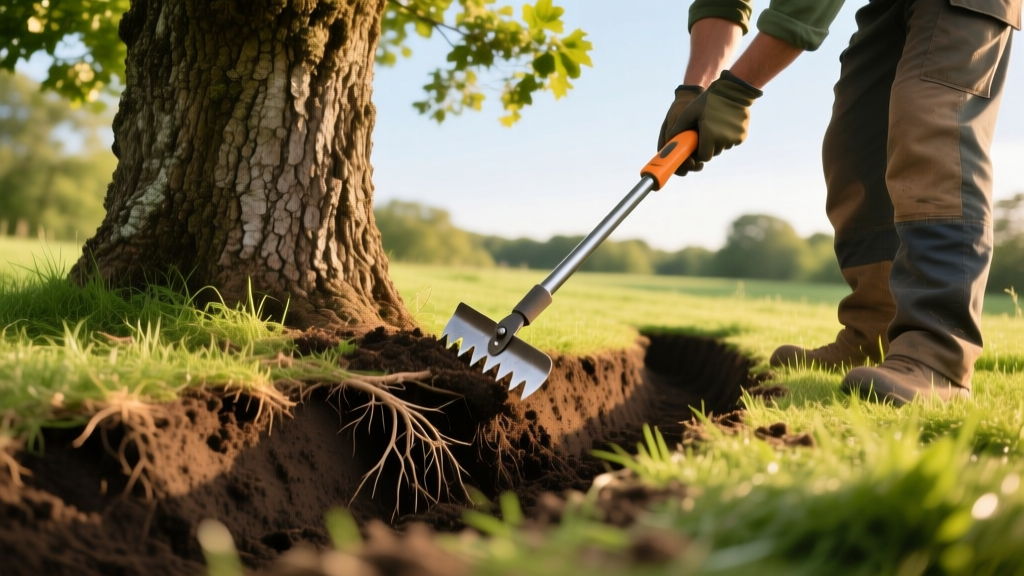
Edging Around Trees: Step-by-Step Root-Safe Trenching Guide
The Biological Conflict: Turf Borders vs. Tree Physiology
Crisp lawn borders elevate landscape aesthetics, but edging around trees introduces severe biological risks if executed improperly. The fundamental conflict lies between turfgrass management—which demands defined, deep boundaries to prevent grass encroachment—and a tree’s requirement for undisturbed soil horizons and oxygen exchange within the Critical Root Zone (CRZ). The majority of a tree's fine, water-absorbing roots reside in the top 2 to 6 inches of soil. Deep mechanical edging or aggressive trenching severs these vital root networks, triggering drought stress, canopy dieback, and increased susceptibility to opportunistic pathogens like Armillaria root rot.
Furthermore, improper edging often leads to 'volcano mulching,' where soil and mulch are piled against the trunk flare. According to the University of Minnesota Extension, burying the root flare restricts oxygen to the phloem and cambium layers, ultimately causing girdling roots and fatal stem decay. This guide provides a precise, step-by-step protocol for establishing a clean lawn edge while preserving tree health.
CRITICAL WARNING: Lawnmower Blight
Never use a motorized rotary edger or a nylon-string weed trimmer within 3 feet of a tree trunk. String trimmers strip the bark and damage the cambium layer, creating open wounds that invite borers and fungal infections. This mechanical damage, known as 'lawnmower blight,' is a leading cause of premature urban tree mortality. Always rely on manual tools near the trunk flare.
Never use a motorized rotary edger or a nylon-string weed trimmer within 3 feet of a tree trunk. String trimmers strip the bark and damage the cambium layer, creating open wounds that invite borers and fungal infections. This mechanical damage, known as 'lawnmower blight,' is a leading cause of premature urban tree mortality. Always rely on manual tools near the trunk flare.
Tool Selection Matrix for Root-Safe Edging
Selecting the correct tool dictates the success of the edge and the safety of the root system. Mechanical edgers should be restricted to areas outside the tree's drip line. As of 2026, commercial-grade manual tools remain the gold standard for precision work within the CRZ.
| Tool Type | Specific Model / Spec | Approx. Cost (2026) | Root Risk Level | Best Use Case |
|---|---|---|---|---|
| Half-Moon Edger | Fiskars 39" Steel Tree Spade / Edger | $42 - $55 | Low | Severing turf roots and defining the initial trench wall. |
| Hand Trowel / Hori Hori | A.M. Leonard 7" Hori Hori Knife | $28 - $35 | Very Low | Excavating soil and navigating around exposed surface roots. |
| Mechanical Rotary Edger | Echo PE-265 (Gas) or Ego EA0800 (Battery) | $180 - $250 | Severe | Long, straight borders far outside the tree's drip line only. |
| Landscaping Paint | Aervoe Inverted Marking Paint (Fluorescent) | $6 - $9 / can | None | Mapping the CRZ and trench path before cutting. |
Step-by-Step Procedure: Executing the Trench
Follow this exact sequence to establish a boundary that halts grass rhizomes while protecting the tree's structural and feeder roots.
Step 1: Calculate and Map the Critical Root Zone (CRZ)
Do not edge arbitrarily close to the trunk. Calculate the CRZ using the standard arboricultural formula: 1 foot of radius for every 1 inch of trunk Diameter at Breast Height (DBH, measured at 4.5 feet above grade). For a tree with a 15-inch DBH, the CRZ extends 15 feet from the trunk. Use inverted marking paint to draw your edging line. If space constraints require edging inside the CRZ, maintain a minimum distance of 8 feet from the trunk for mature shade trees.
Step 2: Sever the Turf Profile
Using a sharp half-moon edger, plunge the blade directly into the soil along your painted line. Cut to a maximum depth of 3 inches. This depth is sufficient to sever Kentucky Bluegrass and Bermudagrass rhizomes without slicing into the deeper structural roots of the tree. Angle the blade at 60 degrees, sloping away from the tree bed, to create a clean, defined wall on the lawn side.
Step 3: Excavate and Clear the Trench
Remove the severed turf and soil using a hand trowel or Hori Hori knife. Never use a motorized tiller or trencher, as these will indiscriminately shred feeder roots. As you excavate, watch for tree roots crossing the trench path. According to guidelines supported by the Penn State Extension, roots smaller than 1.5 inches in diameter can be cleanly pruned with bypass loppers if absolutely necessary, but roots larger than 2 inches must not be severed. Instead, bridge the root by leaving the soil intact over it and adjusting the mulch depth above.
Step 4: Establish the Mulch Transition (The Donut Method)
The edging trench serves as a physical barrier to keep mulch from spilling into the lawn. Fill the tree-side of the trench with double-shredded hardwood mulch to a depth of 2 to 4 inches. Crucially, pull the mulch back 3 to 5 inches from the actual trunk flare. The root flare must remain visible and exposed to the air. This 'donut' configuration prevents moisture accumulation against the bark, mitigating the risk of Phytophthora root rot and bark decay.
Troubleshooting Edge Cases and Soil Variables
- Heavy Clay Soils: Clay compacts easily and holds water. If edging in heavy clay, reduce the trench depth to 2 inches and increase the mulch layer to 3 inches to improve surface drainage and prevent the trench from becoming a water trap that drowns lateral roots.
- Aggressive Grass Species: For invasive turfgrapes like Zoysia or torpedo grass, a 3-inch trench may not stop rhizome migration. Instead of digging deeper and risking root damage, install a physical barrier. Drive a 4-inch deep, 10-mil thick HDPE (High-Density Polyethylene) landscape edging strip into the trench wall on the lawn side.
- Surface Root Heaving: If a tree has extensive surface roots that make trenching impossible without severe damage, abandon the trenching method entirely. Use a string trimmer to carefully kill a 12-inch strip of grass (using a targeted, non-residual herbicide or manual scraping), and lay a thick layer of mulch directly over the roots to smother the grass naturally over 4 to 6 weeks.
Seasonal Refresh and Maintenance Timing
Turfgrass will attempt to grow back into the tree bed, and mulch will decompose over time. Schedule your edging maintenance based on the growth cycles of your specific grass type:
- Cool-Season Grasses (Fescue, Bluegrass): Re-cut the edge in early spring (April) just before the primary growth flush, and perform a light touch-up in early fall (September) before overseeding the lawn.
- Warm-Season Grasses (Bermuda, Zoysia): Re-edge in late spring (May) as the grass breaks dormancy. Avoid edging during peak summer stress (July/August) when the tree is heavily reliant on its peripheral feeder roots for water uptake.
During maintenance refreshes, do not dig a new trench inside the old one. Simply run the half-moon edger along the existing lawn-side wall to shave off new rhizome growth, and top up the mulch layer as needed, ensuring the trunk flare remains permanently exposed.

