Tree Care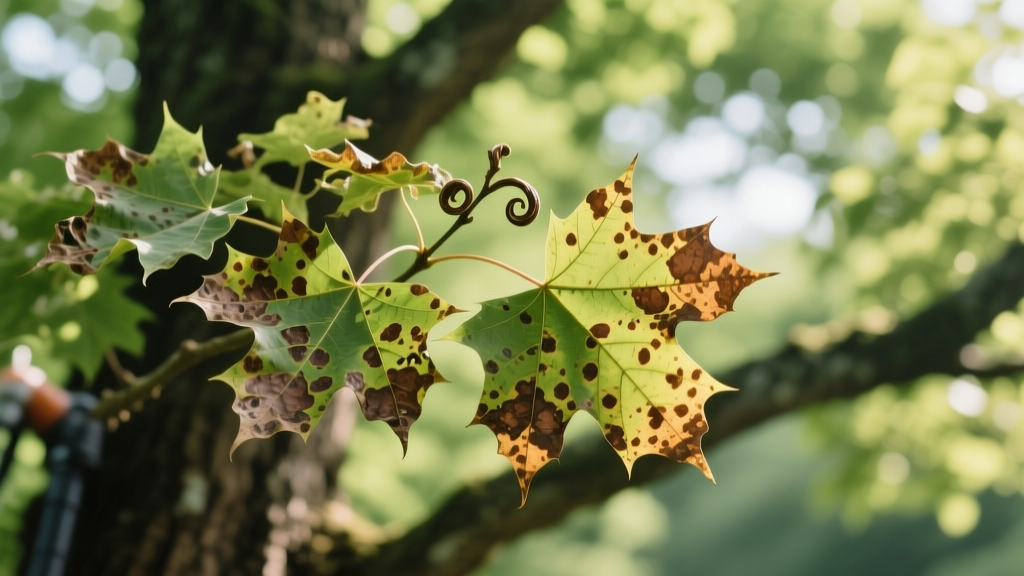
Maple Anthracnose: Beginner Guide to Identification and Treatment
Understanding Maple Anthracnose: A Cosmetic Threat, Not a Death Sentence
When spring arrives with cool, wet weather, many homeowners panic at the sight of their maple trees (Acer spp.) suddenly developing brown, scorched-looking leaves. This is typically maple anthracnose, a common fungal disease primarily caused by pathogens in the Discula and Gloeosporium genera. While the sudden browning and premature leaf drop can look alarming, anthracnose is rarely fatal to established, healthy trees. It is primarily a cosmetic issue that weakens the tree's vigor only if severe defoliation occurs multiple years in a row.
The fungus overwinters in infected leaf litter and dead twigs. During spring rains, spores are splashed onto emerging buds and young leaves. Infection thrives when temperatures remain between 50°F and 65°F (10°C–18°C) with prolonged leaf wetness. According to the University of Minnesota Extension, once the weather warms and dries out in late June, the disease cycle naturally slows, and the tree will often push out a second flush of healthy foliage.
The 3-Step Visual Diagnosis Checklist
Before purchasing any treatments, confirm that your tree actually has anthracnose. Misdiagnosis leads to wasted money and ineffective chemical applications. Use this visual checklist to confirm the presence of the fungus:
- Vein Necrosis (The Hallmark Sign): Unlike environmental scorch which creates random brown patches, anthracnose lesions specifically follow the leaf veins. Look for distinct brown or blackened areas radiating outward from the midrib and secondary veins.
- Marginal Browning and Distortion: As the lesions expand, the edges of the leaves will curl, distort, and turn crispy brown. Young, expanding leaves may become severely stunted or deformed.
- Premature Defoliation: In severe cases, particularly on susceptible species like sugar maples and silver maples, the tree will drop heavily infected leaves in late May or early June, creating a carpet of brown debris on the lawn.
Differential Diagnosis: Anthracnose vs. Other Maple Diseases
Beginners often confuse anthracnose with other common maple ailments. Use this comparison matrix to ensure you are treating the correct problem.
| Disease / Condition | Primary Visual Symptoms | Timing of Onset | Severity & Action Required |
|---|---|---|---|
| Maple Anthracnose | Brown/black lesions tracking along leaf veins; distorted young leaves; early leaf drop. | Mid-to-late spring (cool, wet weather). | Moderate (Cosmetic). Sanitation and preventative fungicides. |
| Tar Spot | Distinct, raised, shiny black spots (up to 1 inch wide) on the upper leaf surface. | Mid-to-late summer. | Low (Cosmetic). Rake fallen leaves; no chemical treatment needed. |
| Verticillium Wilt | Sudden wilting, browning, and death of leaves on one side or single branches; sapwood staining. | Mid-summer (hot, dry weather). | High (Often Fatal). No cure; remove severely infected trees. |
| Environmental Leaf Scorch | Browning strictly at leaf margins and tips; no vein tracking; crispy texture. | Mid-summer (during droughts or high winds). | Moderate. Deep watering and mulching; no fungicides. |
Cultural Controls: Sanitation and Pruning Protocols
For most residential yards, cultural controls are sufficient to manage maple anthracnose without resorting to chemicals. The goal is to reduce the overwintering fungal inoculum and improve canopy airflow to decrease leaf wetness duration.
1. Aggressive Leaf Sanitation
The fungus survives the winter in fallen, infected leaves. You must break this cycle. Rake and remove all fallen maple leaves in the autumn. Do not compost these leaves. Home compost piles rarely reach the sustained 140°F+ temperatures required to kill Discula spores. Bag the infected debris and send it to municipal yard waste facilities, or burn it where local ordinances permit.
2. Strategic Canopy Pruning
Dense canopies trap humidity, creating the perfect microclimate for fungal spores to germinate. Prune your maple during the dormant season (late winter) to remove dead, crossed, or inward-growing branches. Make your pruning cuts exactly 1/4 inch outside the branch collar to promote rapid compartmentalization. Sterilize your pruning shears between every cut using 70% isopropyl alcohol to prevent mechanically spreading pathogens.
Warning: Avoid pruning maples in early spring. Maples are known as "bleeders" and will exude heavy sap if cut just before or during bud break. While the sap flow itself does not harm the tree, the sticky residue can attract secondary insect pests and create a messy nuisance on your hardscaping.
3. Proper Mulching Techniques
Soil splash is a primary vector for moving overwintering spores from the ground onto the lower canopy. Apply a 2-to-3-inch layer of organic arborist wood chips in a 3-foot radius around the trunk. Keep the mulch at least 3 inches away from the actual trunk flare to prevent root rot and rodent damage.
Chemical Interventions: Fungicide Selection and Timing
If your maple has suffered severe defoliation for two or more consecutive years, or if it is a young, newly planted tree that cannot afford to lose its photosynthetic capacity, chemical intervention is warranted. Fungicides are strictly preventative; they will not cure leaves that are already infected and showing brown lesions.
Active Ingredients and Product Recommendations
Look for products containing Chlorothalonil, Mancozeb, or Copper ammonium complex. The Missouri Botanical Garden notes that these contact fungicides create a protective barrier on the leaf surface, preventing spore penetration.
- Chlorothalonil (e.g., Bonide Fung-onil, Daconil): Highly effective and widely available. Expect to pay $18–$25 for a 16 oz concentrate. Mix at a rate of 2.25 to 2.5 fluid ounces per gallon of water.
- Copper Ammonium Complex (e.g., Monterey Liqui-Cop): A good alternative for organic-leaning gardeners, though slightly less effective under heavy disease pressure. Costs around $12–$16 for a 16 oz bottle.
- Propiconazole (e.g., Bonide Infuse Systemic): A systemic option that moves through the plant tissue. Useful if rain is expected shortly after application, as it is absorbed within 24 hours. Priced around $20–$30.
Application Timing and Technique
Timing is the most critical factor in fungicide efficacy. You must apply the first spray at bud break (when the leaf buds are just beginning to swell and show green tissue, typically mid-to-late April depending on your hardiness zone). Follow up with a second application 10 to 14 days later, and a third application if the spring weather remains unusually cool and wet. Use a pump sprayer to thoroughly coat both the upper and lower surfaces of the emerging leaves until the solution begins to drip.
Frequently Asked Questions
Will maple anthracnose kill my tree?
No. Anthracnose is a foliar disease that affects the leaves, not the vascular system or the roots. An established maple can lose up to 50% of its first flush of leaves to anthracnose and still recover fully by pushing out a second flush in early summer. It only becomes a threat to the tree's long-term survival if severe defoliation occurs three or more years in a row, which depletes the tree's stored carbohydrate reserves.
Should I fertilize a tree suffering from anthracnose?
Yes, but with specific parameters. Apply a slow-release, balanced fertilizer (such as a 10-10-10 or 12-4-8 NPK ratio) in early spring before bud break to help the tree push out its second flush of leaves. Avoid high-nitrogen, quick-release fertilizers in late summer, as this promotes soft, succulent growth that is highly susceptible to secondary fungal infections and winter dieback.
Are some maple species more resistant than others?
Susceptibility varies widely. Sugar maples (Acer saccharum) and silver maples (Acer saccharinum) are highly susceptible. Japanese maples (Acer palmatum) can also suffer significant damage in wet springs. Conversely, Norway maples (Acer platanoides) and red maples (Acer rubrum) generally exhibit much higher tolerance and suffer only minor cosmetic damage, as noted by Penn State Extension. If you are planting a new tree in a low-lying, poorly drained area with a history of anthracnose, prioritize red maple cultivars.