
Tree Care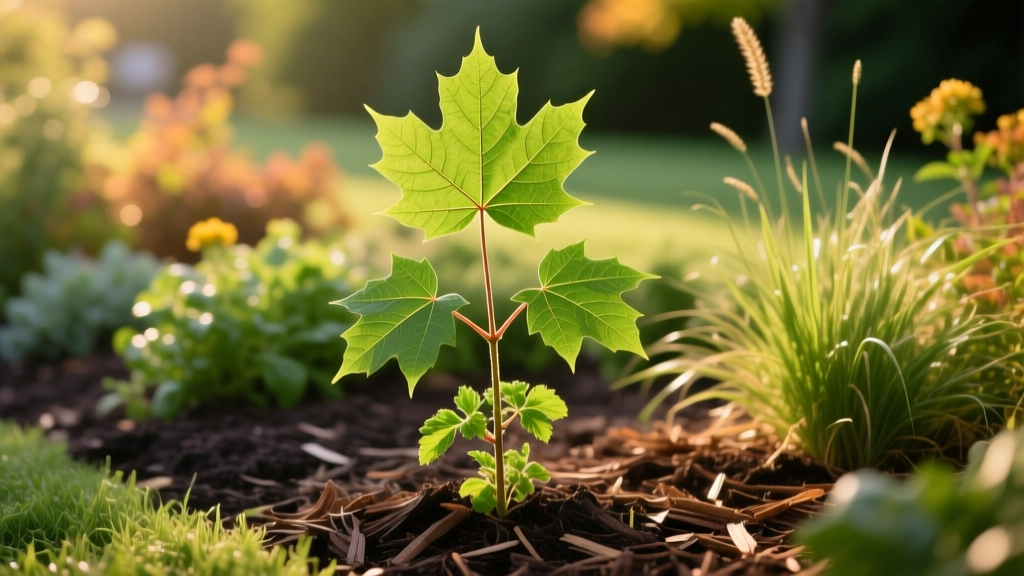
How to Kill the Weed With Maple Like Leaves in Garden Beds
The 'Maple-Lookalike' Weed Problem in Tree Beds
Homeowners maintaining tree and shrub beds frequently encounter broadleaf invaders that mimic the foliage of desirable canopy trees. When gardeners search for the 'weed with maple like leaves,' they are almost always dealing with one of three distinct culprits: Common Mallow, Velvetleaf, or actual volunteer tree seedlings (such as Norway Maple or Sweetgum). Misidentifying these plants leads to failed eradication, wasted herbicide, and potential damage to the root systems of your prized landscape trees.
Effective spot-treatment requires understanding the specific root architecture and germination triggers of each lookalike. Below is a comprehensive identification and eradication framework tailored for ornamental tree and shrub beds.
Identification Matrix: What Weed Has Maple-Like Leaves?
Before selecting a treatment, confirm which species is invading your mulch rings. Use this diagnostic matrix to differentiate between herbaceous weeds and woody volunteers.
| Species Name | Leaf Characteristics | Growth Habit & Height | Root System & Eradication Difficulty |
|---|---|---|---|
| Common Mallow (Malva neglecta) |
5-7 rounded lobes, 2-4 inches wide, crinkled texture, resembles a small sugar maple leaf. | Prostrate to upright, rarely exceeds 2 feet. Stems are often hairy. | Deep, tough taproot (12-18 inches). High difficulty; snaps easily if pulled dry. |
| Velvetleaf (Abutilon theophrasti) |
Heart-shaped but deeply lobed (maple-like), velvety trichomes on both sides, 4-8 inches wide. | Aggressively upright, reaching 4-8 feet in a single season. Thick, fibrous stalks. | Fibrous with a shallow taproot. Moderate difficulty; highly susceptible to contact herbicides. |
| Norway Maple Seedling (Acer platanoides) |
5 distinct sharp lobes, 3-5 inches wide, classic maple silhouette. Exudes milky sap when petiole is snapped. | Upright woody stem. Can grow 2-4 feet in the first year from seed. | Woody taproot. High difficulty; will resprout vigorously if cut without chemical stump treatment. |
| Sweetgum Seedling (Liquidambar styraciflua) |
5-7 palmate lobes, star-shaped, 3-6 inches wide. Margins are finely serrated. | Upright woody stem. Often found in beds adjacent to mature sweetgum canopies. | Woody, aggressive root system. High difficulty; requires systemic translocated herbicides. |
Spot-Treatment Protocols for Mallow and Velvetleaf
Common mallow and velvetleaf are herbaceous broadleaves. According to the University of Minnesota Extension, common mallow is particularly notorious for surviving drought conditions due to its deep taproot, while the Wisconsin Horticulture Division of Extension notes that velvetleaf seeds can remain viable in the soil seedbank for up to 50 years.
Mechanical Extraction: The Soil Moisture Rule
Hand-pulling mallow is only effective if soil moisture is at field capacity (roughly 25-30% volumetric water content). If the soil is dry, the 14-inch taproot will snap at the crown, and the weed will resprout in 7-10 days.
- Tool Selection: Use a 12-inch stainless steel dandelion fork (e.g., the Fiskars 39-inch Steel Dandelion Weeder, averaging $28 in 2026) to penetrate deep alongside the taproot.
- Technique: Insert the fork 10 inches deep, 2 inches from the crown, and lever backward to lift the entire root mass. Do not yank the foliage.
Chemical Spot-Treatment: Herbicide Shielding
For dense patches of velvetleaf where hand-pulling is impractical, a targeted 2% glyphosate solution is highly effective.
- Mixing: Combine 2.5 oz of 41% glyphosate concentrate (e.g., Roundup Pro Concentrate) with 1 gallon of water.
- Surfactant: Velvetleaf is covered in dense, velvety hairs (trichomes) that repel water. You must add a non-ionic surfactant at 0.25% v/v (roughly 1/2 teaspoon per gallon) to break the surface tension and allow the herbicide to penetrate the leaf cuticle.
- Application: Spray only until the leaves are wet, not dripping. Use a physical spray shield (like the Chapin 24-inch Spray Shield, ~$15) to prevent drift onto desirable shrubs.
⚠️ CRITICAL WARNING: Root Zone Protection
Glyphosate translocates through plant tissue and can be absorbed by shallow feeder roots in sandy soils. Never apply glyphosate within the drip line of desirable trees if the weed shares the exact same root zone, as root grafting or soil absorption can occur. For weeds growing directly at the trunk base, rely on manual extraction or carefully painted wick-applications.
Eradicating Woody Volunteer Seedlings (The False Weeds)
Volunteer Norway Maples and Sweetgums are technically trees, but in a shrub bed, they act as aggressive weeds. Pulling a 2-foot Norway Maple seedling often leaves the lower woody taproot intact. If left untreated, the root system will push up 15-20 epicormic suckers the following spring, turning a single weed into a dense thicket.
The Cut-Stump Method for Woody Volunteers
To permanently kill woody volunteers without spraying chemicals near your desirable plants, use the cut-stump method with a translocated brush killer.
- Timing: Perform this in late summer or early fall when sap flow is moving downward toward the roots, maximizing herbicide translocation.
- The Cut: Use sharp bypass pruners to cut the seedling exactly 1 inch above the soil grade. Make a clean, horizontal cut.
- Immediate Application: Within 60 seconds of cutting, apply undiluted Triclopyr (e.g., Ortho Poison Ivy & Tough Brush Killer, 8% Triclopyr active ingredient) to the outer cambium ring of the cut stump.
- Tool: Use a small foam craft brush to paint the chemical precisely. This prevents soil contamination and protects adjacent desirable roots.
The Penn State Extension highlights that Norway Maple is highly invasive and prolific; failing to kill the root system of volunteers guarantees they will outcompete native understory plantings.
Pre-Emergent Defense Strategies
Because velvetleaf and mallow produce thousands of seeds that require light to germinate, blocking photosynthesis at the soil surface is your best long-term defense.
Mulching Protocol
Apply a 3-to-4-inch layer of coarse arborist wood chips over the entire tree bed. Do not use finely shredded bark, which compacts and allows weed seeds to germinate on top. Keep the mulch exactly 3 inches away from the trunk flare of your desirable trees to prevent crown rot and rodent girdling.
Chemical Pre-Emergents
For beds with severe historical infestations, apply a broadleaf pre-emergent in early spring.
- Isoxaben (Gallery 75 DF): The industry standard for broadleaf pre-emergence in ornamental beds. Apply at a rate of 1.0 lb per 1,000 sq ft. As of 2026, a 5lb bag averages $85. It inhibits root development in germinating mallow and velvetleaf seeds.
- Application Trigger: Apply when soil temperatures at a 2-inch depth hit 55°F for three consecutive mornings. Water in with 0.5 inches of irrigation immediately to activate the chemical barrier.
Frequently Asked Questions
Can I use vinegar to kill weeds with maple-like leaves?
Horticultural vinegar (20-30% acetic acid) is a contact desiccant. It will burn the top foliage of velvetleaf and mallow, but it will not penetrate to the 14-inch taproot of the mallow. The weed will appear dead for 48 hours, then resprout from the crown. For permanent eradication, systemic herbicides or deep mechanical extraction are required.
Why are there so many maple seedlings in my beds every spring?
Norway and Silver Maples exhibit 'mast years'—cycles where they produce exponentially more seed (samaras) than usual, often triggered by environmental stress from the previous summer. If your beds are flooded with woody maple seedlings, apply a pre-emergent containing Pendimethalin in late April before the samaras germinate.

