
Tree Care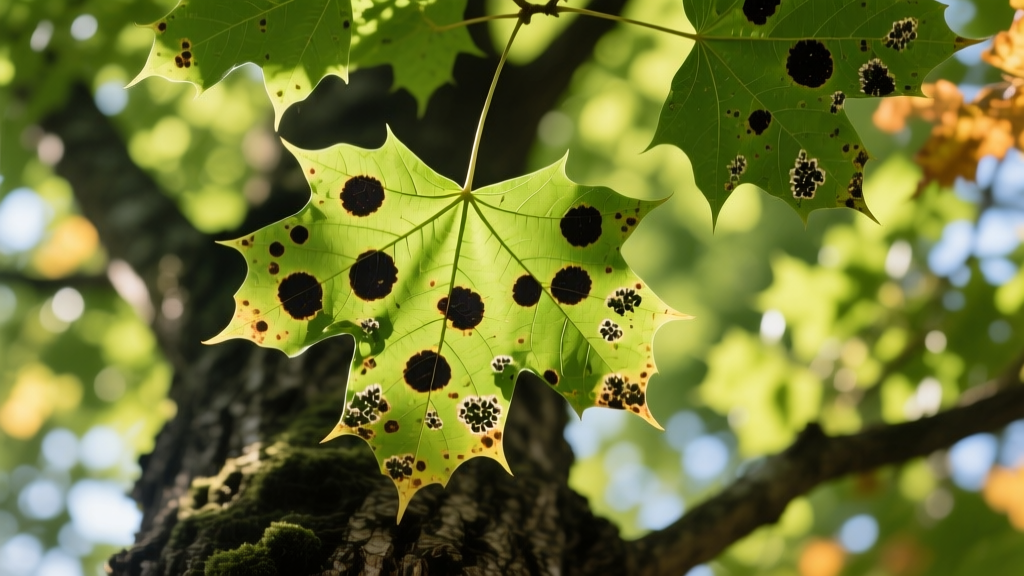
Diagnose and Treat Maple Tar Spot: A Homeowner's Rescue Guide
The Anatomy of an Infection: Identifying Maple Tar Spot
When homeowners notice unsightly black, tar-like blobs appearing on their maple leaves in late summer, panic often sets in. Maple tar spot, caused by fungi in the genus Rhytisma, is one of the most visually alarming yet frequently misunderstood tree diseases. While the lesions look destructive, understanding the pathogen's life cycle is the first step in an effective rescue protocol.
The infection actually begins in early spring when ascospores are released from overwintered leaves on the ground. By early summer (June), you will see pale yellow, chlorotic spots on the leaves. As the season progresses into July and August, the fungus develops stromata—the raised, shiny, black structures that resemble drops of tar. By autumn, these spots can merge, causing severe aesthetic damage and triggering premature defoliation.
Pathogen and Host Specificity Matrix
Not all tar spots are created equal. The specific Rhytisma species dictates the size of the lesion and the primary host tree. Accurate diagnosis requires matching the visual symptom to the maple species in your yard.
| Fungal Species | Primary Maple Hosts | Lesion Characteristics |
|---|---|---|
| Rhytisma acerinum | Norway, Silver, Sugar Maple | Large, raised black spots up to 0.5 inches in diameter. |
| Rhytisma punctatum | Silver, Red, Sugar Maple | Pinpoint tar spot; multiple tiny (1mm) black specks clustered together. |
| Rhytisma americanum | Silver, Red Maple | Intermediate size; slightly raised, often with a yellow halo. |
Is Your Tree in Danger? Assessing the Damage
The most critical piece of information for a homeowner is this: maple tar spot is primarily a cosmetic issue. The fungus does not attack the vascular system, nor does it cause structural decay in the trunk or branches. According to the University of Minnesota Extension, even heavily infected trees will typically survive and produce healthy foliage the following spring.
⚠️ When to Worry: The Defoliation Threshold
While the disease itself isn't lethal, secondary stress can be. If your tree drops more than 50% of its canopy before September, it loses crucial late-summer photosynthetic capacity. This depletes the tree's carbohydrate reserves, making it highly vulnerable to winter injury and secondary pests like the flatheaded appletree borer or opportunistic root rot pathogens like Armillaria.
The Rescue Protocol: Step-by-Step Management
If your maple has suffered severe early leaf drop, or if you want to prevent a recurrence next season, you must implement a multi-tiered management strategy. Spraying chemicals in August when the black spots are fully formed is entirely useless—the fungus is already protected inside the thick stromata. Rescue and prevention rely on sanitation and precise spring timing.
Step 1: Aggressive Sanitation (The 90% Solution)
Because Rhytisma fungi overwinter exclusively in fallen leaf litter, removing the leaves breaks the life cycle. This single step can reduce next year's infection rate by up to 90%.
- Rake thoroughly: Remove all fallen leaves from beneath the tree's drip line in autumn or early winter.
- Do NOT compost: Home compost piles rarely sustain the 140°F (60°C) internal temperatures required to kill fungal spores. Bag the leaves and send them to municipal yard waste, or burn them where local ordinances permit.
- Mulch correctly: If you use a mulching mower on the leaves, the spores will survive in the thatch. You must physically remove the debris.
Step 2: Canopy Pruning for Airflow
Fungal spores require extended periods of leaf wetness (often 12+ hours) to germinate and penetrate the leaf cuticle. Dense canopies trap humidity and delay morning dew evaporation. Hire a certified arborist to perform structural pruning in late winter, removing crossing branches and water sprouts to achieve a 20% to 30% canopy openness. This promotes rapid foliage drying in the spring.
Step 3: Targeted Fungicide Application
Fungicides are strictly preventative, not curative. They must be applied in the spring to protect the newly expanding leaves from airborne spores. According to Penn State Extension, applications should begin when buds are breaking and leaves are half-expanded, followed by a second application 10 to 14 days later if wet weather persists.
Fungicide Selection and Application Matrix
Choosing the right chemical is critical. Contact fungicides must coat the entire leaf surface, while systemic options offer internal protection. Below is a comparison of the most effective residential and commercial-grade options available.
| Active Ingredient | Common Brand Names | Mode of Action | Application Timing & Notes |
|---|---|---|---|
| Chlorothalonil (29.6%) | Bonide Fung-onil, Daconil | Contact / Protectant | Apply at bud break and 14 days later. Requires thorough coverage of both leaf surfaces. |
| Propiconazole (14.3%) | Ferti-lome Liquid Systemic Fungicide II, Banner Maxx | Systemic / Translaminar | Apply at bud break. Absorbed into leaf tissue, offering better rainfastness and coverage. |
| Mancozeb | Bonide Mancozeb Flowable | Contact / Protectant | Apply at bud break. Excellent for heavy spring rain periods due to strong surface adherence. |
💡 Cost and Coverage Reality Check
A standard 2.5-gallon sprayer will only reach the lower 10 to 12 feet of a maple tree. For a mature 40-foot Norway maple, DIY spraying will leave the upper canopy unprotected. DIY chemical costs range from $30 to $50 per season. For complete canopy coverage on mature trees, hiring a licensed arborist to apply a professional-grade systemic trunk injection or high-pressure foliar spray typically costs between $150 and $300 per treatment, depending on trunk diameter and regional labor rates.
Preventative Maintenance for Long-Term Resilience
Trees under environmental stress are less capable of compartmentalizing secondary infections that follow tar spot defoliation. To build long-term resilience, focus on the root zone.
- Deep Root Watering: During late-summer droughts (when tar spot is most active), provide 1 inch of water per week. Use a soaker hose placed at the drip line, not directly against the trunk.
- Avoid Nitrogen Spikes: High-nitrogen synthetic fertilizers in late spring promote rapid, succulent leaf growth with thinner cuticles, making it easier for Rhytisma spores to penetrate. Use slow-release, organic nitrogen sources like Milorganite or compost top-dressing instead.
- Mulch Management: Maintain a 3-inch layer of hardwood mulch in a 4-foot radius around the trunk to regulate soil moisture and temperature, but keep the mulch 3 inches away from the root flare to prevent collar rot.
By combining rigorous autumn sanitation with precisely timed spring fungicide applications, you can effectively manage maple tar spot and restore your tree's aesthetic and physiological health. For further reading on regional disease pressures, consult the Morton Arboretum's plant clinic resources to verify local spore-release windows.

