
Tree Care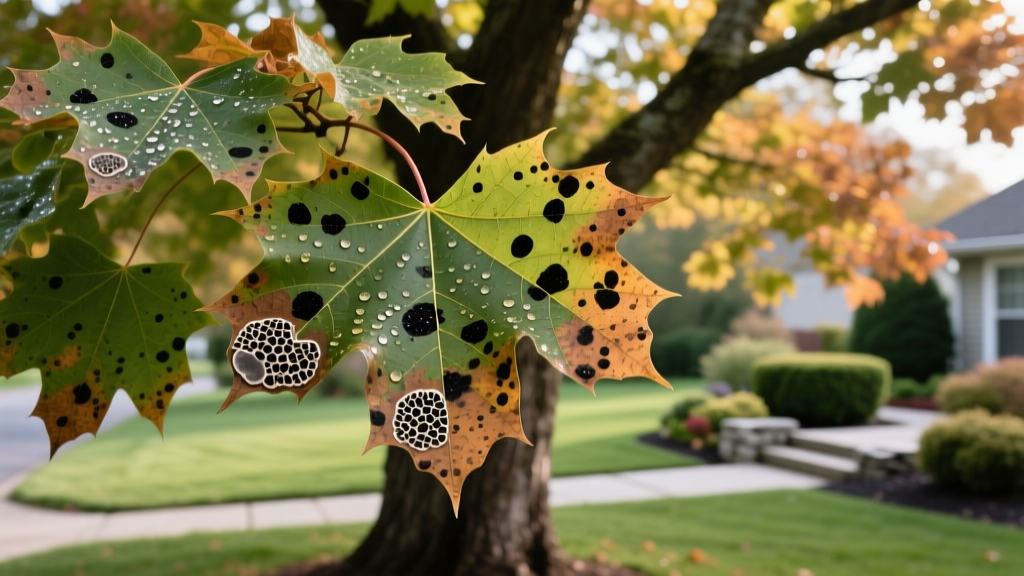
Maple Tree With Black Spots on Leaves: Diagnosis and Rescue Fixes
Finding a maple tree with black spots on leaves is one of the most common visual complaints among homeowners in late summer and early autumn. While the striking black blemishes can look alarming, they rarely indicate a fatal systemic disease. However, ignoring the underlying cause year after year will lead to premature defoliation, reduced photosynthetic capacity, and long-term canopy thinning. To rescue your tree, you must first accurately differentiate between the three primary culprits: tar spot fungus, anthracnose necrosis, and sooty mold.
The Big Three: Diagnosing the Black Spots
Before purchasing any fungicides or insecticides, perform a physical inspection of the affected foliage. The texture, location, and behavior of the black spots will immediately reveal the pathogen or pest vector.
| Symptom Appearance | Primary Culprit | Texture and Feel | Secondary Signs |
|---|---|---|---|
| Distinct, 0.5-inch raised black blisters | Tar Spot (Rhytisma acerinum / punctatum) | Glossy, raised, and firmly attached to leaf tissue | Yellow halos around spots; premature leaf drop in severe cases |
| Irregular brown/black blotches along veins | Anthracnose (Discula / Gloeosporium) | Papery, brittle, necrotic (dead) tissue | Leaf curling, twig dieback, primarily affects lower canopy |
| Powdery black coating over leaf surface | Sooty Mold (Capnodium fungi) | Smooth, powdery; wipes off easily with a thumb | Sticky honeydew residue on leaves; presence of aphids or scale |
Deep Dive: Tar Spot Lifecycle and Damage
Tar spot is the most frequent cause of true black spots on maples. According to the University of Minnesota Extension, Rhytisma acerinum primarily targets Norway maples, while Rhytisma punctatum affects silver and red maples, creating smaller, punctate black specks.
The fungus overwinters in the stromata (hardened fungal fruiting bodies) on fallen leaves. In spring, as temperatures reach 60°F to 65°F during wet conditions, the stromata release ascospores that are carried by wind to newly expanding maple leaves. The initial infection is virtually invisible. The black spots do not appear until mid-to-late summer when the fungus produces its secondary overwintering structures.
Arborist Insight: Is It Killing My Tree?
Tar spot is primarily a cosmetic disease. It will not kill a mature, established maple tree. However, severe infections cause leaves to drop 3 to 4 weeks early. If this premature defoliation occurs annually, the tree exhausts its carbohydrate reserves trying to push out secondary buds, leading to structural weakness and increased susceptibility to secondary borers like the flatheaded appletree borer.
Tar spot is primarily a cosmetic disease. It will not kill a mature, established maple tree. However, severe infections cause leaves to drop 3 to 4 weeks early. If this premature defoliation occurs annually, the tree exhausts its carbohydrate reserves trying to push out secondary buds, leading to structural weakness and increased susceptibility to secondary borers like the flatheaded appletree borer.
Step-by-Step Rescue Protocol for Fungal Leaf Spots
If your diagnosis confirms tar spot or anthracnose, implement this three-phase rescue protocol. Timing is the most critical variable; applying fungicides in late summer when spots are already visible is entirely ineffective.
Phase 1: Immediate Canopy and Ground Sanitation
Because Rhytisma overwinters in leaf litter, sanitation is your primary line of defense. Rake and remove 100% of fallen maple leaves in the autumn. Do not compost these leaves; standard residential compost piles rarely exceed 140°F, which is insufficient to destroy the hardened stromata. Bag the leaves for municipal landfill disposal or burn them where local ordinances permit. If your tree is surrounded by neighboring properties with infected maples, sanitation alone will fail, making Phase 2 mandatory.
Phase 2: Chemical Intervention (Fungicide Specifics)
Fungicide applications must protect the leaves before the spores land. You must target the exact window of leaf expansion.
- Active Ingredient: Chlorothalonil (available in consumer products like Bonide Fung-onil) or Propiconazole (found in Fertilome Liquid Systemic Fungicide).
- Mixing Rate: For Chlorothalonil (29.6% concentration), mix 1.5 to 2.5 teaspoons per gallon of water. For Propiconazole (14.3% concentration), mix 1 to 2 fluid ounces per gallon.
- Application Timing: Apply the first spray when buds are 10% broken and leaves are just emerging (usually early to mid-May, depending on your hardiness zone). Apply a second spray 14 days later when leaves are 50% expanded.
Phase 3: Cultural Adjustments for Airflow
Fungal spores require prolonged leaf wetness (usually 4 to 6 hours of continuous moisture) to germinate and penetrate the leaf cuticle. Prune your maple during the dormant season (late winter) to remove crossing branches and water sprouts. Aim for a canopy density that allows dappled sunlight to reach the inner branches, which accelerates morning dew evaporation.
Sooty Mold Rescue: Treating the Insect Vector
If the black substance wipes off the leaf and leaves a sticky residue behind, you are dealing with sooty mold. As noted by Penn State Extension, sooty mold fungi do not infect plant tissue; they merely grow on the sugar-rich honeydew excreted by sap-sucking insects like aphids, scale, and whiteflies.
To rescue the tree, you must eliminate the insect vector:
- Short-Term Knockdown: Spray the canopy with a 2% concentration of Neem oil or insecticidal soap to smother active aphid colonies. Apply in the early evening to avoid leaf burn and protect foraging pollinators.
- Long-Term Systemic Control: For large maples where canopy spraying is impractical, use an Imidacloprid soil drench (e.g., Bayer Advanced 12-Month Tree & Shrub Protect & Feed). Calculate the trunk circumference at breast height (4.5 feet off the ground). Apply 1.5 fluid ounces of the liquid concentrate per inch of trunk circumference. Water it into the root zone in early spring; the tree's vascular system will pull the insecticide up into the canopy, killing aphids as they feed.
Cost Breakdown: DIY vs. Professional Arborist Treatment
Deciding whether to treat the tree yourself or hire an ISA Certified Arborist depends on the tree's height and your equipment capabilities. Pump sprayers max out at about 15 feet of vertical reach.
| Treatment Approach | Target Pathogen | Estimated Cost (Per Season) | Pros and Cons |
|---|---|---|---|
| DIY Fungicide Spray | Tar Spot / Anthracnose | $35 - $80 | Low cost, but limited to small/young maples under 15 feet tall. |
| DIY Soil Drench | Sooty Mold (Aphids) | $25 - $60 | Highly effective for tall trees, but takes 4-6 weeks to reach the canopy. |
| Pro Fungal Injection | Tar Spot / Anthracnose | $250 - $450 | Arborist uses trunk micro-injections (e.g., Alamo/Propiconazole). Zero environmental drift, highly effective, but expensive. |
| Pro Canopy Spray | All Fungal / Insect | $150 - $350 | Uses high-pressure hydraulic sprayers to reach 60+ foot canopies. Requires scheduling weeks in advance during spring rush. |
Prevention Matrix for Next Season
According to the Morton Arboretum, maintaining overall tree vigor is the best defense against opportunistic leaf pathogens. Implement these baseline cultural practices:
- Mulching: Apply a 2-to-3-inch layer of arborist wood chips in a wide ring around the tree, keeping the mulch 3 inches away from the trunk flare to prevent root rot.
- Deep Watering: During summer droughts, provide 10 gallons of water per inch of trunk diameter using a slow-release watering bag (like a Treegator) to ensure moisture reaches the deep feeder roots.
- Soil Aeration: If the soil beneath the canopy is heavily compacted from foot traffic, use an air spade or manual broadfork to alleviate compaction without severing major structural roots.
Frequently Asked Questions
Can I prune off the branches with black spotted leaves?
No. By the time black spots appear in late summer, the fungal spores have already dispersed throughout the canopy. Pruning at this stage will not stop the spread and will only stress the tree by removing photosynthesizing tissue.
Will tar spot spread to my oak or ash trees?
No. Rhytisma fungi are highly host-specific. The strain that infects Norway maples will not infect oaks, ashes, or even other maple species in some cases. Your surrounding non-maple trees are safe.

