
Tree Care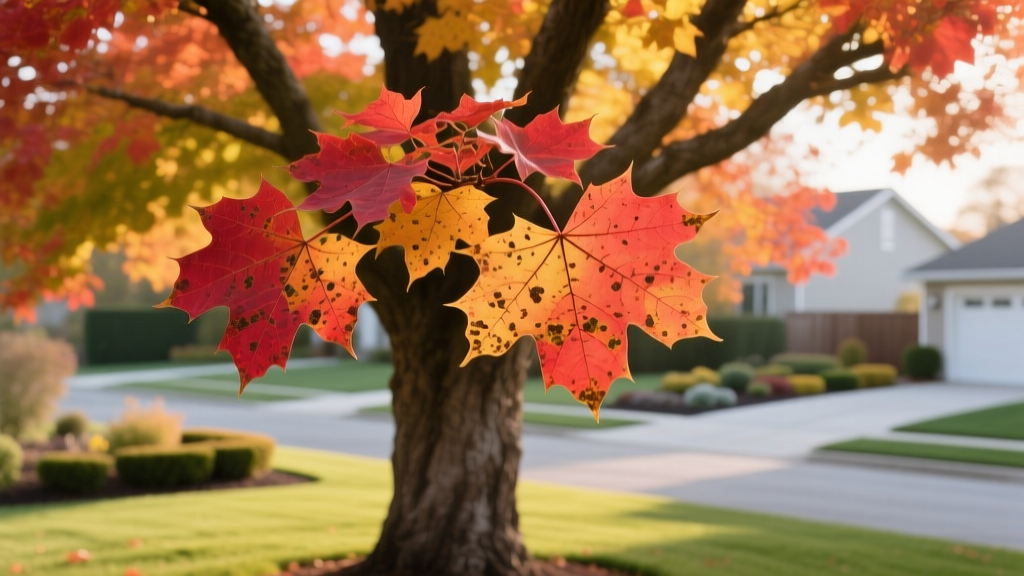
How to Identify and Treat Common Maple Tree Infections
The Diagnostic Matrix: Identifying Maple Pathogens
Maple trees (Acer species) are foundational landscape assets, but their broad leaves and shallow root systems make them highly susceptible to specific fungal and vascular pathogens. Misdiagnosing a maple tree infection often leads to wasted capital on ineffective chemical treatments and irreversible canopy decline. Accurate diagnosis requires examining the exact location of the necrosis, the seasonal timing of symptom onset, and the underlying vascular health of the trunk.
Before applying any fungicide or calling an arborist, cross-reference your tree's symptoms against the primary infection matrix below.
| Pathogen | Primary Visual Symptom | Peak Activity Season | Reversibility |
|---|---|---|---|
| Tar Spot (Rhytisma acerinum) | Raised, black, tar-like pustules on upper leaf surfaces | Mid-to-Late Summer | Highly Reversible (Cosmetic) |
| Verticillium Wilt (Verticillium dahliae) | Sudden, unilateral branch wilting; green/black sapwood streaking | Early Summer / Drought Periods | Low (Often Fatal) |
| Anthracnose (Discula / Gloeosporium) | Irregular brown patches crossing leaf veins; early defoliation | Cool, Wet Springs | Moderate (Cultural Control) |
Tar Spot: Cosmetic Damage vs. Chronic Stress
Tar spot is the most visually alarming yet least lethal of the common maple tree infections. Caused by the fungus Rhytisma acerinum, it primarily affects Norway, silver, and red maples. While the raised black lesions look destructive, the pathogen is largely cosmetic. However, severe, unmanaged infections year-over-year can cause premature defoliation in late August, robbing the tree of critical late-season photosynthesis needed for winter root storage.
Targeted Treatment Protocol
The fungus overwinters in fallen leaf litter. Home compost piles rarely achieve the sustained 140°F internal temperature required to destroy the spores, meaning composting infected leaves simply recycles the pathogen.
- Cultural Control: Rake and bag all fallen maple leaves by late November. Apply a 2-inch layer of fresh arborist wood chip mulch over the root zone to bury any remaining spores and prevent them from splashing onto emerging spring foliage.
- Chemical Control: For high-value specimen trees, apply a systemic fungicide containing propiconazole (e.g., Bonide Infuse) or a contact protectant like chlorothalonil (e.g., Ortho Daconil). Timing is critical: the first application must occur exactly at bud break, followed by a second application 14 days later when leaves are half-expanded. Spraying in mid-summer once black spots appear is entirely ineffective.
According to the Cornell University Plant Clinic, chemical intervention is rarely justified for tar spot unless the tree has suffered severe premature defoliation for two consecutive years.
The Silent Killer: Verticillium Wilt
Unlike foliar fungi, Verticillium wilt is a soil-borne vascular disease that attacks the tree's xylem—the water-conducting tissue. The fungus enters through microscopic root wounds and triggers the tree to produce tyloses (balloon-like cellular outgrowths) in a desperate attempt to wall off the infection. This defensive response inadvertently blocks water transport, causing the canopy to starve and desiccate.
Diagnostic Verification: The Bark Peel Test
Drought stress and Verticillium wilt present similarly: both cause sudden leaf scorch and branch dieback. To differentiate, perform a bark peel test on a recently wilted, but not yet brittle, branch.
- Use a sterilized pocket knife to peel back a 2-inch section of the outer bark on the affected branch.
- Examine the sapwood. Healthy maple sapwood is pale cream or white.
- If you observe distinct olive-green to dark black vertical streaking in the sapwood, Verticillium is present. If the wood is uniformly dry and brown without streaking, the issue is likely abiotic drought stress or root girdling.
Management and Professional Intervention
There is no over-the-counter chemical cure for Verticillium wilt. Homeowner soil drenches cannot penetrate deep enough into the vascular system to halt the pathogen. If the tree exhibits less than 30% canopy dieback, professional arborists can perform macro-infusion trunk injections using propiconazole (Alamo) or thiabendazole (Arbotect).
Cost Expectation: Professional trunk injections are priced by Diameter at Breast Height (DBH). Expect to pay between $15 and $25 per inch of DBH. A mature 24-inch sugar maple will cost approximately $360 to $600 per treatment, which must be repeated every 2 to 3 years to suppress the fungus.
As noted by Penn State Extension, if a maple exhibits more than 50% canopy dieback or structural compromise, removal is the only viable option to prevent the pathogen from spreading to susceptible neighboring plants via root grafts.
Anthracnose and Spring Defoliation
Anthracnose thrives in cool, wet spring conditions (50°F to 65°F with prolonged leaf wetness). It causes irregular, tan-to-brown necrotic patches that distinctly cross the leaf veins—a key differentiator from physiological leaf scorch, which typically respects veinal boundaries.
Pruning and Sanitation Standards
Anthracnose overwinters in cankers on dead twigs. Dormant season pruning (late winter) is the most effective management strategy. However, improper tool sanitation turns pruning shears into pathogen vectors.
"Never use a 10% bleach solution for routine pruning tool sanitation on maples. Bleach severely corrodes the steel pivots of bypass pruners within hours. Instead, use 70% isopropyl alcohol or a commercial quaternary ammonium disinfectant, wiping the blades between every single cut when working on an infected canopy."
For severe spring outbreaks, UMass Extension recommends improving canopy airflow through selective crown thinning, which reduces the leaf wetness duration that fungal spores require to germinate.
Decision Framework: Treat vs. Remove
Determining whether to invest in treating maple tree infections or to schedule a removal requires an objective assessment of the tree's structural integrity and landscape value. Use this framework to make your decision:
Criteria for Treatment and Preservation
- Canopy Dieback: Less than 30% of the total canopy is affected.
- Trunk Integrity: No presence of fungal fruiting bodies (conks) at the root flare or on the main trunk, indicating internal heart rot.
- Root Zone: The critical root zone (1 foot of radius per 1 inch of trunk DBH) is largely uncompacted and free of grade changes.
- Infection Type: The pathogen is limited to foliar issues (Tar Spot, mild Anthracnose) or early-stage Verticillium.
Criteria for Immediate Removal
- Canopy Dieback: Greater than 50% dieback, or rapid, unilateral collapse of major scaffold limbs.
- Structural Defects: Presence of co-dominant stems with included bark combined with active decay or oozing sap.
- Advanced Vascular Disease: Confirmed Verticillium wilt with extensive sapwood streaking reaching the main trunk.
- Proximity to Targets: The tree is located within falling distance of a home, driveway, or high-traffic pedestrian area, where sudden limb drop poses a liability.
Building Long-Term Pathogen Resistance
The most effective defense against maple tree infections is a robust, uncompromised root system. Maples are notorious for developing girdling roots when planted too deeply. Ensure the root flare is fully visible above the soil grade. Apply a 2-to-3-inch layer of organic mulch extending to the drip line, but strictly avoid "volcano mulching" against the trunk, which traps moisture and invites Phytophthora root rot. Incorporating mycorrhizal fungal inoculants (such as Myke or Espoma Bio-Tone) during planting or via deep-root aeration can increase the root mass's nutrient uptake efficiency by up to 40%, giving the tree the carbohydrate reserves necessary to compartmentalize and wall off minor fungal incursions naturally.

