
Tree Care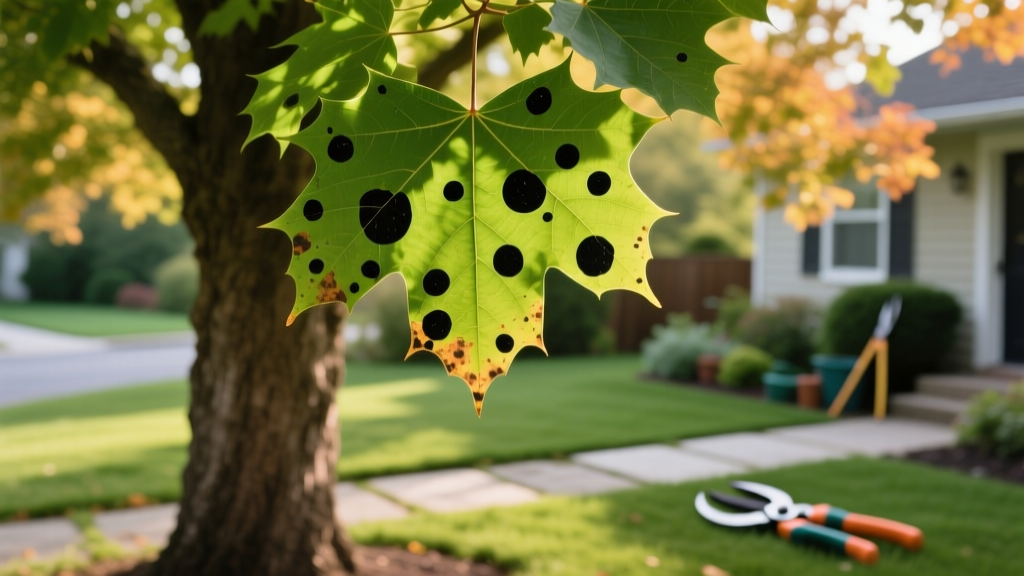
Maple Tree Leaves Have Black Spots? Diagnosis & Rescue Fixes
The Primary Suspect: Tar Spot Fungus (Rhytisma)
When homeowners notice that their maple tree leaves have black spots, the immediate reaction is often alarm. Fortunately, in the vast majority of cases, this symptom points to Tar Spot, a common and primarily cosmetic fungal disease rather than a fatal systemic infection. Caused by fungi in the genus Rhytisma—most notably Rhytisma acerinum on Norway maples and Rhytisma punctatum on silver and red maples—this pathogen alters the aesthetic appeal of your canopy but rarely threatens the structural integrity or long-term survival of mature trees.
According to plant pathologists at the University of Minnesota Extension, tar spot fungi are highly host-specific and rely on a predictable annual life cycle. The fungus overwinters in fallen, infected leaf litter on the ground. As spring temperatures rise and moisture levels increase, the fungus produces ascospores that are carried by wind and rain splash onto newly emerging, vulnerable maple leaves.
Symptom Progression Timeline: Spring to Fall
Diagnosing the exact stage of the infection is critical for determining whether intervention is necessary. The visual signature of tar spot evolves significantly throughout the growing season:
- Late Spring (May–June): Initial infections appear as small, pale yellow or light green spots, typically 1/8 to 1/4 inch in diameter. At this stage, they are easily mistaken for nutrient deficiencies or minor insect stippling.
- Mid-Summer (July–August): The spots enlarge and begin to darken. R. acerinum forms large, raised, glossy black lesions up to 1 inch across that resemble drops of roofing tar. R. punctatum forms clusters of smaller, pinhead-sized black speckles (often called "tar speckle").
- Early Fall (September–October): Heavily infected leaves may experience premature senescence, turning brown and dropping weeks ahead of schedule. While early defoliation can stress young saplings, mature maples tolerate this localized leaf loss without long-term decline.
Differential Diagnosis: Tar Spot vs. Other Maple Leaf Diseases
Before purchasing fungicides, you must confirm that the black spots are indeed tar spot. Misdiagnosis leads to wasted chemical applications and unresolved tree stress. Use this comparison matrix to differentiate common maple foliage issues:
| Disease / Condition | Visual Signature | Texture & Elevation | Primary Host & Severity |
|---|---|---|---|
| Tar Spot (Rhytisma) | Glossy black, circular spots or clusters of speckles | Raised, tar-like, firm to the touch | Norway, Silver, Red maples; Low severity (cosmetic) |
| Maple Anthracnose | Irregular brown/black blotches along leaf veins and margins | Flat, papery, often causes leaf curling | All maples; Moderate severity (can cause twig dieback) |
| Maple Bladder Gall | Small, distinct red-to-black blister-like bumps | Hollow, raised blisters on the upper leaf surface | Silver maples; Low severity (caused by eriophyid mites) |
| Sooty Mold | Powdery black coating that covers large leaf sections | Flat, dusty, wipes off easily with a damp cloth | All maples; Low severity (grows on aphid honeydew) |
For a definitive identification of complex canopy issues, consulting resources like The Morton Arboretum plant clinic can provide laboratory confirmation if visual symptoms are ambiguous.
Rescue Fixes: Step-by-Step Treatment Protocol
If your maple tree leaves have black spots and the infection is severe enough to cause premature defoliation for consecutive years, a targeted rescue protocol is required. For mild cases, no chemical treatment is recommended; focus entirely on cultural controls.
Phase 1: Rigorous Sanitation (Fall & Early Spring)
Because the fungus overwinters exclusively in leaf litter, removing the debris breaks the life cycle. Do not simply mulch infected leaves with a mower; the fungal fruiting bodies (apothecia) can survive standard mulching and still release spores.
- Rake and Remove: Collect all fallen maple leaves in the autumn. Use heavy-duty contractor bags to prevent tearing.
- Hot Composting or Off-Site Disposal: To destroy the pathogen, compost piles must sustain temperatures above 140°F (60°C) for several days. Most home compost bins fail to reach this threshold. If you cannot guarantee high-heat composting, bag the leaves for municipal yard waste pickup.
- Spring Cleanup: Any leaves that survived the winter cleanup must be removed before bud break (typically early to mid-April, depending on your USDA hardiness zone).
Phase 2: Chemical Intervention (Severe Cases Only)
Fungicides are strictly preventative—they protect new foliage from spore infection but will not cure existing black spots. Timing is the single most critical factor for success.
💡 Pro Tip: The 10-14 Day Rule
Fungicide applications must begin exactly at bud break (when leaf buds are just opening and showing green tissue) and must be repeated 10 to 14 days later to protect leaves as they fully expand. A third application may be necessary during exceptionally wet, cool springs.
Fungicide applications must begin exactly at bud break (when leaf buds are just opening and showing green tissue) and must be repeated 10 to 14 days later to protect leaves as they fully expand. A third application may be necessary during exceptionally wet, cool springs.
Recommended Fungicides & Pricing (2026 Estimates):
- Chlorothalonil (Contact Fungicide): Products like Bonide Fung-onil Multi-Purpose Fungicide (approx. $18–$22 per quart). Mix rate is typically 2.25 fluid ounces per gallon of water. Apply using a pump sprayer until runoff. This creates a protective barrier on the leaf surface.
- Propiconazole 14.3% (Systemic Fungicide): Products like Ferti-lome Liquid Systemic Fungicide II (approx. $28–$35 per pint). This can be applied as a foliar spray or a soil drench, allowing the tree's vascular system to distribute the active ingredient into new growth. Follow label instructions strictly, as soil drench rates vary by trunk diameter (e.g., 1 oz per inch of trunk diameter).
⚠️ Arborist Warning: Spraying mature maples (over 20 feet tall) is impractical for homeowners due to the lack of high-pressure equipment required to reach the upper canopy. If a mature tree requires chemical protection, hire an ISA-certified arborist. Expect to pay between $250 and $600 per treatment depending on tree size and regional labor rates.
Long-Term Preventative Canopy Management
Fungal pathogens thrive in environments with poor air circulation and prolonged leaf wetness. Modifying the microclimate around your maple tree reduces the humidity that facilitates spore germination.
Strategic Crown Thinning
Prune your maple to improve internal airflow, but never prune during the spring sap flow. Maples are notorious "bleeders" if pruned in late winter or early spring. Schedule structural pruning for late summer (August) or deep dormancy (late December to January).
- Remove crossing, rubbing, or dead branches.
- Aim to remove no more than 15% to 20% of the live crown in a single season to avoid inducing stress.
- Elevate the lower canopy by removing branches below 6 feet to reduce splash-back of spores from the soil to the lower leaves.
- Always sanitize pruning shears and loppers between cuts using a 70% isopropyl alcohol solution or a 10% bleach solution to prevent cross-contaminating healthy tissue with latent spores.
Soil Health and Root Zone Care
A vigorous root system supports a tree's natural chemical defenses. Penn State Extension recommends maintaining a 2-to-3-inch layer of organic mulch over the root zone, keeping it strictly away from the trunk flare (the "donut" method, not the "volcano" method). This preserves soil moisture and regulates temperature without trapping excess humidity against the bark. Avoid high-nitrogen synthetic fertilizers, which promote rapid, succulent leaf growth that is highly susceptible to fungal penetration.
Consider applying a granular mycorrhizal inoculant to the root zone in early spring. These beneficial fungi form symbiotic relationships with maple roots, expanding their absorptive capacity for water and phosphorus, which in turn fuels the tree's natural production of defensive phenolic compounds. By combining rigorous autumn sanitation, precise spring fungicide timing, and strategic canopy pruning, you can effectively manage the outbreak and restore the natural beauty of your maple tree.

