Tree Care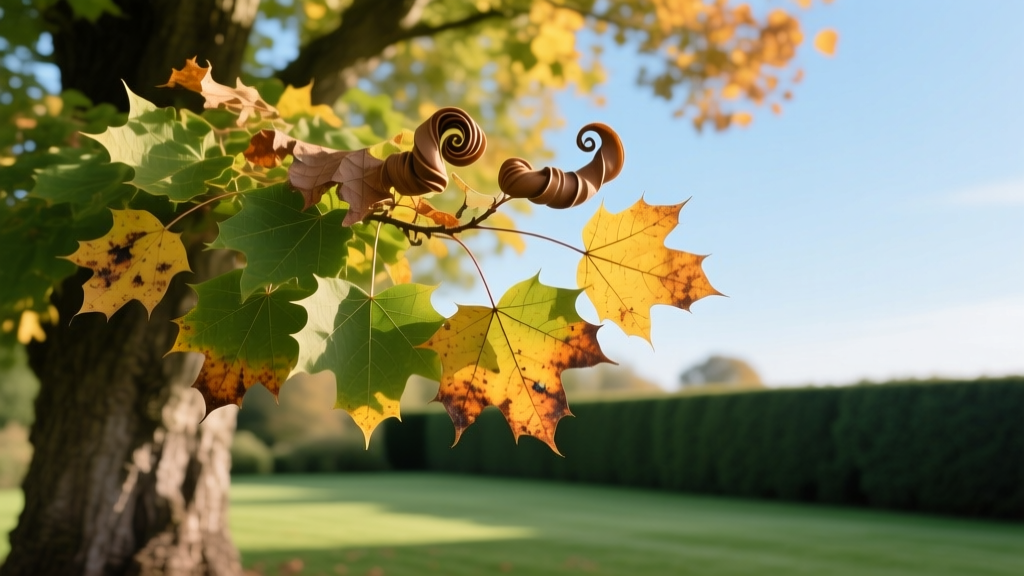
Maple Tree Leaves Turning Brown, Yellow, or Curling: Expert Diagnosis
The Visual Diagnostic Matrix: What Your Maple Tree Leaves Are Telling You
Maple trees (Acer species) are highly susceptible to a specific triad of foliar and vascular stressors: fungal pathogens, soil-borne vascular wilts, and abiotic environmental factors. Because symptoms often overlap, misdiagnosis leads to wasted chemical treatments and irreversible canopy decline. Before purchasing fungicides or soil amendments, cross-reference your specific foliar symptoms against the diagnostic matrix below.
| Foliar Symptom | Visual Cue & Timing | Primary Suspect | Immediate First Response |
|---|---|---|---|
| Black/Brown Blisters | 1/4-inch raised, tar-like spots appearing mid-to-late summer | Tar Spot (Rhytisma acerinum) | Rake fallen leaves; apply preventative fungicide at 10% bud break next spring. |
| Marginal Scorch | Crispy brown leaf edges with interveinal yellowing in July/August | Environmental Scorch / Iron Chlorosis | Deep root watering (10 gal/inch DBH); test soil pH immediately. |
| One-Sided Wilting | Individual branches drooping, leaves curling and dropping prematurely | Verticillium Wilt | Prune deadwood; consult an arborist for phosphonate trunk injection. |
| White Powdery Dusting | Chalky coating on new growth and upper leaf surfaces in humid weather | Powdery Mildew | Improve canopy airflow via structural pruning; apply horticultural oil. |
| Purple/Brown Margins | Irregular brown patches along leaf veins, early spring defoliation | Anthracnose (Discula spp.) | Clear leaf litter; apply Thiophanate-methyl during wet spring cycles. |
Fungal Pathogens: Tar Spot, Anthracnose, and Powdery Mildew
Fungal diseases are the most common cause of aesthetic damage to maple tree leaves. While rarely fatal to mature, established trees, severe annual infections cause premature defoliation, depleting the tree's carbohydrate reserves and making it vulnerable to secondary borers like the Asian longhorned beetle.
Tar Spot (Rhytisma acerinum)
Tar spot is highly host-specific, primarily targeting Norway, Silver, and Sugar maples. The fungus overwinters in fallen leaf litter. By early summer, pale yellow spots appear, eventually maturing into raised, black, tar-like stromata. According to the University of Minnesota Extension, chemical control is rarely necessary for tree health, but heavily infected trees will drop leaves by August.
Targeted Treatment Protocol: If treatment is desired for aesthetic preservation, timing is critical. Apply a fungicide containing Chlorothalonil (e.g., Daconil) or Myclobutanil (e.g., Spectracide Immunox) exactly at 10% bud break, followed by a second application 14 days later. Spraying in mid-summer after black spots appear is entirely ineffective, as the pathogen has already colonized the leaf tissue.
Anthracnose
Anthracnose thrives in cool, wet spring conditions. It causes necrotic lesions that follow the leaf veins, often causing leaves to curl and distort. The Penn State Extension notes that improving air circulation through selective canopy thinning is more effective long-term than chemical sprays. If spraying is required, use a product containing Thiophanate-methyl (Cleary's 3336) applied at bud break and repeated at 10- to 14-day intervals until leaves are fully expanded.
Vascular & Root Diseases: Verticillium Wilt and Phytophthora
When maple tree leaves wilt, curl, and scorch on only one side of the canopy—a phenomenon known as 'flagging'—you are likely dealing with a vascular disease. Verticillium dahliae and Verticillium albo-atrum are soil-borne fungi that enter through root wounds and colonize the xylem, blocking water transport.
Diagnosing Verticillium Wilt
To confirm Verticillium wilt, peel back the bark on a recently wilted (but not fully dead) branch. If you observe dark green to black vertical streaking in the sapwood, the tree is infected. The Morton Arboretum emphasizes that there is no chemical cure for Verticillium wilt once it is systemic. However, the disease can be managed and suppressed.
- Suppression Strategy: Professional arborists use macro-injection systems to deliver Phosphonates (e.g., Agri-Fos) or Propiconazole (Propizol) directly into the xylem. This boosts the tree's natural defense compounds (phytoalexins).
- Cost Expectation: As of 2026, professional trunk injection services average $18 to $28 per inch of DBH (Diameter at Breast Height). For a 20-inch Silver Maple, expect to pay $360 to $560 per treatment.
- Cultural Control: Mulch the root zone with 2 to 3 inches of arborist wood chips to prevent soil compaction and root damage from mowers, which create entry points for the fungus.
Environmental Stressors: Chlorosis and Girdling Roots
Abiotic factors cause the vast majority of chronic maple leaf issues in urban and suburban landscapes. Maples, particularly Silver and Red maples, are highly sensitive to soil alkalinity and root constriction.
Iron and Manganese Chlorosis
If your maple tree leaves are turning yellow while the veins remain green, the tree is suffering from interveinal chlorosis. This is not a true nutrient deficiency, but a nutrient lockout. Maples require a soil pH between 5.5 and 6.5. In soils with a pH above 7.0, iron and manganese oxidize into forms the roots cannot absorb.
Critical Product Distinction: Do not waste money on standard iron chelates (Fe-EDTA) if your soil pH is above 6.5; they break down and become unavailable in alkaline soils. You must use Fe-EDDHA (e.g., Sprint 138), which remains stable and plant-available in soils with a pH up to 9.0.
Step-by-Step Soil Amendment Protocol for Alkaline Soils
- Test Soil pH: Use a calibrated digital soil meter or send a core sample to a university extension lab. Do not rely on cheap color-changing liquid kits.
- Calculate DBH: Measure the trunk circumference at 4.5 feet above ground. Divide by 3.14 to get the DBH in inches.
- Apply Fe-EDDHA: Dissolve 1 to 2 ounces of Sprint 138 (Fe-EDDHA) per inch of DBH in 5 gallons of water.
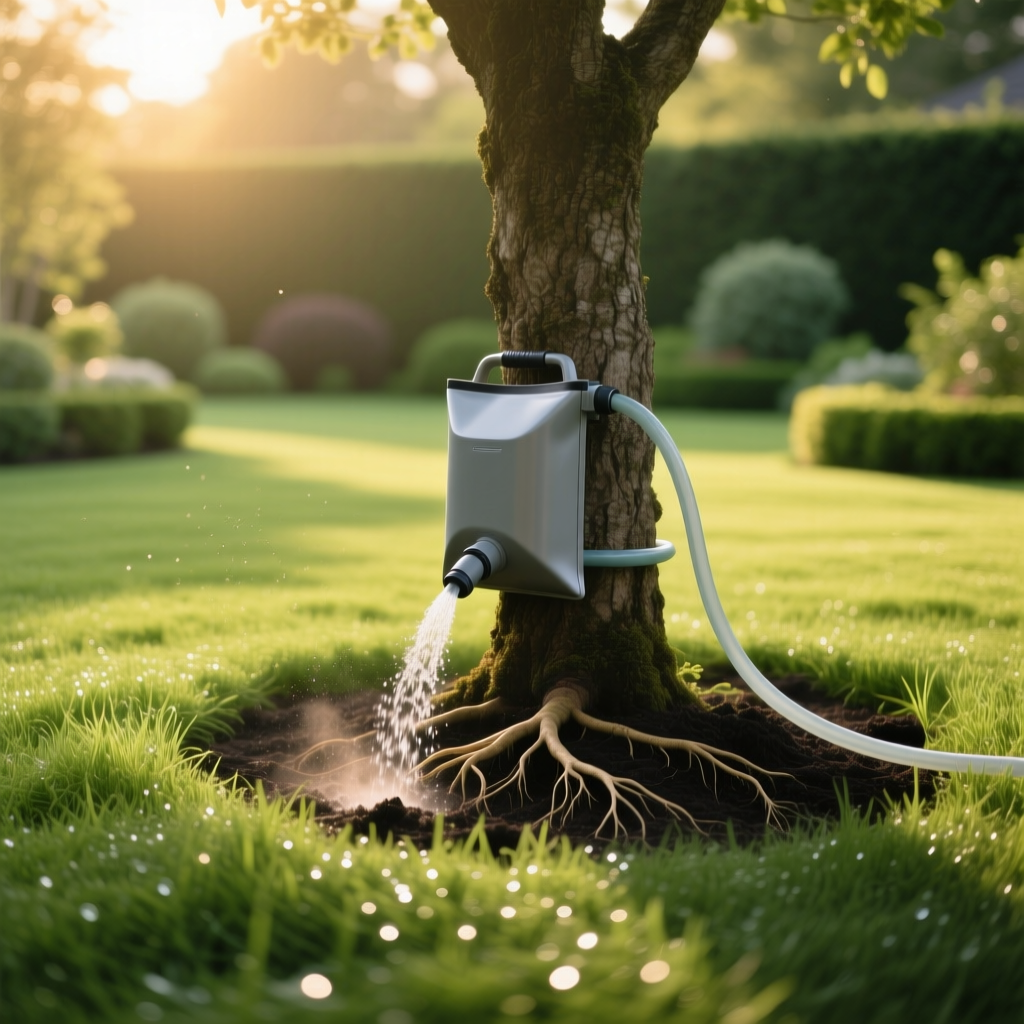
- Drench the Root Zone: Apply the solution evenly across the soil surface from the trunk out to the drip line (the outer edge of the canopy). Water it in immediately with 10 gallons of water per inch of DBH to push the chelate into the active root zone.
- Lower Soil pH Long-Term: Apply elemental sulfur at a rate of 1 pound per 100 square feet in the fall to gradually lower soil pH over the next 12 to 18 months.
When to Call a Certified Arborist vs. DIY Treatment
Knowing when to transition from DIY care to professional intervention saves money and prevents fatal mistakes. Use this decision framework to determine your next step.
DIY Treatment is Appropriate When:
- The issue is strictly foliar and cosmetic (Tar Spot, Powdery Mildew).
- The tree is under 20 feet tall, allowing you to achieve complete canopy coverage with a standard pump sprayer.
- Symptoms are uniform across the entire canopy, indicating an environmental or soil issue (chlorosis, drought stress) that can be addressed with soil drenches and watering.
Hire an ISA Certified Arborist When:
- You observe 'flagging' (one-sided wilting) or dark vascular streaking under the bark (Verticillium Wilt).
- The tree requires trunk injections for systemic fungicides or iron, which requires specialized drill-and-plug equipment to avoid girdling the cambium.
- There is significant dieback in the upper third of the canopy, which may indicate deep root rot (Phytophthora) or severe girdling roots that require air-spade excavation and root collar surgery.
'The most common mistake homeowners make with declining maples is applying high-nitrogen synthetic fertilizers to a stressed tree. If a maple is suffering from Verticillium wilt or severe root rot, pushing top growth with nitrogen diverts energy away from root defense and accelerates the tree's decline. Always diagnose the root and vascular system before altering the nutrient profile.' — Board Certified Master Arborist, International Society of Arboriculture (ISA)