
Tree Care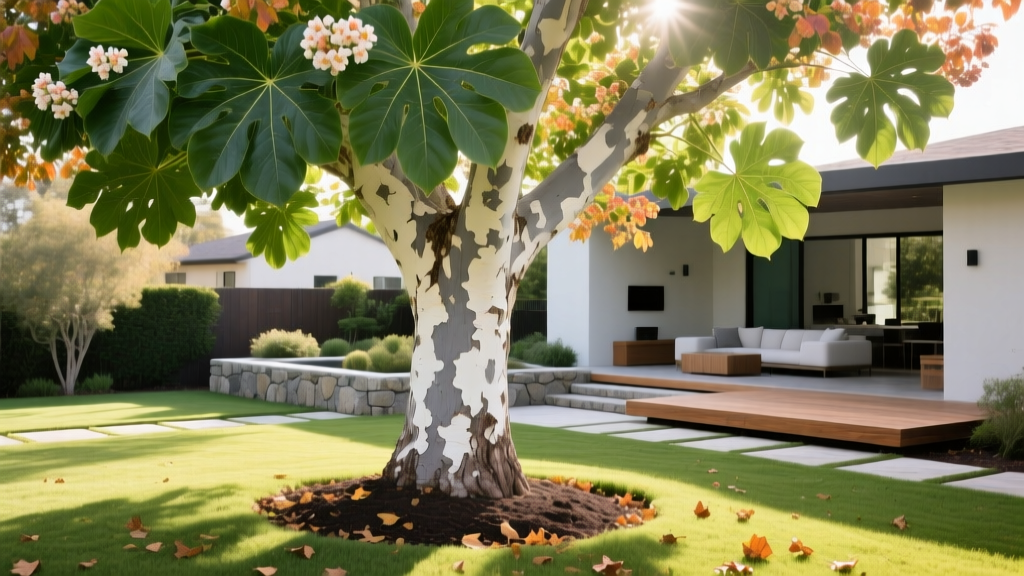
Mexican Sycamore Tree: A Beginner's Planting and Care Guide
Why Choose the Mexican Sycamore (Platanus mexicana)?
The Mexican sycamore tree (Platanus mexicana) is a premier shade tree for homeowners in USDA Hardiness Zones 7 through 9. Unlike its American cousin, the Mexican sycamore exhibits superior resistance to anthracnose, tolerates intense heat, and thrives in alkaline soils. It is highly valued for its striking, smooth silver-white bark that peels to reveal mottled patches of olive, tan, and cream, providing striking winter interest. When mature, these trees reach 50 to 70 feet in height with a canopy spread of 40 to 50 feet, delivering massive cooling shade for lawns and patios.
Quick Reference Profile
- Botanical Name: Platanus mexicana
- Mature Size: 50–70 ft tall, 40–50 ft wide
- Growth Rate: Fast (3 to 5 feet per year when young)
- Sun Exposure: Full sun (minimum 8 hours direct light)
- Soil Preference: Adaptable; tolerates clay, loam, and high pH (alkaline)
- Water Needs: Moderate; highly drought-tolerant once established
Site Selection and Soil Preparation
Proper placement is the most critical decision you will make for a Mexican sycamore. Because of its aggressive root system and massive mature canopy, spacing is non-negotiable. Plant the tree at least 20 feet away from home foundations, driveways, and underground utilities. Overhead power lines are also a major hazard; ensure you have at least 30 feet of vertical clearance.
While Platanus mexicana is highly adaptable, it performs best in well-draining soil. If your yard has heavy, compacted clay, do not amend the planting hole with compost or peat moss. According to Texas A&M AgriLife Extension, amending the backfill soil creates a 'bathtub effect' where water pools in the loose amended soil and drowns the roots. Instead, dig the hole in native soil and apply organic mulch on the surface after planting.
Step-by-Step Planting Instructions
When purchasing from a nursery, expect to pay between $120 and $180 for a 15-gallon container tree, or $350 to $500 for a 30-gallon boxed specimen. Follow these exact steps to ensure successful establishment:
- Dig the Hole: Excavate a hole 2.5 to 3 times wider than the root ball to allow lateral root expansion. The depth must be exactly the height of the root ball, or slightly shallower.
- Locate the Root Flare: Brush away the top layer of nursery soil from the root ball until you expose the trunk flare (where the trunk widens at the base). The root flare must sit 1 to 2 inches above the surrounding grade. Burying the flare is the number one cause of premature tree death.
- Position and Backfill: Place the tree in the center of the hole. Backfill with the native soil you excavated, tamping down gently with your hands to remove large air pockets. Do not stomp on the soil with your feet, which compacts it and restricts oxygen flow.
- Construct a Mulch Ring: Apply a 3-inch layer of shredded hardwood mulch in a 4-foot diameter ring around the tree. Keep the mulch at least 4 inches away from the trunk itself to prevent collar rot and rodent damage.
- Initial Watering: Immediately apply 15 to 20 gallons of water to settle the soil around the roots.
Watering and Fertilization Schedule
Newly planted Mexican sycamores require consistent moisture to push roots into the surrounding native soil. Overwatering is just as lethal as underwatering. Use the following schedule based on the tree's trunk caliper (diameter measured 6 inches above the soil line).
| Tree Stage | Watering Frequency | Volume per Session | Fertilization |
|---|---|---|---|
| Year 1 (Establishment) | Every 3–4 days in summer; weekly in winter | 10 gallons per inch of trunk caliper | None (focus on root growth) |
| Year 2 (Transition) | Once a week in summer; bi-weekly in winter | 10–15 gallons per inch of caliper | Apply slow-release 10-10-10 in early spring |
| Year 3+ (Established) | Only during severe drought (14+ days no rain) | Deep soak to 12-inch soil depth | Only if soil test shows nutrient deficiency |
Structural Pruning and Training
Mexican sycamores naturally develop a central leader, but nursery-grown trees often have co-dominant stems (two or more main trunks competing for dominance). If left uncorrected, these weak branch unions will split during high winds or ice storms.
When to Prune
Perform all major structural pruning during the dormant season (late December through February). Pruning in spring or summer attracts wood-boring insects and increases the risk of disease transmission. For minor deadwood removal, you can prune at any time of year.
The Three-Cut Method
When removing branches larger than 2 inches in diameter, always use the three-cut method to prevent bark tearing, as recommended by the University of Minnesota Extension:
- Undercut: Make a shallow cut on the underside of the branch, about 6 inches from the trunk.
- Top Cut: Cut completely through the branch from the top, an inch further out than the undercut. The branch will snap off cleanly without tearing the trunk bark.
- Collar Cut: Make the final cut just outside the branch collar (the swollen area where the branch meets the trunk). Never cut flush with the trunk, as this destroys the tree's natural chemical compartmentalization zone and invites decay.
Pest and Disease Troubleshooting
While Platanus mexicana is remarkably resilient, it is not entirely immune to environmental stressors. Here is how to identify and treat the two most common issues:
Sycamore Anthracnose
Symptoms: Irregular brown, dead patches on leaves in early spring, followed by premature leaf drop and twig dieback. While less severe on Mexican sycamores than American varieties, cool, wet spring weather can still trigger outbreaks.
Action Plan: Rake and destroy all fallen leaves to remove fungal spores. If defoliation is severe for two consecutive years, apply a preventive fungicide containing chlorothalonil (e.g., Daconil) or a copper-based spray just as the buds begin to swell in early spring. Repeat 10 days later.
Sycamore Lace Bug
Symptoms: Leaves appear stippled, bleached, or yellowish from the top. Flipping the leaf over reveals tiny, dark, varnish-like spots of excrement and small, lacy-winged insects.
Action Plan: Lace bugs rarely kill the tree but cause aesthetic damage. For small trees, spray the undersides of the leaves with insecticidal soap or neem oil every 7 days until controlled. For large, established trees, apply a soil drench containing imidacloprid (e.g., Bayer Advanced Tree & Shrub) in early spring before bud break for season-long systemic protection.
Mexican Sycamore vs. American Sycamore
Homeowners often confuse the Mexican sycamore with the native American sycamore (Platanus occidentalis). While they look similar, their landscape performance differs drastically. Use this comparison matrix to ensure you are purchasing the correct species for your yard.
| Feature | Mexican Sycamore (P. mexicana) | American Sycamore (P. occidentalis) |
|---|---|---|
| Leaf Underside | Silvery-white, slightly fuzzy | Bright green, mostly smooth |
| Disease Resistance | High resistance to anthracnose | Highly susceptible to anthracnose |
| Drought Tolerance | Excellent once established | Poor; requires consistent moisture |
| Soil pH Preference | Tolerates high alkalinity (pH up to 8.5) | Prefers slightly acidic to neutral (pH 6.0-7.5) |
| Winter Bark Interest | Striking silver-white upper trunk | Mottled white, gray, and brown camouflage |
By selecting the Mexican sycamore and following these precise planting and maintenance protocols, you will establish a robust, fast-growing shade tree that requires minimal intervention while delivering maximum visual and environmental impact to your landscape. For further guidance on long-term tree health, consult the planting resources provided by the Arbor Day Foundation.

