
Tree Care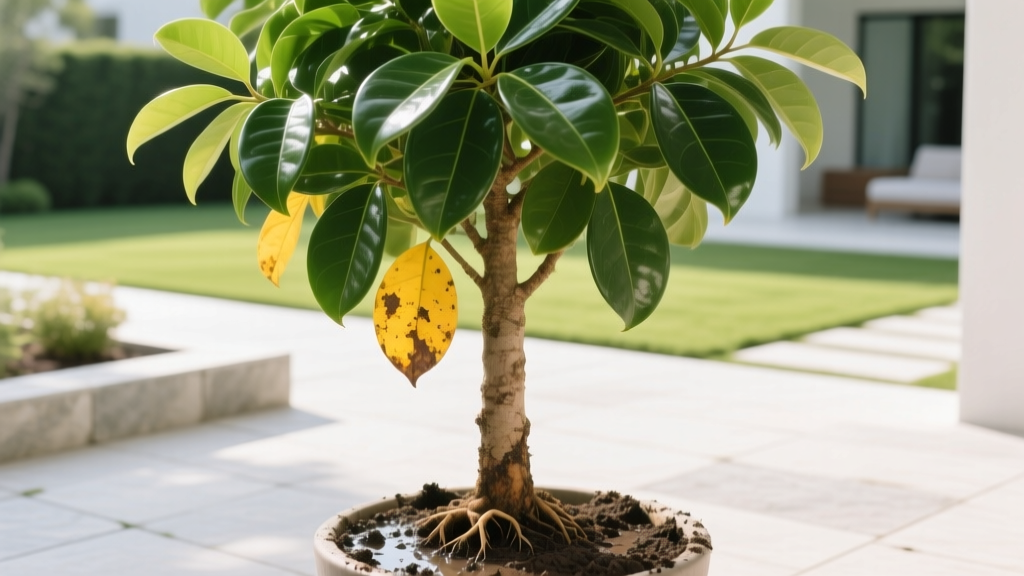
Money Tree Care Instructions: Diagnose and Fix Common Issues
When searching for reliable money tree care instructions, most guides focus on ideal tropical conditions. However, indoor environments rarely match these parameters, and Pachira aquatica is notoriously unforgiving of over-attention. While these trees are incredibly resilient to brief periods of neglect, they rapidly decline when subjected to chronic overwatering, improper light gradients, or physical constriction from nursery braiding. This diagnostic guide bypasses generic advice to provide exact measurements, failure-mode analysis, and targeted interventions for the most common money tree ailments.
The Diagnostic Matrix: Symptom to Solution
Before altering your care routine, accurately identify the primary stressor. Misdiagnosing root rot as underwatering is the most frequent cause of total plant loss. Use this decision matrix to pinpoint the exact failure mode.
| Visual Symptom | Primary Suspect | Diagnostic Test | Immediate Intervention |
|---|---|---|---|
| Lower leaves turning yellow and dropping uniformly | Chronic Overwatering / Early Root Rot | Insert wooden skewer 4 inches deep; check for dark soil clinging and sour odor. | Halt watering immediately; increase ambient airflow; prepare for repotting if soil remains wet after 5 days. |
| Crispy, brown patches on leaf margins and tips | Low Humidity or Fertilizer Burn | Check recent feeding history; measure ambient humidity with a digital hygrometer. | Flush soil with distilled water; increase humidity to 50% via pebble tray or humidifier. |
| Leaves drooping but remaining green and firm | Severe Underwatering or Root Bound | Lift the pot; if exceptionally light, or if roots circle the drainage holes, it is parched. | Bottom-water by submerging the pot in 3 inches of water for 45 minutes. |
| Trunk feels soft or mushy near the soil line | Advanced Stem / Root Rot | Gently press the base of the trunk; healthy trunks are rigid and woody. | Excise rotting tissue immediately; propagate healthy upper branches if the base is compromised. |
Root Rot and the Overwatering Epidemic
The vast majority of indoor Pachira aquatica fatalities are caused by Pythium and Phytophthora water molds, which thrive in anaerobic, waterlogged soil. Standard 'well-draining potting mix' instructions are insufficient for money trees, as peat-heavy commercial mixes compact over time, suffocating the root system.
The Precision Soil Recipe
To prevent anaerobic conditions, discard standard potting soil and mix a custom chunky substrate. The ideal volumetric ratio is:
- 40% High-Quality Potting Soil: Provides baseline nutrients and minor moisture retention.
- 30% Coarse Perlite (Size #3 or #4): Creates permanent macropores for oxygen exchange. Do not use fine perlite, which compacts.
- 30% Orchid Bark Chunks: Prevents soil settling and mimics the coarse debris of the tree's native swampy, yet aerated, habitats.
Quantified Watering Protocols
Abandon the 'water when the top inch is dry' rule. For a standard 10-inch nursery pot, the top inch will dry out in 48 hours while the bottom four inches remain saturated. Instead, use a digital soil moisture meter. Insert the probe halfway down the root ball. Only water when the meter reads 2.0 or lower on a 1-10 scale. When watering, apply exactly 16 to 20 ounces of filtered or rainwater until you see a steady drip from the drainage holes. Never allow the pot to sit in a saucer of standing water; empty the saucer within 15 minutes of watering.
Light Stress: Sunburn vs. Deprivation
Money trees are frequently marketed as 'low-light' plants, a misleading claim that leads to slow etiolation and leaf drop. While they will survive in low light, they require bright, indirect light to maintain their dense canopy and thick trunks.
Target Light Metrics: Aim for 10,000 to 20,000 lux (approximately 1,000 to 2,000 foot-candles) for at least 6 to 8 hours daily. An unobstructed east-facing window is ideal. South or west-facing windows require a sheer curtain to filter direct afternoon rays.
Sunburn Diagnosis: If your tree was recently moved from a dim corner to a bright south-facing window, the sudden UV exposure will bleach the chlorophyll, resulting in large, crispy, white-to-brown splotches on the leaves facing the glass. These damaged leaves will not recover. Prune them at the petiole base and acclimate the tree to brighter light gradually over a 14-day period, moving it 2 feet closer to the window every three days.
Light Deprivation Diagnosis: If the tree is dropping older, interior leaves while new growth emerges small, pale, and widely spaced (etiolation), it is light-starved. Supplement with a full-spectrum LED grow light positioned 18 inches above the canopy, rated for at least 2,000 lumens and a color temperature of 6500K, run on a 12-hour timer.
The Braided Trunk Ticking Time Bomb
Nursery-grown money trees are almost always sold with three to five trunks braided together. While aesthetically pleasing, this practice introduces severe long-term horticultural risks. As the trunks undergo secondary growth (thickening), the rubber bands or wires used to bind them at the nursery will eventually girdle the cambium layer—the vital tissue responsible for transporting water and nutrients.
Inspecting and Unbinding the Braid
- Locate the Bindings: Inspect the top of the braid and the base near the soil line. Nurseries often hide thick rubber bands beneath the soil or wrap them tightly under the lowest crossover.
- Snip, Do Not Pull: Use sterilized, needle-nosed snips to carefully cut the bindings. Never pull the material out, as this can strip the delicate outer bark.
- Manage the 'Dead Trunk' Scenario: If one trunk in a multi-braided tree dies and turns black, it is actively harboring rot that will spread to the healthy, adjacent trunks via the physical contact points. You must carefully unbraid the dead trunk and remove it entirely, treating the remaining trunks with a copper-based fungicide at the contact scars.
Pest Vector Alert: Fungus Gnats
If you notice tiny black flies hovering near the soil surface, your money tree is harboring fungus gnats (Bradysia species). These pests do not damage the leaves, but their larvae feed on fine root hairs and vector Pythium spores, accelerating root rot. According to guidelines on biological controls from the EPA, the most effective organic treatment is Bacillus thuringiensis israelensis (Bti). Dissolve one-quarter of a mosquito dunk (containing Bti) in a gallon of water and use this solution for your next three waterings to eradicate the larval stage.
Safe Handling and Toxicity
When pruning dead foliage or repotting a compromised root system, standard hygiene practices apply. Fortunately, Pachira aquatica does not produce toxic calcium oxalate crystals like many other common houseplants (such as Pothos or Philodendron). The ASPCA classifies the money tree as non-toxic to both cats and dogs, making it a safe choice for households with pets that may chew on dropped leaves. However, ingestion of large quantities of fibrous plant material can still cause mild gastrointestinal upset in animals.
Seasonal Maintenance Checklist
To maintain structural integrity and prevent seasonal decline, adhere to this strict annual timeline:
- Early Spring (March): Repot if roots are circling the drainage holes. Upgrade to a pot only 2 inches wider in diameter. Apply a balanced, water-soluble fertilizer (10-10-10 NPK) at half the manufacturer's recommended strength.
- Summer (June - August): Monitor for spider mites, which thrive in hot, dry indoor air. Wipe leaves monthly with a damp microfiber cloth to remove dust that blocks photosynthesis and harbors pests.
- Autumn (October): Cease all fertilization. Reduce watering frequency by 30% as ambient light levels drop and the tree's metabolic rate slows.
- Winter (December - February): Move the tree away from cold drafts and heating vents. Maintain ambient temperatures above 60°F (15°C) to prevent cold-shock leaf drop.

