
Tree Care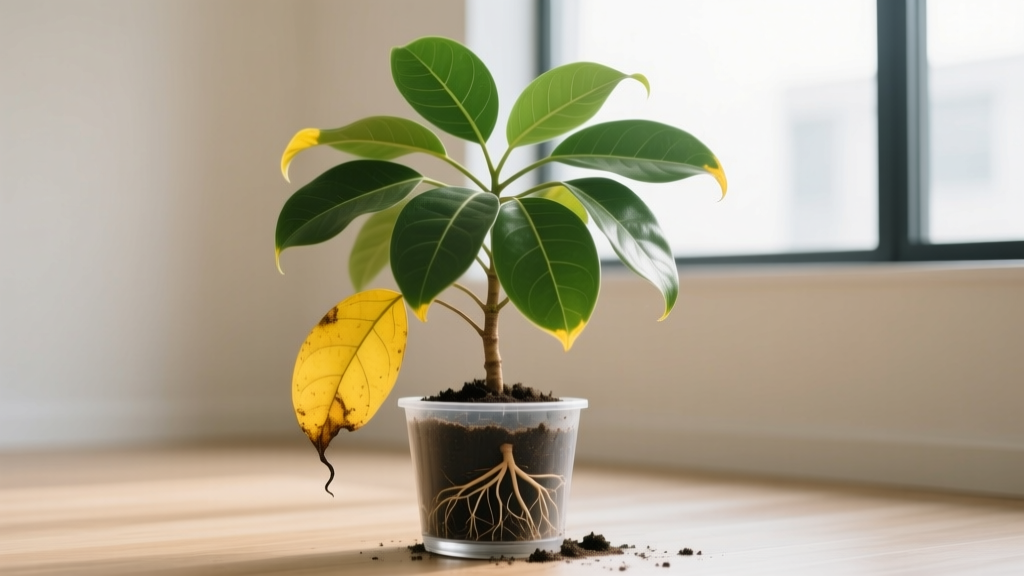
Money Tree Care Indoor: Diagnosing Yellow Leaves, Drop & Root Rot
The Money Tree Diagnostic Matrix
Pachira aquatica, commonly known as the money tree, is a resilient tropical wetland species that frequently suffers when subjected to standard indoor conditions. When mastering money tree care indoor environments require shifting your mindset from 'watering on a schedule' to 'responding to environmental data.' Most indoor declines are not sudden; they are the result of compounding micro-stressors. Use the diagnostic matrix below to identify your primary issue before attempting any corrective action.
| Primary Symptom | Probable Cause | Immediate Diagnostic Action |
|---|---|---|
| Lower leaves yellowing and dropping uniformly | Chronic overwatering / Hypoxia | Insert moisture meter 4 inches deep; check cache pot for standing water. |
| Crispy brown leaf margins and tips | Low humidity / Fluoride toxicity | Test ambient humidity; check if tap water is heavily chlorinated/fluoridated. |
| Sudden, massive leaf drop (green leaves) | Environmental shock / Drafts | Check for HVAC vents, cold drafts, or recent relocation of the plant. |
| Mushy stem base / Foul soil odor | Advanced Phytophthora root rot | Gently tug the trunk; if bark slips or base is soft, immediate surgery is required. |
| Fine webbing / Stippled yellow dots on leaves | Tetranychus urticae (Spider mites) | Shake a leaf over white paper; look for moving dust-like specks. |
Problem 1: The Watering Paradox (Yellowing & Leaf Drop)
The most pervasive error in indoor cultivation is treating the money tree like a standard tropical foliage plant. In its native Central and South American wetland habitats, Pachira aquatica experiences distinct wet and dry seasons. Indoors, keeping the soil perpetually moist suffocates the root system, preventing oxygen uptake and triggering ethylene gas production, which abscises (drops) leaves.
WARNING: The Cache Pot Trap
Never plant a money tree directly into a decorative pot without a drainage hole. Always keep the plant in a plastic nursery pot with drainage holes, and place that inside your decorative cache pot. After watering, you must empty the cache pot within 30 minutes. Letting the nursery pot sit in 2 inches of drained water will induce root rot within 72 hours.
Never plant a money tree directly into a decorative pot without a drainage hole. Always keep the plant in a plastic nursery pot with drainage holes, and place that inside your decorative cache pot. After watering, you must empty the cache pot within 30 minutes. Letting the nursery pot sit in 2 inches of drained water will induce root rot within 72 hours.
The 50% Dry Rule and Verification
Do not rely on the 'finger test' for soil moisture; it is highly inaccurate for deep pots. Instead, implement the 50% Dry Rule: water only when the top 50% of the soil volume is completely dry. Purchase an analog probe like the XLUX Soil Moisture Meter. Insert the probe halfway down the root ball. If it reads below a 3 (on a 1-10 scale), it is time to water. When you do water, apply room-temperature distilled or rainwater until 20% of the volume drains out the bottom, flushing accumulated salts.
Problem 2: Surgical Intervention for Root Rot
If your money tree's trunk feels spongy near the soil line, or if the soil emits a sulfur-like anaerobic odor, the plant has entered advanced root rot. Fungicides will not save a plant with necrotic tissue; physical removal is the only viable solution.
Step-by-Step Root Rot Excision
- Extraction: Gently slide the plant from its pot. Do not pull by the braided trunk; squeeze the nursery pot to loosen the root ball.
- Washing: Use a gentle stream of lukewarm water to wash away 100% of the old, anaerobic soil. You must see the bare root architecture.
- Excision: Using bypass pruners sterilized with 70% isopropyl alcohol, cut away all roots that are black, mushy, or hollow. Healthy roots are firm and white or light tan.
- Fungicidal Dip: Submerge the remaining healthy root mass in a solution of 3% hydrogen peroxide and water (1 part peroxide to 4 parts water) for 5 minutes to kill lingering Phytophthora spores.
- Repotting Mix: Discard standard potting soil. Mix a highly aerated substrate: 2 parts cactus/succulent mix, 1 part pumice (or perlite), and 1 part fine orchid bark. This ensures a 30% air-filled porosity.
- Downsizing: Repot into a container that is only 1 to 2 inches wider than the newly reduced root mass. Excess soil holds excess water.
Problem 3: Crispy Edges and Water Quality Toxicity
Money trees are highly sensitive to fluoride and chlorine commonly found in municipal tap water. When these chemicals accumulate in the leaf margins, they cause cellular necrosis, presenting as crispy, brown, and sometimes yellow-haloed leaf tips. According to the University of Wisconsin-Madison Extension, salt and chemical buildup from synthetic fertilizers exacerbates this tip-burn.
The Soil Flushing Protocol
If your water source is heavily treated, switch exclusively to reverse-osmosis, distilled, or clean rainwater. To reverse existing buildup, perform a soil flush: place the nursery pot in a sink and slowly pour 3 to 4 times the pot's volume of distilled water through the soil. This leaches out soluble salts and fluoride. Follow up with a diluted application of a calcium-magnesium supplement (Cal-Mag) to restore cellular wall integrity in new growth.
Problem 4: Pest Eradication (Mites & Mealybugs)
Indoor environments lack the natural predatory insects that keep pest populations in check. Spider mites thrive in the low-humidity, warm conditions of a typical living room, while mealybugs hide in the tight crevices where the money tree's palmate leaves meet the petiole.
Expert Insight: Systemic vs. Contact Controls
While neem oil and insecticidal soaps work on contact, they fail to penetrate the tight leaf axils where mealybugs hide. For severe infestations, use a systemic granular treatment containing Imidacloprid (such as Bonide Systemic Houseplant Insect Control). The roots absorb the chemical, making the plant's sap toxic to sucking insects for up to 8 weeks. Note: The EPA notes that while botanical pesticides like neem are safer for immediate indoor use, systemics require strict adherence to label rates to prevent indoor soil contamination.
While neem oil and insecticidal soaps work on contact, they fail to penetrate the tight leaf axils where mealybugs hide. For severe infestations, use a systemic granular treatment containing Imidacloprid (such as Bonide Systemic Houseplant Insect Control). The roots absorb the chemical, making the plant's sap toxic to sucking insects for up to 8 weeks. Note: The EPA notes that while botanical pesticides like neem are safer for immediate indoor use, systemics require strict adherence to label rates to prevent indoor soil contamination.
Optimal Indoor Environment Parameters
To prevent the recurrence of the issues detailed above, calibrate your indoor environment to match the specific physiological needs of Pachira aquatica. The ASPCA confirms the plant is non-toxic to pets, making it safe to place in various rooms, provided the environmental metrics are met.
| Parameter | Optimal Range | Tolerance Limits & Risks |
|---|---|---|
| Light Intensity | 1,000 - 3,000 foot-candles (Bright, indirect) | Below 500 FC causes leggy growth; above 5,000 FC (direct midday sun) causes leaf scorch. |
| Temperature | 65°F - 80°F (18°C - 26°C) | Temperatures below 55°F (12°C) induce cold shock and rapid leaf drop. |
| Humidity | 50% - 60% | Below 30% triggers spider mite outbreaks and crispy leaf margins. |
| Soil pH | 6.0 - 6.5 (Slightly acidic) | Alkaline soil (pH > 7.0) locks out iron and manganese, causing interveinal chlorosis. |
| Fertilizer NPK | 3-1-2 or 9-3-6 ratio | High phosphorus (middle number) promotes root burn and inhibits zinc uptake. |
Frequently Asked Questions
Should I mist my money tree daily to increase humidity?
No. Misting provides only a transient spike in humidity that evaporates within 15 minutes, doing little to benefit the plant while significantly increasing the risk of fungal foliar diseases like Anthracnose. Instead, use a dedicated ultrasonic humidifier (like the Levoit Classic 300S) set to maintain a constant 50% ambient humidity, or group the plant with other high-transpiration tropicals to create a localized microclimate.
Why is my money tree's braided trunk rotting at the base?
Braided trunks are often bound tightly with rubber bands or wire at the time of purchase. As the individual trunks expand in girth, these bindings girdle the bark, cutting off the phloem and restricting nutrient flow. This causes the tissue above the binding to swell and the tissue below to starve and rot. Immediately cut away any bindings you find buried in the soil or wrapped tightly around the lower trunk.
What is the best fertilizer for an indoor money tree?
Use a high-quality, urea-free liquid fertilizer formulated specifically for indoor foliage, such as Dyna-Gro Foliage-Pro (9-3-6). Urea requires soil bacteria to break it down into usable ammonium, a process that is highly inefficient in sterile indoor potting mixes. Apply at 1/4 of the recommended label strength every time you water during the active growing season (spring through early autumn), and cease fertilization entirely during the winter dormancy period.

