
Tree Care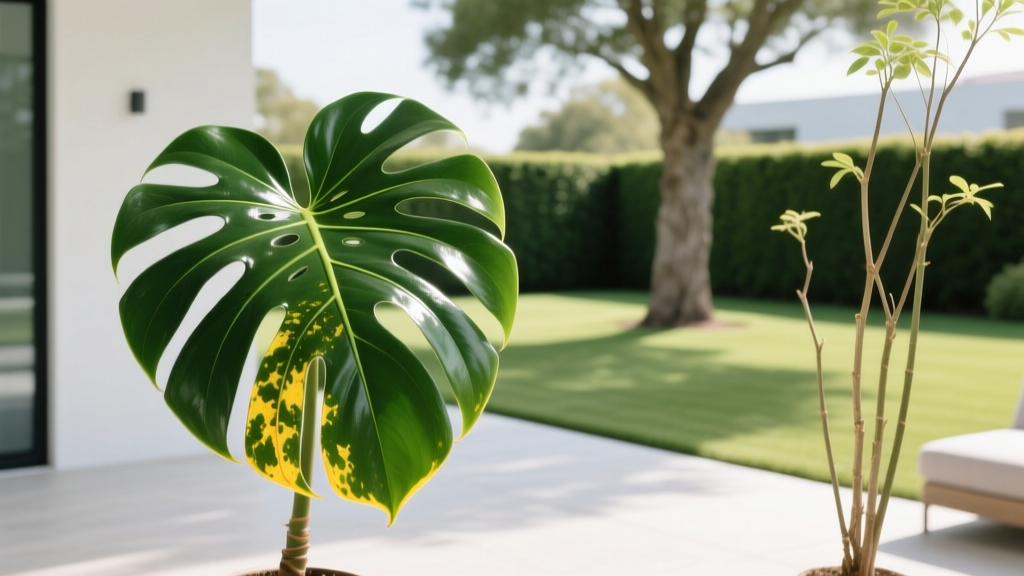
Money Tree Light Requirements: Diagnosing Sunburn and Leggy Growth
The Baseline: Ideal Money Tree Light Requirements
The Money Tree (Pachira aquatica) is native to the shaded, swampy wetlands of Central and South America. In its natural habitat, it grows under the dappled canopy of larger tropical trees. This evolutionary background dictates its indoor light needs: it thrives in bright, indirect light but is highly susceptible to cellular damage from unfiltered, direct midday sun.
According to the Missouri Botanical Garden, Pachira aquatica performs best when shielded from harsh direct rays. To move beyond vague advice like 'bright indirect light,' we must quantify these requirements using measurable metrics:
Quantitative Light Targets for Pachira aquatica:
- Maintenance Level: 1,500 to 2,500 lux (150–250 foot-candles)
- Active Growth Level: 2,500 to 4,000 lux (250–400 foot-candles)
- Daily Duration: 8 to 12 hours of exposure
- PPFD Target (for grow lights): 150 to 250 µmol/m²/s at the canopy level
Symptom Checker: Diagnosing Light-Related Stress
When a Money Tree's light environment falls outside its optimal range, it exhibits distinct physiological responses. Use this diagnostic matrix to identify the exact failure mode before attempting a fix.
| Visual Symptom | Underlying Cause | Estimated Lux Level | Immediate Action |
|---|---|---|---|
| Bleached, crispy brown patches on leaves facing the window | Photobleaching & thermal cellular rupture (Sunburn) | > 40,000 lux (Direct Sun) | Move 3 feet back or install sheer curtain |
| Elongated stem internodes, small pale leaves, leaning | Etiolation (stretching for photons) | < 500 lux (Deep Shade) | Relocate to East window or add LED grow light |
| Lower leaves turning uniformly yellow and dropping | Insufficient photosynthesis to support older foliage | 500 - 1,000 lux (Low Light) | Increase ambient light; reduce watering frequency |
| Leaves losing variegation (if applicable) or deep green hue | Chlorophyll degradation due to low photon capture | < 1,200 lux | Supplement with full-spectrum diodes |
Problem 1: Sunburn and Leaf Scorch (Too Much Direct Light)
Visual Identification and Physiology
Sunburn on a Money Tree does not look like a gradual fading. It presents as acute necrotic lesions. When exposed to unfiltered South or West-facing window light (which can easily exceed 50,000 lux in summer), the leaf cuticle overheats. The water inside the leaf cells vaporizes faster than the vascular system can replace it, causing cellular collapse. You will see stark white or yellow bleached spots that eventually dry out into crispy, papery brown lesions. These lesions are permanent; the damaged tissue will never turn green again.
The Acclimation Protocol: How to Fix and Prevent
If your tree is currently in low light and you want to move it to a brighter spot to encourage growth, you cannot do it abruptly. You must follow a strict acclimation protocol to allow the plant to thicken its leaf cuticle and produce photoprotective pigments.
Warning: Never move a Money Tree directly from a dark corner to a sunny patio or South-facing window. The shock will cause massive leaf drop and severe scorching within 48 hours.
- Week 1: Move the plant 25% closer to the target light source. Monitor for any yellowing.
- Week 2: Move it 50% closer. If moving outdoors, keep it in 100% deep shade.
- Week 3: Move it 75% closer. Introduce 1 hour of direct, mild morning sun (before 9 AM) if applicable.
- Week 4: Place in the final location. Ensure midday sun (11 AM - 3 PM) is filtered through a sheer curtain or dappled by other foliage.
Problem 2: Etiolation and Leggy Growth (Too Little Light)
Visual Identification
When a Money Tree receives less than 500 lux, it initiates a survival mechanism called etiolation. The plant rapidly elongates its stem internodes (the space between leaves) to 'reach' for a light source. The resulting growth is weak, spindly, and unable to support the weight of mature leaves. New leaves will emerge significantly smaller than older ones and will lack the characteristic deep, glossy green pigmentation.
Supplemental Lighting Solutions
If your home lacks adequate natural light, you must supplement with artificial lighting. Avoid outdated T5 fluorescent tubes or cheap purple 'blurple' LEDs. Modern horticultural lighting relies on full-spectrum white LEDs that provide a balanced Photosynthetically Active Radiation (PAR) output while maintaining a natural aesthetic in your home.
Recommended Hardware for 2026:
- Budget/Standard Setup: Sansi 15W LED Grow Light Bulb (Approx. $18). Screw this into a standard desk lamp or floor lamp positioned 12 to 18 inches above the canopy. It delivers roughly 200 µmol/m²/s at that distance, perfectly matching the plant's active growth requirements.
- High-Output/Canopy Setup: Spider Farmer SE3000 or Roleadro 75W Panel (Approx. $80 - $130). Mount these on a lightweight stand 24 inches above a large, mature Money Tree. Use a built-in timer to run the light for 12 hours daily, overlapping with natural daylight hours.
Measuring Your Light: Tools and Techniques
Guessing light levels is the primary cause of indoor plant failure. To master Money Tree light requirements, invest in measurement tools.
For under $25, the Dr.meter LX1330B Digital Illuminance Meter provides highly accurate lux and foot-candle readings. Place the sensor flat against the leaf surface facing the window to get an exact reading of the light the plant is actually receiving. Alternatively, use the Photone smartphone app, which utilizes your phone's ambient light sensor to calculate both lux and PPFD, provided you calibrate it with a standard white sheet of paper.
Seasonal Light Shifts: Window Placement Guide
The sun's angle changes drastically between the summer and winter solstices. A spot that provides perfect bright indirect light in June might subject your plant to harsh direct scorching in December when the sun sits lower on the horizon.
| Window Direction | Summer Profile | Winter Profile | Money Tree Strategy |
|---|---|---|---|
| North | Low, consistent indirect (800-1500 lux) | Very low, insufficient (<500 lux) | Requires supplemental grow lights year-round. |
| East | Mild morning direct, bright indirect (2500 lux) | Low morning direct, moderate indirect | Ideal placement. No modifications needed. |
| South | Intense direct sun (>50,000 lux) | Moderate direct sun (15,000 lux) | Use sheer curtains in summer; move closer in winter. |
| West | Harsh, hot afternoon direct (40,000+ lux) | Mild afternoon direct | Keep 4+ feet away from glass in summer to avoid thermal burn. |
Expert Troubleshooting FAQ
Should I rotate my Money Tree pot?
Yes. Money trees exhibit strong phototropism, meaning they will lean heavily toward the primary light source. Rotate the pot exactly 90 degrees every two weeks when you water it. This ensures even light distribution across all foliage, preventing lopsided canopy growth and structural stress on the braided trunk.
Can I use standard household LED bulbs instead of 'grow lights'?
Yes, but you must check the specifications. Standard household LEDs are optimized for human vision (peaking in the green/yellow spectrum) rather than photosynthesis (which requires deep red and blue wavelengths). If using household bulbs, select 'Daylight' temperature bulbs rated at 5000K to 6500K with a high CRI (Color Rendering Index > 90). However, dedicated full-spectrum horticultural LEDs like the Sansi 15W remain vastly more efficient for plant energy capture.
My Money Tree is dropping leaves after I moved it. Is it light shock?
Leaf drop after relocation is usually a combination of light shock and a resulting water-management mismatch. When a plant moves to a lower light area, its rate of photosynthesis and transpiration drops immediately. If you continue watering it on the same schedule as when it was in bright light, the roots will sit in damp soil, leading to hypoxia (oxygen deprivation) and subsequent leaf drop. Always reduce watering volume by 20-30% when moving a Money Tree to a lower light environment, as noted by Penn State Extension guidelines on indoor plant environmental stress.
Final Diagnosis Summary
Mastering Money Tree light requirements is not about finding a single 'perfect' spot and leaving the plant there forever. It requires active monitoring of lux levels, seasonal adjustments to window proximity, and the strategic use of full-spectrum LEDs to bridge the gap during dark winter months. By quantifying your light environment and following strict acclimation protocols, you can eliminate sunburn, reverse etiolation, and maintain a dense, vibrant canopy year-round.

