
Tree Care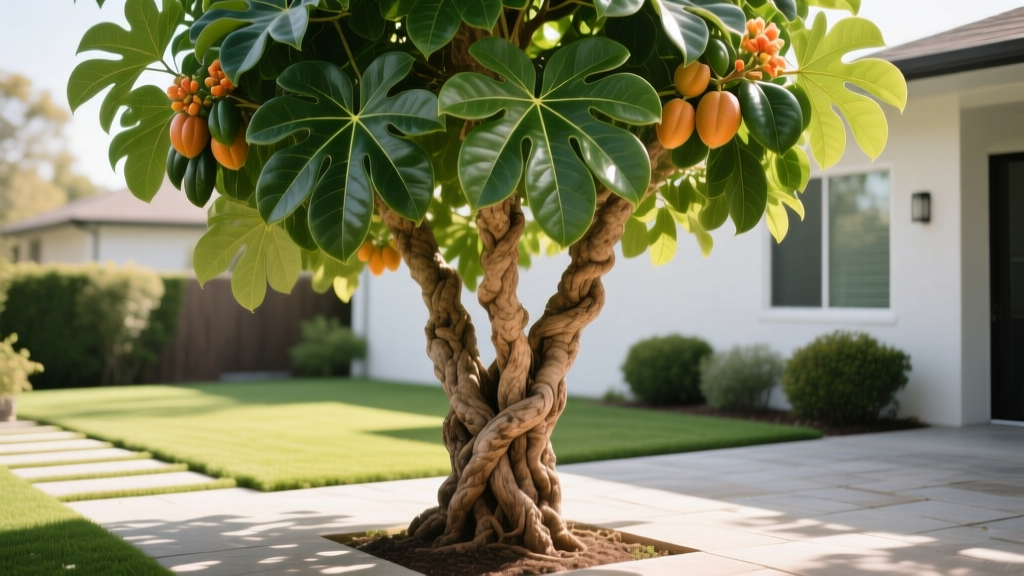
How Big Do Money Trees Get? A Practical Sizing and Pruning Guide
The Direct Answer: Indoor vs. Outdoor Growth Ceilings
If you are wondering how big money trees get, the answer depends entirely on their environment. The classic braided money tree (Pachira aquatica) is a tropical wetland tree native to Central and South America. In its natural outdoor habitat (USDA Hardiness Zones 10 through 12), a money tree can reach a massive 30 to 60 feet in height with a canopy spread of 10 to 15 feet. However, when grown indoors as a houseplant, environmental constraints and container sizing limit its maximum height to between 6 and 8 feet. Understanding this genetic ceiling is the first step in managing your plant's footprint.
Species Identification Check: Are you growing a Pachira aquatica (the classic braided trunk tree with umbrella-like leaves) or a Crassula ovata (the Jade Plant, a succulent often called a money plant)? This guide focuses exclusively on Pachira aquatica. Jade plants max out at 3 to 5 feet indoors and require entirely different pruning and watering protocols.
The Braided Trunk Factor: How It Stunts Growth
Most commercial money trees feature three to five trunks tightly braided together. While aesthetically pleasing, this braiding physically restricts the vascular tissue (xylem and phloem) of the tree. According to horticultural researchers at NC State Extension, this restriction naturally limits the upward flow of water and nutrients, effectively stunting the tree's ultimate height compared to a single-trunk specimen. If you plant a single, unbraided Pachira aquatica seedling in the ground in South Florida, it will easily outgrow a braided specimen by 20% to 30% over a decade.
Growth Expectations by Environment
| Environment | Max Height | Canopy Spread | Growth Rate |
|---|---|---|---|
| Indoors (Standard Pot) | 6 to 8 feet | 3 to 4 feet | 12 to 24 inches/year |
| Indoors (Large Atrium Pot) | 10 to 12 feet | 5 to 6 feet | 24 to 36 inches/year |
| Outdoors (Zones 10-12) | 30 to 60 feet | 10 to 15 feet | 3 to 5 feet/year |
Step-by-Step Guide to Controlling Money Tree Size
If your tree is threatening to outgrow its space, you must intervene using both canopy and root management. Relying on canopy pruning alone will eventually result in a top-heavy tree that snaps at the braided base.
1. Canopy Pruning for Height and Density
Prune your money tree in early spring before the active summer growth flush. Use sharp, sterilized bypass pruners (such as the Felco F-2 or Okatsune 103) to avoid crushing the stem tissue.
- The Cut: Make a 45-degree angle cut exactly 1/4 inch above a leaf node (the small bump on the stem where the leaf petiole attaches).
- The Rule of Thirds: Never remove more than 30% of the total canopy in a single season. Removing too much foliage shocks the root system, leading to leaf drop and stem dieback.
- Apical Dominance: To stop the tree from growing taller, snip the main central leader (the highest vertical stem). This forces the tree to push lateral branches, creating a denser, wider canopy rather than a taller one.
2. Root Pruning to Stunt Overall Growth
Bonsai enthusiasts have used root pruning for centuries to keep large trees small. You should root-prune your money tree every 2 to 3 years.
- Slide the tree out of its nursery pot and gently tease away the outer 2 inches of soil.
- Using a sterilized root saw or heavy-duty pruning shears, trim away the bottom 20% to 25% of the root mass. Do not exceed 25%, or you risk fatal transplant shock.
- Cut away any thick, woody taproots, prioritizing the retention of fine, fibrous feeder roots.
- Repot into the same size container using a fresh, well-draining mix (50% standard potting soil, 30% perlite, 20% orchid bark).
"A money tree's above-ground height is directly proportional to its below-ground root volume. If you want to cap the tree's height at 4 feet, cap its root volume in a 10-inch diameter pot."
Pot Sizing Matrix: Matching Container to Desired Height
The most common mistake homeowners make is up-potting too quickly. Moving a money tree into an oversized container encourages rapid root expansion, which triggers a massive upward growth spurt. Use this matrix to select the correct pot size to maintain your target height.
| Target Plant Height | Ideal Pot Diameter | Approximate Soil Volume | Repotting Frequency |
|---|---|---|---|
| 2 to 3 feet (Desktop size) | 6 to 8 inches | 1 to 2 gallons | Every 12-18 months |
| 4 to 5 feet (Floor accent) | 10 to 12 inches | 3 to 4 gallons | Every 2 years |
| 6 to 8 feet (Statement tree) | 14 to 16 inches | 6 to 8 gallons | Every 3 years (Root prune) |
Environmental Variables That Dictate Growth Speed
Even with proper pot sizing, your environment can force a money tree to grow faster or slower than expected. Pachira aquatica responds aggressively to light and nutrient availability.
Light Metrics
Money trees thrive in bright, indirect light ranging from 1,000 to 2,000 lux. If your tree is placed in a low-light corner (under 500 lux), it will exhibit etiolation—growing tall, thin, and "leggy" as it stretches for light, but with weak structural integrity. Conversely, placing it in direct, unfiltered southern exposure (over 4,000 lux) will scorch the leaves and stunt overall growth due to photoinhibition. Use a digital lux meter or a smartphone light meter app to verify your placement.
Fertilizer Regimens
To control size, manipulate your fertilizer. During the spring and summer growing season, apply a balanced liquid fertilizer (such as a 10-10-10 or 20-20-20 NPK ratio) diluted to half the manufacturer's recommended strength. Apply once a month. In fall and winter, cease fertilization entirely. Over-fertilizing with high-nitrogen blends will produce rapid, weak, elongated stems that cannot support the weight of mature foliage.
Troubleshooting Common Sizing Issues
Issue: The braided trunk is rotting at the base.
Cause: Overwatering combined with a pot that is too large. The dense, braided center of the trunk traps moisture and lacks airflow. If the base feels mushy, the rot is advanced. You must un-braid the trunks, cut away the necrotic tissue with a sterilized knife, dust with cinnamon powder (a natural fungicide), and repot in a smaller, faster-draining container.
Issue: The tree is growing sideways instead of up.
Cause: Phototropism. Money trees will aggressively lean toward the nearest light source. To maintain a straight, vertical profile, you must rotate the pot 90 degrees every two weeks. If the lean is severe, stake the main trunk using a bamboo dowel and soft plant ties, but do not force it completely upright in one day; adjust the tension over several weeks to avoid snapping the vascular tissue.
For more detailed information on the toxicity and safety of keeping this plant around pets, consult the ASPCA's toxic and non-toxic plants database, which confirms Pachira aquatica is non-toxic to dogs and cats, making it a safe choice for indoor sizing and placement.
By understanding the genetic limits of Pachira aquatica and actively managing its root volume, canopy density, and light exposure, you can dictate exactly how big your money tree gets, keeping it perfectly scaled to your living space for decades.

