
Tree Care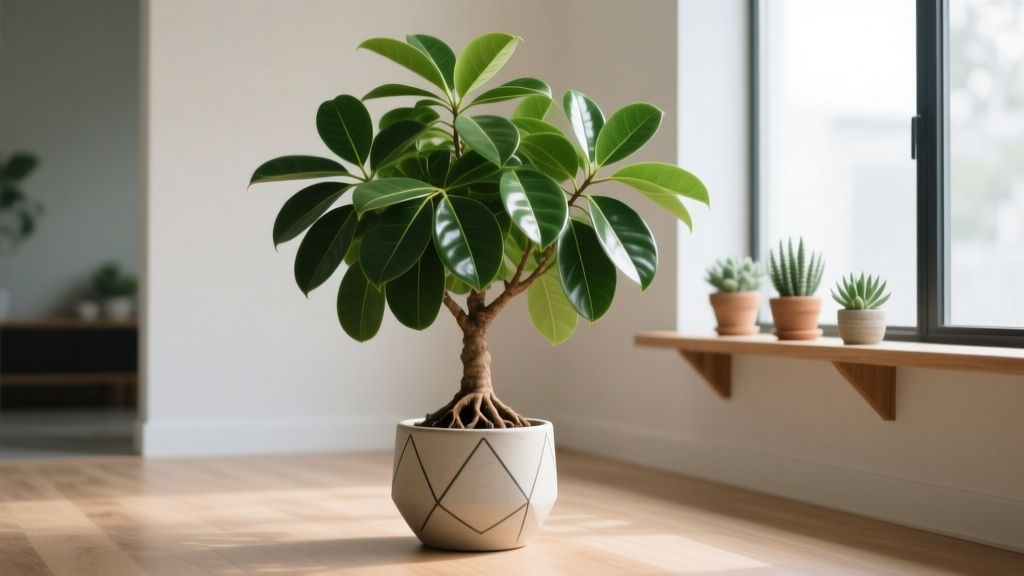
Mastering Money Tree Plant Care Indoors: Planting & Establishment
Establishing a Pachira aquatica, commonly known as the money tree, in an indoor environment requires replicating its native Central and South American wetland conditions while mitigating the risks of enclosed interior spaces. Mastering money tree plant care indoors hinges on three critical establishment phases: soil matrix engineering, precise hydration protocols, and light acclimation. Unlike outdoor landscaping, indoor cultivation demands strict control over air-filled porosity and evaporation rates to prevent the anaerobic conditions that trigger fatal root pathogens.
Container Selection and Soil Matrix Engineering
The most common failure point during the first 90 days of indoor establishment is root asphyxiation. Nursery-grade soil is designed for outdoor evaporation rates and high-frequency fertigation; it retains far too much moisture for an indoor setting. Before establishing your money tree, you must strip away the outer 30% of the nursery soil and replace it with a custom, high-aeration matrix.
The 50-30-20 Aeration Recipe
To achieve the optimal 45% air-filled porosity required for Pachira aquatica, mix the following components by volume:
- 50% Peat-Free Indoor Potting Mix: Provides baseline structure and moisture retention without the compaction issues of heavy sphagnum peat.
- 30% Coarse Horticultural Perlite (#3 or #4 size): Creates permanent macropores for drainage and oxygen exchange. Avoid fine perlite, which floats to the top and degrades over time.
- 20% Fine Orchid Bark: Introduces organic chunkiness that prevents soil compaction and mimics the debris-rich environment of native swamp floors.
Container selection is equally critical. Choose a pot exactly 2 inches wider in diameter than the root ball. Oversized pots hold excess soil volume that remains wet long after the root zone has absorbed its share, creating a perched water table. Terracotta or unglazed clay pots are highly recommended for heavy waterers, as the porous walls allow lateral evaporation. If using glazed ceramic or plastic, you must adhere strictly to the watering metrics outlined below. Ensure the container has a minimum 3/8-inch drainage hole.
The Establishment Watering Protocol
According to horticultural guidelines from the University of Florida IFAS Extension, Pachira aquatica is highly susceptible to Phytophthora root rot when subjected to prolonged soil saturation. During the establishment phase, the plant's transpiration rate is reduced as it adapts to indoor humidity levels (typically 30-40%, compared to its native 70%+).
Critical Warning: Never allow a money tree to sit in a saucer of standing water. Capillary action will wick water back into the soil profile, suffocating the fine feeder roots within 48 hours and initiating irreversible tissue necrosis.
Hydration Metrics and Execution
Abandon calendar-based watering schedules (e.g., 'water every Sunday'). Instead, rely on volumetric soil moisture data:
- Measure: Insert a calibrated analog soil moisture meter 4 inches deep into the soil. Water only when the dial reads between 3.0 and 4.0 on a 1-10 scale, or when the top 3 inches of soil feel completely dry to the touch.
- Saturate: Apply room-temperature water slowly to the soil surface until exactly 20% of the applied volume exits the drainage hole (the leaching fraction). This flushes accumulated mineral salts.
- Drain: Allow the pot to drain completely in a sink or bathtub for 15 minutes before returning it to its decorative saucer.
Light Acclimation and Placement Metrics
Money trees require bright, indirect light to sustain their braided trunks and expansive palmate leaves. The target illumination is 200 to 500 foot-candles. Direct, unfiltered midday sun exceeding 800 foot-candles will cause rapid photoinhibition, resulting in bleached, crispy leaf margins.
For optimal establishment, place the tree 2 to 4 feet from an East-facing window. This orientation provides gentle morning direct light (approximately 300-400 foot-candles) and bright indirect light for the remainder of the day. If your only available space is near a South or West-facing window, you must diffuse the light. Use a 50% shade cloth on the glass, or position the plant 6 to 8 feet back from the window pane to drop the light intensity into the safe 400 foot-candle range. Rotate the pot 90 degrees every two weeks to ensure symmetrical canopy development and prevent the trunk from leaning toward the light source.
Nutrient Management and Seasonal Matrix
Indoor money trees are light feeders. During the establishment phase (the first 3 months post-repotting), do not apply any fertilizer; the custom soil matrix and residual nursery nutrients are sufficient. Once the plant pushes new apical growth, initiate a diluted feeding regimen.
Use a balanced, water-soluble fertilizer with an NPK ratio of 10-10-10 or 20-20-20 (such as Jack's Classic or Dyna-Gro). Dilute the solution to 50% of the manufacturer's recommended label rate. Applying full-strength fertilizer to indoor container plants leads to rapid salt accumulation, which burns the delicate root hairs and manifests as brown, necrotic leaf tips. General houseplant maintenance principles from the University of Minnesota Extension emphasize that indoor plants require significantly less phosphorus and nitrogen than their outdoor counterparts due to restricted growth volumes.
| Season | Watering Frequency | Fertilizer Protocol | Environmental Adjustments |
|---|---|---|---|
| Spring (Active Growth) | Every 7-10 days (based on meter) | Half-strength balanced NPK every 3 weeks | Increase ambient humidity to 45%+ |
| Summer (Peak Transpiration) | Every 5-7 days | Half-strength balanced NPK every 3 weeks | Monitor for spider mites; mist leaves |
| Autumn (Hardening Off) | Every 10-14 days | Cease all fertilization by mid-September | Move away from cold window drafts |
| Winter (Dormancy) | Every 14-21 days (soil must dry deeply) | None | Keep away from HVAC heating vents |
Troubleshooting Common Establishment Failures
Even with precise care, indoor microclimates can trigger physiological stress responses. Identifying the exact failure mode early is crucial for saving the plant.
Acclimation Leaf Drop vs. Pathogenic Leaf Drop
It is entirely normal for a newly established money tree to drop its lowest, oldest leaves within the first 30 days. This is 'acclimation drop'—the plant is shedding leaves that were optimized for high-light greenhouse conditions to produce new foliage adapted to your lower-light interior. However, if new growth or mid-canopy leaves are dropping, this indicates acute stress. Check for cold drafts (temperatures below 60°F/15°C) or verify that the soil is not remaining wet for more than 5 days between waterings.
Edema and Salt Toxicity
If you notice yellowing leaves accompanied by raised, corky brown bumps on the undersides of the foliage, the plant is suffering from edema. This occurs when the roots absorb water faster than the leaves can transpire it, causing plant cells to rupture. To correct this, increase air circulation around the canopy with a low-speed oscillating fan and extend the dry-out period between waterings. If the brown tips are crispy and flat, this is salt toxicity from hard tap water or over-fertilization. Flush the soil profile with two gallons of distilled or reverse-osmosis water to leach the salts out of the drainage hole.
By adhering to these strict establishment protocols, your Pachira aquatica will develop a robust, disease-resistant root system capable of thriving indoors for decades. For households with pets, it is also worth noting that the ASPCA classifies the money tree as non-toxic to cats and dogs, making it a safe, structural centerpiece for your interior landscape.

