Tree Care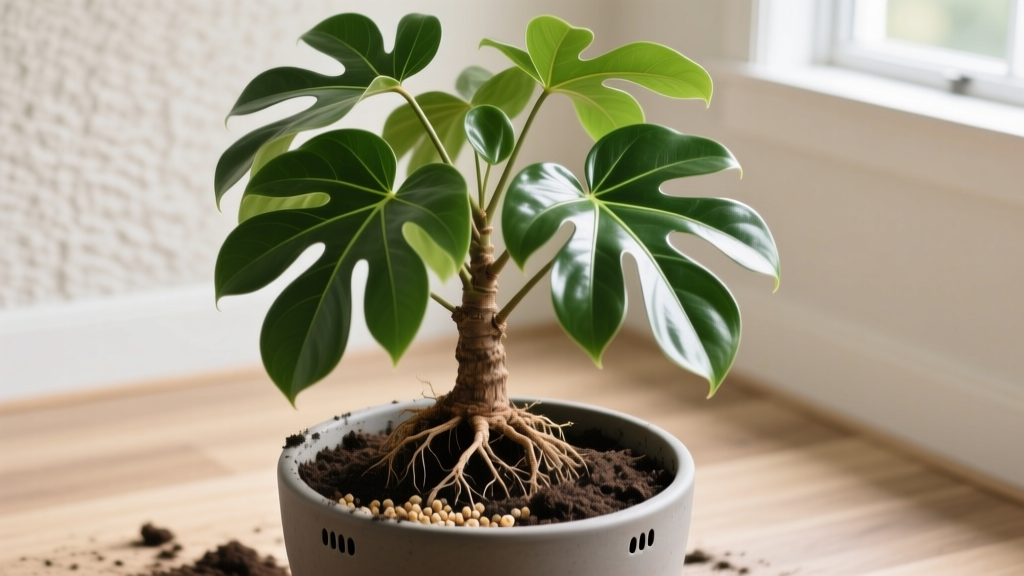
Money Tree Plant Care: Repotting, Soil Mix & Establishment Guide
The Ideal Soil Matrix for Pachira aquatica
Proper money tree plant care begins long before the first watering; it starts with the soil matrix. *Pachira aquatica* is a wetland tree in its native Central and South American habitat, but as a potted indoor specimen, it is highly susceptible to root asphyxiation. Standard commercial potting soils retain too much moisture and create a 'perched water table' at the bottom of the pot, drowning the lower root system.
To establish a healthy root network, you must engineer a soil mix with high porosity and optimal Cation Exchange Capacity (CEC). The ideal DIY money tree soil recipe by volume is:
- 40% Coco Coir: Provides moisture retention without waterlogging. Ensure it is buffered and rinsed to remove excess sodium.
- 30% Pine Bark Fines (1/4 inch): Creates macro-pores for oxygen flow and prevents soil compaction over time.
- 20% Pumice or Perlite: Pumice is preferred as it does not float to the top during watering and provides excellent drainage.
- 10% Worm Castings: Supplies a gentle, slow-release biological nutrient charge and introduces beneficial microbes.
Pro Tip: Test your soil pH before planting. *Pachira aquatica* thrives in a slightly acidic environment. Aim for a pH between 6.0 and 6.5. If your coco coir is too alkaline, amend it with a small amount of elemental sulfur or use a pH-down liquid buffer during your first watering.
Step-by-Step Repotting & Establishment Protocol
When bringing a new money tree home, it is often root-bound in a flimsy nursery pot filled with peat-heavy soil. Repotting within the first two weeks is critical for long-term establishment. According to University of Minnesota Extension, proper pot selection and root handling are the primary determinants of houseplant longevity.
- Select the Right Vessel: Choose a pot that is only 1 to 2 inches wider in diameter than the current root ball. Terracotta is highly recommended for beginners because its porous walls wick away excess moisture, mitigating overwatering risks. Ensure the pot has at least one large drainage hole.
- Tease the Roots: Gently remove the plant from its nursery pot. Using your fingers or a sterilized hand fork, loosen the outer inch of the root ball. If the roots are circling tightly, make three or four shallow vertical slits along the sides to encourage outward growth.
- Create a Base Layer: Add 2 inches of your custom soil matrix to the bottom of the new pot. Do not add a layer of gravel at the bottom; this actually raises the perched water table closer to the roots.
- Position the Trunk: Place the root ball in the center. The most critical rule of money tree plant care is to never bury the trunk. The soil line must sit exactly where the roots meet the bark. Burying the braided trunk will cause fatal bark rot.
- Fill and Settle: Fill the gaps with the remaining soil mix, tapping the sides of the pot to settle the medium. Water thoroughly until water flows freely from the drainage hole, then allow it to drain completely before placing it in its permanent location.
Acclimation & Early Watering Schedules
During the first 30 days of establishment, the root system is recovering from transplant shock and cannot uptake water as efficiently. Overwatering during this phase is the leading cause of money tree mortality. Instead of watering on a fixed calendar schedule, use the 'chopstick test': insert a dry wooden skewer deep into the soil, leave it for 10 seconds, and pull it out. If the wood is dark and damp, wait. If it comes out clean and dry, it is time to water.
The following matrix provides a baseline for watering frequency during the establishment phase, assuming an indoor temperature of 68°F to 72°F (20°C to 22°C):
| Pot Size | Light Level | Est. Days Between Watering | Water Volume |
|---|---|---|---|
| 6-inch | Bright Indirect | 7 - 10 Days | 16 oz (until runoff) |
| 8-inch | Medium Light | 10 - 14 Days | 24 oz (until runoff) |
| 10-inch | Bright Indirect | 12 - 16 Days | 32 oz (until runoff) |
| 12-inch | Low Light | 18 - 24 Days | 48 oz (until runoff) |
Braiding and Structural Training
Most commercial money trees feature braided trunks, a technique that requires ongoing maintenance as the plant establishes new vertical growth. As your *Pachira aquatica* pushes new apical growth, the fresh green stems are highly pliable and ideal for continuing the braid.
- Timing: Only braid when the new growth is at least 6 to 8 inches long and still green. Once the bark begins to lignify (turn brown and woody), it loses flexibility and will snap if forced.
- Tension Control: Braid loosely. The trunks will expand in girth as they mature. A braid that is too tight will girdle the vascular cambium, cutting off nutrient flow and killing the individual trunk.
- Securing: Use soft, biodegradable jute twine or Velcro plant ties to secure the top of the braid. Avoid wire or tight rubber bands, which will scar the bark.
Troubleshooting Establishment Shock
Even with perfect money tree plant care, transplant shock can occur. Distinguishing between normal acclimation and fatal errors is crucial for saving the plant.
Symptom: Yellowing Lower Leaves
Cause: This is typically a normal physiological response to transplant shock. The plant is aborting older, less efficient leaves to redirect energy toward generating new root hairs in the fresh soil matrix.
Fix: Do not overwater in an attempt to 'save' the yellow leaves. Allow the soil to dry out appropriately, and snip the yellow leaves off at the petiole with sterilized pruning shears to keep the plant tidy.
Symptom: Mushy, Dark Trunk Base
Cause: Fatal stem rot caused by burying the trunk during repotting or allowing the plant to sit in a saucer full of stagnant water. The bark of *Pachira aquatica* is not adapted to constant moisture exposure.
Fix: If the rot is localized, carefully scrape away the soil from the base to expose the trunk to air. If the trunk is entirely soft and collapses under gentle pressure, the rot has reached the vascular system. You must attempt emergency propagation by cutting the healthy top growth above the rot line and rooting it in water, though success rates are low. For more on plant toxicity and safety around pets when handling rotting plant matter, consult the ASPCA's Money Tree profile.
Symptom: Crispy, Brown Leaf Edges
Cause: Low ambient humidity combined with high soluble salts in the soil. Tap water often contains chlorine and fluorides that accumulate in the soil matrix, burning the delicate leaf margins.
Fix: Switch to distilled or reverse-osmosis water. Flush the soil thoroughly once a month by pouring three times the pot's volume of water through the medium to leach out accumulated salts. Increase local humidity to 50% using a nearby humidifier.
Frequently Asked Questions
Should I fertilize my money tree immediately after repotting?
No. The custom soil matrix containing worm castings provides sufficient nutrients for the first 60 days. Fertilizing a plant with a compromised root system will cause fertilizer burn. Wait until you see new vegetative growth before applying a balanced 10-10-10 liquid fertilizer at one-quarter strength.
Can I untangle a braided money tree?
If the trunks have not yet fused, you can carefully untangle them. However, if the tree has been braided for several years, the bark will have grafted together. Forcing them apart will tear the vascular tissue and likely kill the plant.